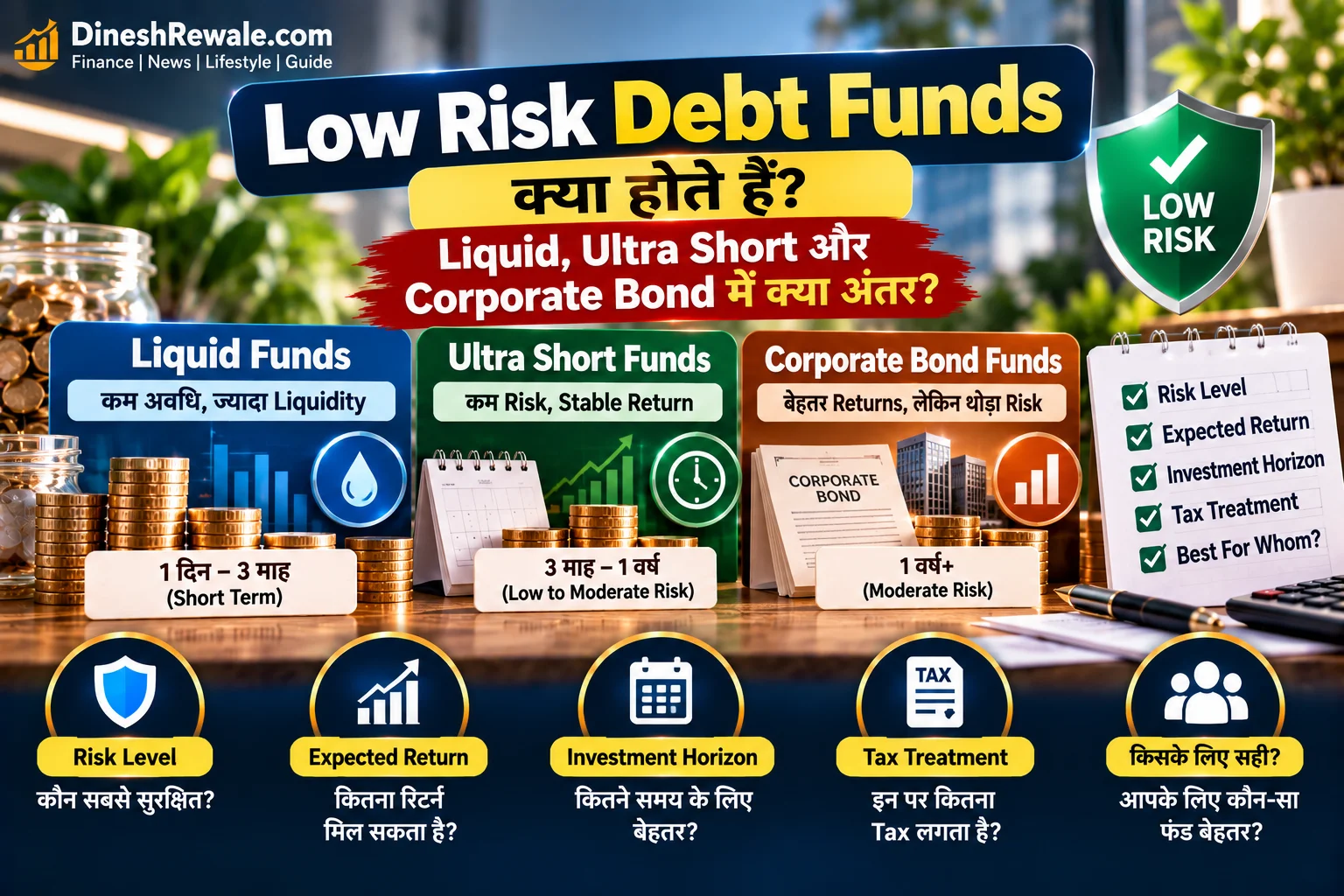
Low-Risk Debt Funds: 4 Types का आसान Comparison
Low-Risk Debt Funds ऐसे debt mutual funds होते हैं जिनका उद्देश्य आम तौर पर equity funds की तुलना में कम volatility के साथ short-term या medium-term debt exposure देना होता है। लेकिन “low-risk” का मतलब zero-risk या guaranteed return नहीं है। Liquid, Ultra Short Duration, Banking & PSU और Corporate Bond funds की portfolio duration,…
Low-Risk Debt Funds ऐसे debt mutual funds होते हैं जिनका उद्देश्य आम तौर पर equity funds की तुलना में कम volatility के साथ short-term या medium-term debt exposure देना होता है। लेकिन “low-risk” का मतलब zero-risk या guaranteed return नहीं है। Liquid, Ultra Short Duration, Banking & PSU और Corporate Bond funds की portfolio duration, issuer profile और risk अलग होती है। इसलिए सिर्फ पिछले return को देखकर fund चुनना सही तरीका नहीं है।
SEBI की 2026 mutual-fund classification में Liquid Fund, Ultra Short Duration Fund, Corporate Bond Fund और Banking & PSU Debt Fund अलग debt categories हैं। Liquid Fund में securities की maturity 91 calendar days तक होती है, Ultra Short Duration Fund की portfolio Macaulay duration 3 से 6 महीने के बीच होती है, Corporate Bond Fund में कम-से-कम 80% total assets AA+ और उससे ऊपर rated corporate bonds में रखा जाता है, जबकि Banking & PSU Debt Fund में कम-से-कम 80% assets banks, PSUs, public financial institutions और municipal bonds के debt instruments में लगाए जाते हैं।
In Short
- Liquid Fund: बहुत short-term money parking के लिए सबसे सीधी debt category, लेकिन return fixed नहीं होता।
- Ultra Short Duration Fund: Liquid Fund से ज्यादा duration, इसलिए interest-rate movement का असर कुछ ज्यादा हो सकता है।
- Banking & PSU Debt Fund: banks, PSUs, public financial institutions और municipal bonds के debt exposure पर focus करता है।
- Corporate Bond Fund: कम-से-कम 80% assets AA+ और ऊपर rated corporate bonds में रखता है, लेकिन credit risk पूरी तरह खत्म नहीं होता।
- सबसे जरूरी बात: कम duration और अच्छी credit quality आम तौर पर risk को नियंत्रित करने में मदद करते हैं, लेकिन mutual fund NAV market-linked रहता है।
Low-Risk Debt Funds क्या होते हैं?
Debt mutual fund वह fund है जो मुख्य रूप से bonds, government securities, money-market instruments, certificates of deposit, commercial paper और दूसरे fixed-income instruments में निवेश करता है। किसी debt fund का risk समझने के लिए दो चीजें खास तौर पर देखनी चाहिए: interest-rate risk और credit risk।
Interest-rate risk का मतलब है कि market interest rates बदलने पर existing bonds की market value बदल सकती है। आम तौर पर longer-duration portfolio में यह sensitivity ज्यादा होती है। दूसरी तरफ credit risk issuer के interest या principal payment में समस्या आने से जुड़ा होता है। High-rated securities इस risk को कम कर सकती हैं, लेकिन इसे zero नहीं बनातीं।
इसलिए “low-risk debt fund” को एक informal description मानें, कोई अलग SEBI category नहीं। सही category समझने के बाद fund की Macaulay duration, portfolio quality, concentration, expense ratio, exit load और recent portfolio changes देखना ज्यादा उपयोगी है। SEBI की current category framework में debt schemes की classification duration या issuer exposure के आधार पर अलग-अलग की गई है।
Liquid Fund क्या है?
Liquid Fund debt और money-market securities में निवेश करता है जिनकी maturity 91 calendar days तक होती है। इस छोटे maturity profile की वजह से इसे अक्सर short-term cash management और temporary parking के लिए इस्तेमाल किया जाता है। SEBI की 2026 classification भी Liquid Fund के लिए 91 calendar days तक की maturity सीमा बताती है।
इसका अर्थ यह नहीं है कि Liquid Fund में हर दिन NAV बिल्कुल स्थिर रहेगा या return guaranteed होगा। Portfolio में credit, liquidity और market-value movements का छोटा असर संभव है। बहुत short-term पैसे के लिए scheme का exit load और redemption rules भी देखना चाहिए।
किसके लिए उपयोगी? ऐसा investor जिसके पास कुछ समय के लिए cash पड़ा है और वह bank account के अलावा market-linked debt option देख रहा है, वह Liquid Fund पर विचार कर सकता है। लेकिन emergency fund का पूरा पैसा किसी एक market-linked product में डालने से पहले liquidity जरूरत को समझना जरूरी है।
Ultra Short Duration Fund क्या है?
Ultra Short Duration Fund की portfolio Macaulay duration 3 से 6 महीने के बीच होती है। यही अंतर इसे Liquid Fund से अलग बनाता है। Duration बढ़ने के साथ interest-rate changes का NAV पर असर आम तौर पर Liquid Fund की तुलना में अधिक हो सकता है।
यह category उन investors के लिए ज्यादा relevant हो सकती है जिनका horizon short term है, लेकिन वे सिर्फ बहुत छोटी maturity वाली securities तक सीमित नहीं रहना चाहते। फिर भी investment से पहले actual portfolio duration और issuer quality जरूर देखनी चाहिए, क्योंकि एक ही category के अलग schemes का portfolio structure अलग हो सकता है।
Banking & PSU Debt Fund क्या है?
Banking & PSU Debt Fund में कम-से-कम 80% total assets banks, Public Sector Undertakings, Public Financial Institutions और municipal bonds के debt instruments में निवेश किया जाता है। इस category का focus issuer type पर है, इसलिए इसे सिर्फ “government-backed” या “guaranteed” fund समझना गलत होगा।
किसी bank या PSU से जुड़ा debt instrument होने का मतलब यह नहीं कि investor के capital पर government guarantee मिल गई। Mutual fund units market-linked होती हैं और scheme के portfolio में interest-rate risk तथा credit risk दोनों हो सकते हैं। Fund चुनते समय rating mix, maturity profile और concentration जरूर देखें।
Corporate Bond Fund क्या है?
Corporate Bond Fund में कम-से-कम 80% total assets AA+ और उससे ऊपर rated corporate bonds में निवेश किया जाता है। इसका मतलब portfolio quality पर category-level minimum requirement है, लेकिन इससे हर scheme का risk एक जैसा नहीं हो जाता। अलग issuers, maturities, sector concentration और duration से overall risk बदल सकता है।
Corporate Bond Fund उस investor के लिए relevant हो सकता है जो corporate debt में exposure चाहता है और relatively higher-rated portfolio को preference देता है। फिर भी “AA+ and above” को “no default risk” नहीं समझना चाहिए। Rating बदल सकती है, spreads बदल सकते हैं और market conditions के कारण NAV में उतार-चढ़ाव हो सकता है।
Liquid vs Ultra Short vs Banking & PSU vs Corporate Bond
| Fund Type | मुख्य आधार | SEBI category framework | मुख्य risk | Typical use |
|---|---|---|---|---|
| Liquid Fund | Very short maturity | Debt & money-market securities up to 91 days | Low duration, credit and liquidity risk | Short-term cash parking |
| Ultra Short Duration | Portfolio duration | Macaulay duration 3–6 months | Interest-rate and credit risk | Short-term allocation |
| Banking & PSU Debt | Issuer type | Minimum 80% in specified banking/PSU/PFI/municipal debt | Credit, duration and concentration | Higher-quality debt exposure |
| Corporate Bond | Credit quality | Minimum 80% in AA+ and above corporate bonds | Credit and interest-rate risk | Medium-term debt allocation |
Low-Risk Debt Funds में Risk कैसे compare करें?
Fund category को देखकर तुरंत “safe” या “unsafe” label लगाना ठीक नहीं है। Practical comparison के लिए चार factors ज्यादा useful हैं।
1. Duration
Duration जितनी ज्यादा होगी, interest-rate changes के प्रति portfolio की sensitivity आम तौर पर उतनी अधिक हो सकती है। इसी वजह से Liquid Fund और Ultra Short Duration Fund के बीच छोटा लेकिन meaningful risk difference हो सकता है।
2. Credit Quality
AAA, AA+ जैसी ratings issuer की credit quality के बारे में संकेत देती हैं, लेकिन rating कोई guarantee नहीं है। Portfolio में top issuers, rating distribution और sector concentration देखें।
3. Concentration
अगर portfolio का बड़ा हिस्सा कुछ ही issuers या sectors में concentrated है, तो issuer-specific event का impact बढ़ सकता है। इसलिए सिर्फ average rating देखना पर्याप्त नहीं है।
4. Liquidity और Exit Load
Short-term investment में exit rules बहुत मायने रखते हैं। Scheme का exit load, settlement process और redemption terms पढ़ें। “Liquid Fund” नाम देखकर यह assume न करें कि हर situation में पैसा बिल्कुल savings account जैसा तुरंत उपलब्ध होगा।
Debt Fund और FD में क्या फर्क है?
Bank FD और debt mutual fund अलग products हैं। FD में interest rate और tenure पहले से तय framework के तहत होते हैं, जबकि debt fund में NAV market conditions के अनुसार बदलता है। इसलिए debt fund को FD का direct replacement मानना सही नहीं है।
| Point | Debt Mutual Fund | Bank FD |
|---|---|---|
| Return | Market-linked | Rate agreed at booking |
| NAV / value movement | Can fluctuate | Principal and contracted interest structure |
| Credit exposure | Underlying issuers of the fund portfolio | Bank deposit framework |
| Tax | Depends on applicable capital-gains rules and scheme classification | Interest generally taxable as income |
Bank deposits are also subject to the applicable DICGC deposit-insurance framework, while mutual fund units are not bank deposits. इसलिए safety compare करते समय product structure को भी देखना चाहिए।
Debt Mutual Fund Tax Rules 2026
Taxation के मामले में पुराने articles पर निर्भर रहना risky हो सकता है। Income-tax rules में Section 50AA का specified mutual fund framework लागू है। 1 April 2026 से “Specified Mutual Fund” की definition ऐसे mutual funds को cover करती है जो more than 65% of total proceeds debt and money-market instruments में निवेश करते हैं, या certain fund-of-fund structures जो ऐसे funds में 65% या उससे अधिक निवेश करते हैं। ऐसे specified mutual funds पर Section 50AA gains को short-term capital gains की तरह treat करता है, holding period से अलग।
इसलिए किसी debt fund को सिर्फ “3 साल hold करने पर long-term tax मिलेगा” जैसे पुराने formula से evaluate न करें। Scheme की current tax treatment, purchase date और लागू law verify करना जरूरी है। Income Tax Department के current explanation के अनुसार Section 50AA specified mutual funds के gains को short-term capital gains के रूप में treat करता है।
Tax planning करते समय capital gains के अलावा expense ratio, exit load और actual post-tax return भी compare करें। Tax saving के लिए fund खरीदना और risk profile को नजरअंदाज करना अच्छी strategy नहीं है।
₹10 लाख का practical example
मान लीजिए किसी investor के पास ₹10 लाख हैं और अगले 6 से 12 महीने में इस पैसे की जरूरत पड़ सकती है। ऐसी स्थिति में पूरा amount एक ही long-duration debt fund में डालना उचित नहीं माना जाना चाहिए। पहले liquidity requirement तय करें, फिर short-duration options को compare करें।
एक practical approach यह हो सकती है कि emergency reserve का हिस्सा highly liquid form में रखा जाए और बाकी short-term debt allocation के लिए Liquid या Ultra Short Duration category की schemes research की जाएं। अगर horizon medium term का है, तब Banking & PSU या Corporate Bond Fund पर भी विचार किया जा सकता है, लेकिन portfolio duration और credit quality देखकर।
यह example किसी व्यक्ति के लिए personalized recommendation नहीं है। सही allocation income stability, emergency needs, tax position और risk tolerance पर निर्भर करेगा। Emergency fund की basic planning के लिए Emergency Fund: Savings Account, FD या Liquid Fund? पढ़ें।
Low-Risk Debt Fund चुनने से पहले 7 Checks
- Fund category check करें: Liquid, Ultra Short, Banking & PSU या Corporate Bond किस category में आता है।
- Macaulay duration देखें: सिर्फ category नाम नहीं, current portfolio duration पढ़ें।
- Credit rating mix देखें: AAA/AA+ concentration और lower-rated exposure समझें।
- Top issuers देखें: portfolio कितना concentrated है, यह check करें।
- Yield के पीछे न भागें: higher yield कभी-कभी extra credit या duration risk के साथ आ सकती है।
- Expense ratio और exit load compare करें: खासकर short holding period में costs का असर meaningful हो सकता है।
- Tax और goal match करें: investment horizon और Section 50AA जैसी applicable rules को ध्यान में रखकर post-tax outcome देखें।
किस Investor के लिए कौन-सी category देखी जा सकती है?
| Investor need | पहले किन categories को research करें | क्या देखें |
|---|---|---|
| कुछ महीनों के लिए cash parking | Liquid Fund | Liquidity, portfolio quality, exit terms |
| Short-term goal | Liquid / Ultra Short Duration | Duration and credit risk |
| Higher-quality banking/PSU debt exposure | Banking & PSU Debt | Issuer concentration and duration |
| Corporate debt allocation | Corporate Bond Fund | AA+ and above mix, duration, concentration |
बड़े portfolio को एक ही debt category में रखना भी जरूरी नहीं है। Asset allocation और goal-based planning के लिए Asset Allocation by Age & Salary guide देखें। FD और conservative savings choices compare करने के लिए Small Finance Bank FD vs Government Bank FD पढ़ सकते हैं।
Debt Fund में कौन-सी गलतियां नहीं करनी चाहिए?
- “Debt मतलब fixed return” मान लेना।
- Past return देखकर बिना portfolio देखे fund खरीद लेना।
- Credit rating को government guarantee समझ लेना।
- Emergency fund के पूरे पैसे को market-linked product में डाल देना।
- Tax rules के लिए पुराने 2024 या 2025 articles को blindly follow करना।
- Short-term goal के लिए बहुत ज्यादा duration लेना।
- एक ही issuer या sector में concentration को ignore करना।
FAQs: Low-Risk Debt Funds
क्या Low-Risk Debt Funds में पैसा पूरी तरह safe होता है?
नहीं। Low-risk का अर्थ comparatively lower risk हो सकता है, लेकिन debt mutual funds market-linked हैं। Interest-rate, credit और liquidity risks मौजूद रह सकते हैं।
Liquid Fund और Ultra Short Duration Fund में मुख्य फर्क क्या है?
Liquid Fund में debt और money-market securities की maturity 91 days तक होती है, जबकि Ultra Short Duration Fund की Macaulay duration 3 से 6 महीने के बीच होती है। इसलिए Ultra Short category में duration-related sensitivity आम तौर पर ज्यादा हो सकती है।
क्या Corporate Bond Fund FD से ज्यादा safe है?
ऐसा सीधे कहना सही नहीं है। Corporate Bond Fund और FD अलग products हैं। Corporate Bond Fund market-linked है और underlying bonds में credit तथा interest-rate risks हो सकते हैं।
क्या Banking & PSU Debt Fund में government guarantee होती है?
नहीं। Category banks, PSUs, public financial institutions और municipal bonds के debt instruments में minimum 80% allocation पर आधारित है। Mutual fund unit को sovereign guarantee वाला deposit नहीं समझना चाहिए।
क्या debt fund में 3 साल बाद tax कम हो जाता है?
हर debt fund पर एक जैसा पुराना holding-period formula लागू नहीं किया जा सकता। 1 April 2026 से Section 50AA की specified mutual fund definition बदल चुकी है और covered funds के gains short-term capital gains की तरह treat किए जाते हैं। Applicable tax purchase date और scheme classification देखकर verify करें।
क्या Liquid Fund emergency fund के लिए सही है?
यह investor की emergency needs, required liquidity और risk tolerance पर निर्भर करता है। Emergency fund का एक हिस्सा savings account या other readily accessible form में रखना भी useful हो सकता है। Liquid Fund को guaranteed-return savings account का replacement न मानें।
Debt Fund चुनते समय सबसे पहले क्या देखें?
सबसे पहले goal और time horizon तय करें। उसके बाद category, duration, credit quality, issuer concentration, expense ratio, exit load और tax treatment compare करें।
क्या Low-Risk Debt Funds में SIP किया जा सकता है?
हाँ, कई open-ended debt schemes में SIP facility उपलब्ध हो सकती है। लेकिन short-term cash requirement के लिए SIP से ज्यादा महत्वपूर्ण goal, duration और liquidity matching है।
और पढ़ें
Direct vs Regular Mutual Funds: कौन-सा option सही?
Index Fund vs Mutual Fund: फर्क और सही selection
PPF, NSC और SCSS Interest Rates Oct-Dec 2026
₹25 लाख Investment Options: Safe से Growth तक
उपयोगी संदर्भ
SEBI पर current mutual-fund regulations, master circular और scheme-related regulatory information देखें।
AMFI पर mutual-fund categories और investor education material देखें।
Income Tax Department पर current capital-gains rules और Section 50AA की जानकारी verify करें।
लेखक के बारे में
Dinesh Rewale personal finance और investment planning पर practical, reader-focused guides लिखते हैं। उनका उद्देश्य complex financial topics को आसान भाषा, examples और useful comparisons के साथ समझाना है, ताकि readers informed financial decisions ले सकें।
Disclaimer
यह लेख सामान्य educational information के लिए है और इसे personalized financial advice न माना जाए। Debt mutual funds market-linked products हैं तथा इनमें interest-rate, credit, liquidity, concentration और tax-related risks हो सकते हैं। Investment से पहले scheme document, current portfolio, riskometer, applicable tax rules और अपनी financial needs की समीक्षा करें।