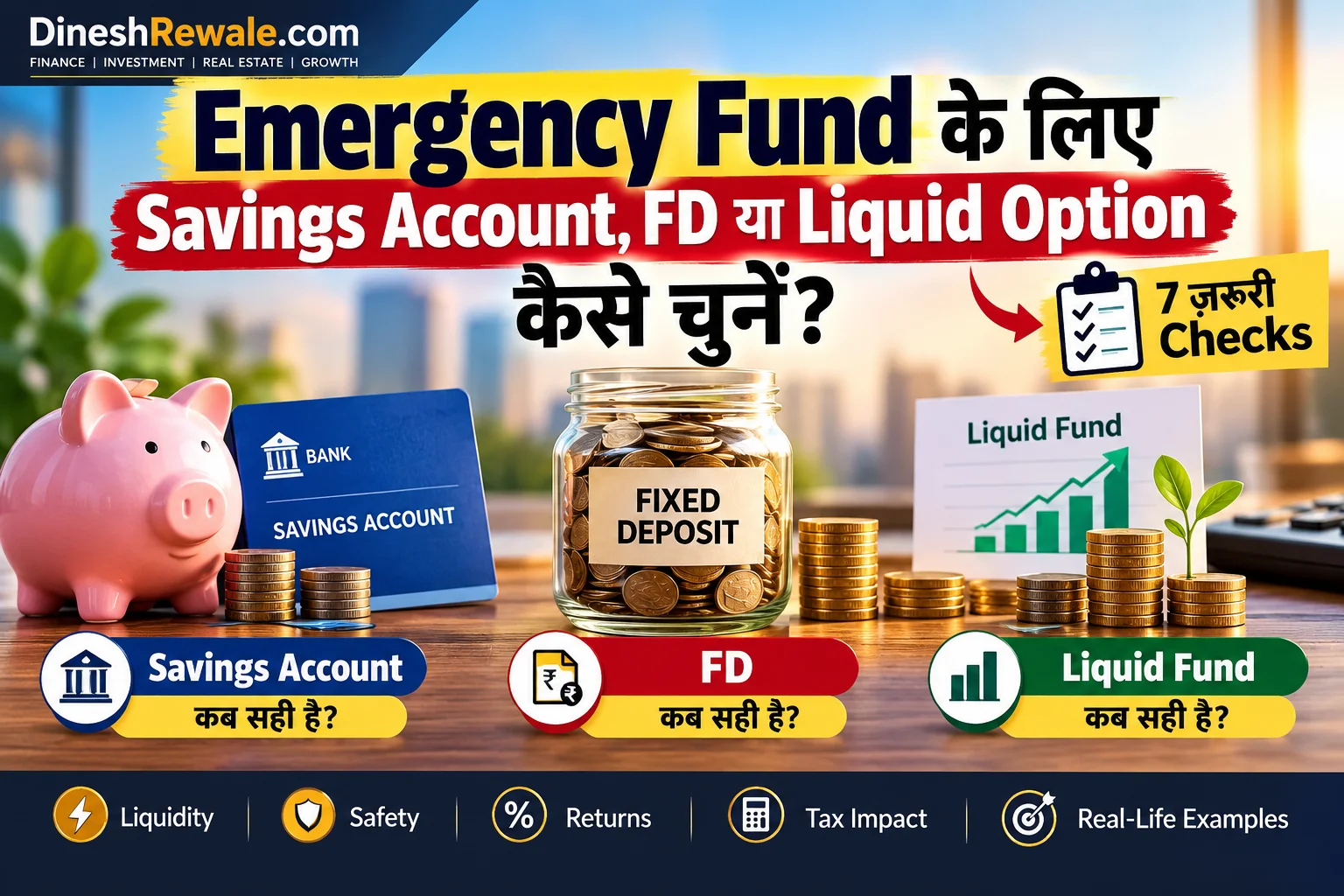
Emergency Fund कहाँ रखें? 7 Checks: Savings, FD, Liquid
Emergency Fund के लिए Savings Account, FD या Liquid Fund में पैसा कहाँ रखना चाहिए? इसका जवाब सिर्फ interest rate देखकर नहीं दिया जा सकता। Emergency Fund का सबसे बड़ा काम return कमाना नहीं, बल्कि जरूरत पड़ते ही आपका पैसा सही समय पर उपलब्ध कराना है। इसलिए liquidity, safety, access, risk, tax और product rules को साथ में देखना जरूरी है.
भारत में Emergency Fund रखने के लिए आम तौर पर तीन options सामने आते हैं: Savings Account, Bank FD और Liquid Mutual Fund। तीनों की liquidity, return potential, access और risk अलग हैं। Bank deposits पर DICGC insurance framework लागू हो सकता है, जबकि mutual funds deposit insurance के दायरे में नहीं आते. DICGC के अनुसार eligible bank deposits में savings और fixed deposits शामिल हैं तथा एक depositor को एक insured bank में same right and same capacity के तहत principal और interest मिलाकर अधिकतम ₹5 लाख तक insurance cover मिलता है.
इस guide में आप सिर्फ “कहाँ ज्यादा interest मिलेगा?” नहीं, बल्कि यह समझेंगे कि Emergency Fund को किस तरह structure करें ताकि पैसा emergency के समय usable रहे.
Quick Answer: Emergency Fund के लिए पहले access और capital safety को देखें। Savings Account immediate-access bucket के लिए useful हो सकता है। FD higher deposit return के लिए उपयोगी हो सकता है, लेकिन premature withdrawal rules और access conditions पहले देखें। Liquid Fund short-term parking का विकल्प है, लेकिन यह mutual fund है, guaranteed deposit नहीं। इसलिए इसे savings या FD का exact substitute नहीं मानना चाहिए.
Emergency Fund रखने के लिए 3 Options क्या हैं?
सबसे पहले तीनों products को उनके basic nature से समझना आसान होगा.
Savings Account
Savings Account सबसे straightforward emergency bucket है। पैसा bank account में रहता है और जरूरत आने पर transfer, ATM, cheque या अन्य available banking channels के जरिए इस्तेमाल किया जा सकता है। इसका सबसे बड़ा advantage easy access है.
लेकिन savings account का purpose emergency fund में return maximize करना नहीं है। अलग-अलग banks की interest rates, transaction limits, balance requirements और other terms अलग हो सकती हैं. इसलिए केवल headline interest rate देखकर account चुनना सही approach नहीं है.
Bank Fixed Deposit (FD)
FD में आप एक निश्चित अवधि के लिए bank deposit बनाते हैं और bank के terms के अनुसार interest मिलता है। Emergency Fund के लिए FD का मुख्य आकर्षण यह है कि savings account की तुलना में कई cases में deposit return अलग हो सकता है और पैसा एक अलग bucket में discipline के साथ रखा जा सकता है.
समस्या तब आती है जब emergency अचानक आ जाए और FD को maturity से पहले तोड़ना पड़े। Premature withdrawal, penalty, reduced interest या other conditions bank और FD product के हिसाब से अलग हो सकती हैं। इसलिए FD को emergency fund में शामिल करने से पहले actual withdrawal rules जरूर पढ़ें.
Liquid Mutual Fund
Liquid Fund एक debt-oriented mutual fund category है जो short-term money market और debt instruments में निवेश करती है। AMFI के अनुसार liquid funds ऐसे instruments में निवेश करते हैं जिनकी residual maturity सामान्यतः 91 days तक होती है और इन्हें short periods के लिए surplus money park करने वाले investors के लिए बनाया गया है.
लेकिन सबसे जरूरी distinction यही है: Liquid Fund bank deposit नहीं है. Mutual fund units में investment market-related risk रखता है और return या principal की guarantee नहीं होती। AMFI की investor guidance भी mutual fund investments में liquidity, default, interest-rate और अन्य risks के साथ principal loss की संभावना बताती है.
Savings Account vs FD vs Liquid Fund: मुख्य अंतर
| Factor | Savings Account | Bank FD | Liquid Fund |
|---|---|---|---|
| Product type | Bank deposit | Bank deposit | Mutual fund |
| Access | आमतौर पर सबसे आसान | Premature withdrawal rules पर निर्भर | Redemption process पर निर्भर |
| Return | Bank rate पर निर्भर | FD rate पर निर्भर | Market-linked, guaranteed नहीं |
| Capital certainty | Bank deposit; DICGC cover eligibility लागू हो सकती है | Bank deposit; DICGC cover eligibility लागू हो सकती है | Deposit insurance नहीं |
| Lock-in | सामान्यतः नहीं | Tenure होती है | Lock-in सामान्यतः नहीं, लेकिन exit-load/processing rules देखें |
| Emergency suitability | Immediate-access layer के लिए useful | Planned reserve layer के लिए useful | Short-term parking के लिए possible, risk समझने पर |
यह table किसी एक option को universal winner नहीं बनाता। सही choice आपके emergency corpus की size, access requirement और risk tolerance पर निर्भर करेगी.
Emergency Fund चुनते समय 7 Practical Checks
1. पैसा कितनी जल्दी चाहिए?
Emergency fund में सबसे पहला सवाल होना चाहिए: “क्या मुझे यह पैसा आज ही चाहिए हो सकता है?”
अगर आपकी emergency में rent, EMI, groceries, medicines या urgent travel का payment उसी दिन करना पड़ सकता है, तो पूरी रकम को ऐसे product में रखना practical नहीं होगा जिसकी redemption या premature withdrawal process आपको समझ में न आती हो.
यहीं savings account की role स्पष्ट होती है। Immediate-access money को ऐसी जगह रखने का फायदा है जहाँ आप banking channel के जरिए सीधे payment कर सकें.
Example: मान लीजिए आपका essential monthly खर्च ₹50,000 है। तीन महीने का Emergency Fund ₹1.50 लाख बनता है। इस पूरे ₹1.50 लाख को एक ही जगह रखने के बजाय आप immediate-access requirement और बाकी reserve की अलग layers पर विचार कर सकते हैं.
2. Capital safety को return से ऊपर रखें
Emergency Fund का पैसा वह रकम है जिसे आपको emergency में “available” रखना है। इसलिए long-term wealth creation वाली सोच यहाँ अलग हो जाती है। Emergency reserve और long-term investing को अलग buckets में समझने के लिए आप Asset Allocation क्या है? वाली guide भी पढ़ सकते हैं.
DICGC के अनुसार eligible savings, fixed, current और recurring deposits पर एक insured bank में same right and same capacity के लिए principal और accrued interest मिलाकर अधिकतम ₹5 लाख तक deposit insurance cover है। अलग-अलग branches में रखे deposits को insurance calculation के लिए aggregate किया जाता है.
इसका अर्थ यह भी है कि ₹5 लाख की insurance ceiling को हर branch के लिए अलग ₹5 लाख मानना गलत है। Deposit का overall structure समझना जरूरी है.
Liquid Fund इस framework में अलग है क्योंकि DICGC की deposit insurance guide mutual funds को covered deposits की list में शामिल नहीं करती। इसलिए liquid fund को “FD जैसा insured product” मानकर emergency corpus रखना सही comparison नहीं है.
3. Emergency में access के रास्ते पहले test करें
किसी भी product को चुनने से पहले एक छोटा operational test करें। क्या आप यह पैसा अपने linked bank account में आसानी से ला सकते हैं? कितने steps लगते हैं? KYC, account access, app login और redemption process ठीक से काम कर रहे हैं?
Emergency के समय technical problem, forgotten password या unavailable banking channel भी परेशानी बढ़ा सकता है। इसलिए सिर्फ product का नाम नहीं, real-world access process भी देखें.
एक practical habit यह है कि अपने emergency account की net banking और mobile banking access को पहले से verify रखें। जरूरी beneficiary details भी updated रहें.
4. FD में premature withdrawal rules समझें
FD को Emergency Fund में रखते समय सबसे common mistake है maturity value देखकर फैसला लेना। Emergency में maturity का इंतजार नहीं किया जा सकता.
इसलिए FD चुनते समय देखें:
- Premature withdrawal allowed है या नहीं.
- Premature closure पर interest कैसे calculate होगा.
- Penalty या reduced interest लागू होता है या नहीं.
- Withdrawal process online है या branch visit की जरूरत पड़ सकती है.
- Sweep-in या sweep-out facility उपलब्ध है तो उसकी actual terms क्या हैं.
Bank-to-bank rules अलग हो सकते हैं, इसलिए FD खोलने से पहले उसी bank की current terms पढ़ना जरूरी है.
5. Liquid Fund में “liquid” का मतलब “bank balance” नहीं है
“Liquid” शब्द देखकर कई लोग मान लेते हैं कि पैसा savings account जितना ही instantly available होगा। ऐसा जरूरी नहीं है.
Liquid Fund से redemption mutual fund transaction के जरिए होता है। Applicable NAV, cut-off rules, transaction processing और settlement के कारण इसका experience bank account से अलग हो सकता है। कुछ mutual fund platforms या schemes specific instant redemption facilities भी दे सकती हैं, लेकिन वे universal feature नहीं हैं.
इसलिए Emergency Fund का जो हिस्सा आपको उसी समय payment के लिए चाहिए, उसे सिर्फ “liquid” नाम देखकर mutual fund में डालना उचित नहीं है.
6. Exit load और tax को ignore न करें
SEBI के current mutual fund framework में liquid funds के लिए short-term exit-load structure दिया गया है। Current SEBI material में subscription के बाद day 1 पर 0.0070%, day 2 पर 0.0065%, day 3 पर 0.0060%, day 4 पर 0.0055%, day 5 पर 0.0050%, day 6 पर 0.0045% और day 7 onwards nil का schedule दिखाई देता है। किसी transaction से पहले अपने scheme की latest Scheme Information Document और applicable load details जरूर check करें.
Taxation भी अलग consideration है। Bank FD का interest taxable income हो सकता है। वहीं current Income Tax rules के अनुसार, 1 April 2026 से “specified mutual fund” की definition debt और money-market-heavy mutual funds को cover करती है और Section 50AA के तहत ऐसे specified mutual funds के gains short-term capital gains treatment में आ सकते हैं, applicable rules के अनुसार.
इसलिए सिर्फ pre-tax return देखकर Emergency Fund product चुनना सही comparison नहीं है.
7. पूरे Emergency Fund को एक ही bucket में रखने की जरूरत है या नहीं?
यहीं पर layered structure practical बनता है। मान लीजिए आपका target ₹3 लाख है। आप अपनी liquidity requirement को देखकर कुछ रकम instant-access savings bucket में रख सकते हैं, कुछ रकम ऐसी FD structure में जहाँ access conditions acceptable हों, और कुछ रकम liquid fund जैसे option में तभी रख सकते हैं जब आप mutual fund risk और redemption mechanics समझते हों.
इसका उद्देश्य return chase करना नहीं है। उद्देश्य यह है कि पहली जरूरत के पैसे की access और बाकी reserve की usability के बीच balance बनाया जाए.
एक Practical Emergency Fund Structure कैसे सोचें?
मान लीजिए आपके essential expenses ₹40,000 प्रति month हैं और आपने 6 महीने का target चुना है.
| Calculation | Amount |
|---|---|
| ₹40,000 × 6 months | ₹2,40,000 |
अब आप अपने लिए तीन questions पूछ सकते हैं:
- पहले 1 महीने का खर्च क्या मुझे तुरंत उपलब्ध चाहिए?
- बाकी reserve के लिए क्या bank FD की access terms मेरे लिए ठीक हैं?
- क्या मैं liquid fund के market-linked nature, redemption process और tax treatment को समझता हूँ?
इन सवालों के जवाब के आधार पर आपका structure तय होगा। इसका कोई single formula हर व्यक्ति पर लागू नहीं होता.
Savings Account कब अधिक useful हो सकता है?
Savings Account की सबसे बड़ी ताकत simplicity और accessibility है। आप emergency payment directly account से कर सकते हैं और product को समझना relatively आसान होता है.
यह layer खास तौर पर उस पैसे के लिए useful हो सकती है जिसकी जरूरत rent, utility bills, groceries, medicines या urgent travel जैसे immediate expenses के लिए पड़ सकती है.
लेकिन savings account में बहुत बड़ी रकम indefinitely रखना भी जरूरी नहीं। Emergency fund बढ़ने पर liquidity और deposit safety के साथ overall structure की review की जा सकती है.
FD कब consider किया जा सकता है?
FD उस emergency corpus के हिस्से के लिए consider किया जा सकता है जिसे आप अलग रखना चाहते हैं, लेकिन उसके लिए premature access acceptable होना चाहिए.
एक important point है एक single long-tenure FD बनाने के बजाय अलग-अलग maturity buckets पर विचार करना। इससे पूरा corpus एक ही maturity date या एक ही withdrawal decision पर निर्भर नहीं रहता.
यह approach universal rule नहीं है। Bank की FD terms, interest calculation और premature closure conditions देखना जरूरी है.
Liquid Fund कब consider किया जा सकता है?
Liquid Fund उन लोगों के लिए relevant हो सकता है जो short-term parking के लिए mutual fund route समझते हैं और bank deposit से अलग investment structure स्वीकार कर सकते हैं.
AMFI के अनुसार liquid funds short-term money market instruments में निवेश करते हैं और surplus funds को short periods के लिए park करने वाले investors के लिए बनाए गए हैं। फिर भी यह mutual fund investment है, deposit नहीं.
इसलिए Emergency Fund में इसका role चुनते समय आपको risk disclosure, scheme portfolio, credit quality, redemption process, exit-load rules और tax treatment समझना चाहिए.
क्या Emergency Fund का पूरा पैसा Savings Account में रखना चाहिए?
जरूरी नहीं। इसका फायदा simplicity है, लेकिन आपके corpus की size बड़ी होने पर पूरा पैसा एक ही account में रखना जरूरी नहीं है.
उदाहरण के लिए ₹6 लाख का Emergency Fund है तो आप पहले अपनी immediate liquidity requirement define कर सकते हैं और फिर बाकी रकम के लिए deposit structure या other short-term options की suitability देख सकते हैं.
साथ ही DICGC coverage को ध्यान में रखें। Eligible deposits के लिए ₹5 लाख की insurance ceiling एक depositor के same right and same capacity पर insured bank level पर apply होती है, इसलिए बड़े deposits के लिए diversification of banks को समझना relevant हो सकता है. यह banking decision product terms और ownership structure के अनुसार अलग हो सकता है.
क्या Emergency Fund का पूरा पैसा FD में रखना चाहिए?
यह भी जरूरी नहीं। पूरा corpus FD में रखने से आपको एक समस्या हो सकती है: emergency उसी दिन आ गई जब FD mature होने में कई महीने बाकी हैं.
इसलिए FD को Emergency Fund की entire structure न मानकर एक layer की तरह देखना ज्यादा practical हो सकता है, खासकर जब immediate-access bucket अलग मौजूद हो.
क्या Emergency Fund के लिए Liquid Fund सबसे बेहतर है?
“सबसे बेहतर” का universal answer नहीं है। Liquid Fund का नाम liquidity से जुड़ा है, लेकिन यह bank deposit नहीं है और इसकी value तथा redemption mutual fund framework के तहत operate होती है.
अगर आपका priority capital certainty और direct banking access है, तो bank deposits और liquid fund को एक ही category में रखना उचित नहीं है। अगर आपका उद्देश्य short-term surplus parking है और आप mutual fund structure को समझते हैं, तब liquid fund अलग consideration हो सकता है.
Emergency Fund चुनते समय किन गलतियों से बचें?
- सिर्फ highest interest rate देखकर decision लेना: Emergency Fund में access और safety ज्यादा महत्वपूर्ण हैं.
- पूरा पैसा एक long FD में lock करना: Premature withdrawal की जरूरत पड़ सकती है.
- Liquid Fund को savings balance समझना: दोनों products की structure अलग है.
- DICGC cover को branch-wise समझना: Eligible deposits को insurance rules के अनुसार aggregate किया जाता है.
- Tax और charges ignore करना: Post-tax usable amount अलग हो सकता है.
- Emergency access test न करना: सिर्फ account खोलना पर्याप्त नहीं, actual withdrawal process भी समझें.
- Personal और business cash को mix करना: अगर आप business चलाते हैं, तो personal Emergency Fund को business working capital से अलग रखना useful है. Business और Personal Finance अलग क्यों रखें?
Emergency Fund की सही amount तय करने के बाद अगला step क्या है?
Product चुनने से पहले Emergency Fund का target तय करना बेहतर है। यह target आपकी essential monthly expenses, income stability, dependents, debt और insurance coverage जैसे factors पर depend कर सकता है। अगर आप salary को अलग-अलग financial goals के हिसाब से plan करना चाहते हैं, तो 50-30-20 Rule और Salary Budget वाली guide भी देख सकते हैं.
आप पहले अपने core expenses लिख सकते हैं और फिर 3, 6 या 9 महीने का target चुन सकते हैं। इस calculation के लिए हमारी Emergency Fund 3, 6 या 9 महीने का कितना रखें? वाली guide useful starting point है। इसके बाद आप अपने broader Financial Goals कैसे Set करें guide के जरिए emergency reserve को बाकी goals से अलग plan कर सकते हैं.
Monthly expenses सही तरीके से निकालना भी जरूरी है। इसके लिए Monthly Budget कैसे बनाएं? जैसे budgeting framework से शुरुआत की जा सकती है.
एक Simple Decision Framework
| आपकी प्राथमिकता | पहले क्या देखें? |
|---|---|
| आज ही पैसा चाहिए हो सकता है | Easy bank access और liquidity |
| कुछ reserve अलग रखना है | FD access rules, tenure और premature closure terms |
| Short-term surplus park करना है | Liquid fund portfolio, risk, redemption और costs |
| बड़ा bank deposit है | DICGC eligibility और ₹5 लाख insurance structure |
| Post-tax outcome महत्वपूर्ण है | Applicable tax treatment और charges |
यह framework आपको product चुनने में मदद करता है, लेकिन specific product या bank चुनने से पहले उसकी latest terms और applicable rules पढ़ना जरूरी है.
निष्कर्ष: Emergency Fund में “कहाँ रखें” से ज्यादा जरूरी है “किस काम का पैसा कहाँ रखें”
Emergency Fund एक single product नहीं, बल्कि liquidity system की तरह सोचने लायक financial reserve है. Savings Account immediate-access money के लिए useful हो सकता है। FD disciplined bank-deposit layer बना सकता है, बशर्ते premature withdrawal terms आपके लिए acceptable हों। Liquid Fund short-term parking का option हो सकता है, लेकिन mutual fund risk, redemption mechanics और taxation को समझे बिना इसे bank deposit का replacement नहीं मानना चाहिए.
आपका पहला लक्ष्य होना चाहिए कि emergency आने पर जरूरी पैसा बिना unnecessary delay के उपलब्ध हो। दूसरा लक्ष्य यह है कि बाकी reserve को ऐसी जगह रखा जाए जहाँ safety, access और return के बीच आपके लिए उचित balance बने.
इसलिए अगली बार Emergency Fund बनाते समय सिर्फ यह मत पूछिए कि “कहाँ interest ज्यादा मिलेगा?” बल्कि पूछिए: “Emergency के दिन यह पैसा कितनी आसानी से, कितने भरोसे के साथ और किस cost पर मेरे काम आएगा?”
Author: Dinesh Rewale
Dinesh Rewale एक independent content creator और blogger हैं, जो personal finance, business, investments, technology, real estate और current affairs को आसान, reader-friendly भाषा में समझाने पर ध्यान देते हैं.
Facebook: https://www.facebook.com/profile.php?id=61574859401427
Financial Disclaimer
यह लेख सामान्य educational और informational purpose के लिए है। Emergency Fund का सही amount और उसका product structure हर व्यक्ति की income, expenses, debt, dependents, insurance coverage, liquidity requirement और financial situation के अनुसार अलग हो सकता है। यहाँ दिए गए examples illustrative हैं। Bank deposits, FD और mutual fund products की latest terms, charges, tax treatment और applicable rules निवेश या deposit decision से पहले स्वयं verify करें। यह लेख personalized financial advice या किसी specific bank, FD, mutual fund या investment product की recommendation नहीं है.