Monthly Budget कैसे बनाएं? 7 आसान तरीके
महीने की 1 तारीख को salary account में आती है और कुछ दिनों तक लगता है कि इस बार पैसा आराम से चलेगा। फिर rent, groceries, electricity, commute, UPI payments, subscriptions, family support और अचानक आए खर्च एक-एक करके balance कम करते जाते हैं। आखिर में सवाल वही रहता है: पैसा गया कहाँ?
यहीं monthly budget काम आता है। Budget का मतलब हर छोटी खुशी पर रोक लगाना नहीं है। इसका मतलब है कि salary आने से पहले ही आप तय कर लें कि कितना पैसा जरूरी खर्चों, future goals, irregular bills, lifestyle और बचत के लिए जाएगा। RBI अपनी financial-awareness material में budget को future income और expenses की योजना बताता है और budget को actual expenditure से compare करने की सलाह देता है। SEBI Investor भी income और expenses track करने, basic needs को priority देने, savings/investments के लिए हिस्सा अलग रखने और emergency fund बनाने पर जोर देता है।
इस guide में आप केवल 50/30/20 जैसी popular percentage rule नहीं पढ़ेंगे। हम एक ऐसा system बनाएंगे जो ₹30,000, ₹60,000 या ₹1 लाख take-home income पर भी adapt हो सके। खास focus रहेगा उन खर्चों पर जो budget को अक्सर चुपचाप बिगाड़ते हैं, जैसे annual insurance premium, festivals, repairs, medical bills, travel और irregular family expenses।
Last updated: 12 September 2026. यह लेख general financial education के लिए है। आपकी income, family responsibilities, debt और goals के अनुसार numbers बदल सकते हैं।
Quick Answer: Monthly Budget कैसे बनाएं?
- Take-home income को budget का starting point बनाएं, CTC या gross salary को नहीं।
- कम से कम पिछले 3 महीने के actual खर्च देखकर realistic categories बनाएं।
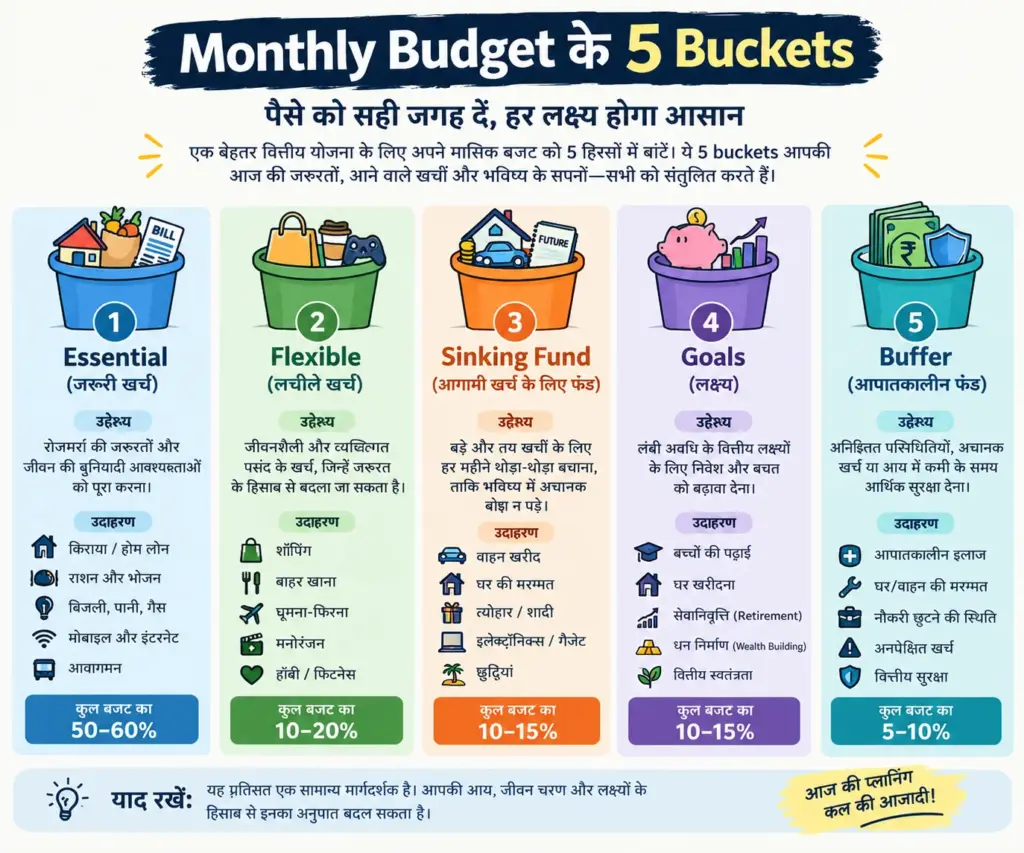
- खर्च को केवल Needs और Wants में नहीं, बल्कि Essential, Flexible, Sinking Fund, Goals और Buffer जैसे buckets में बांटना ज्यादा practical हो सकता है।
- Irregular expenses को monthly amount में बदलें ताकि अचानक आने वाले bills budget न तोड़ें।
- Salary आते ही savings या goals के लिए पैसा अलग करना अक्सर month-end saving का इंतजार करने से बेहतर system बनाता है।
- हर महीने budget बनाकर भूलें नहीं। Actual vs Budget compare करें और अगले महीने limits adjust करें।
Monthly Budget बनाने से पहले एक जरूरी बात: 50/30/20 को rule नहीं, starting point मानें
50/30/20 framework में take-home income का 50% needs, 30% wants और 20% savings/investments के लिए रखा जाता है। यह याद रखने में आसान framework है और beginners को structure दे सकता है। लेकिन इसे हर भारतीय household पर जबरन लागू करना सही नहीं है। Mumbai जैसे महंगे शहर में rent किसी दूसरे शहर की तुलना में काफी बड़ा हिस्सा ले सकता है। Single-income family, parents support, school fees या existing EMI होने पर आपकी needs 50% से ऊपर भी जा सकती हैं।
इसलिए बेहतर सवाल है: मेरे पैसे को इस महीने कौन-कौन से jobs देने हैं? Percentage बाद में आता है।
| Budget Method | कैसे काम करता है | किसके लिए उपयोगी | मुख्य कमजोरी |
|---|---|---|---|
| 50/30/20 | Needs, Wants, Savings के 3 buckets | Beginners | High-rent या high-obligation households में rigid लग सकता है |
| Zero-Based Budget | हर रुपये को पहले से एक job देना | Detailed control चाहने वाले | Tracking ज्यादा करनी पड़ सकती है |
| 5-Bucket Budget | Essential, Flexible, Sinking, Goals, Buffer | Irregular expenses वाले households | शुरुआत में categories तय करनी पड़ती हैं |
| Pay Yourself First | Salary credit होते ही savings/goals अलग | जो month-end saving नहीं कर पाते | Over-allocation होने पर month-end cash tight हो सकता है |
7 आसान तरीके: Monthly Budget कैसे बनाएं?
1. Budget हमेशा Take-Home Income से शुरू करें
अगर आपकी salary slip पर gross salary ₹70,000 है लेकिन deductions के बाद account में ₹61,500 आते हैं, तो household spending budget ₹61,500 पर बनना चाहिए। PF, tax या अन्य payroll deductions दोबारा खर्च में नहीं गिनें। इसी तरह uncertain bonus, occasional freelance income या cashback को regular monthly income मानने से बचें।
एक simple formula रखिए:
Budget Income = Reliable Take-Home Income + नियमित और भरोसेमंद अतिरिक्त आय
अगर side income कभी ₹2,000 तो कभी zero है, तो base budget salary पर बनाइए। Side income को emergency fund, annual expense या goal funding में भेजना अधिक सुरक्षित हो सकता है।
2. पिछले 3 महीने के खर्च को audit करके अपना real baseline निकालें
Budget अनुमान से नहीं, data से मजबूत बनता है। पिछले 3 महीने के bank statements, UPI history, credit-card statement और cash spends देखें। हर transaction को 20 categories में बांटने की जरूरत नहीं है। पहले बड़े buckets पहचानें।
| Expense Type | Examples | Budget में treatment |
|---|---|---|
| Essential | Rent, basic groceries, utilities, necessary commute | पहले fund करें |
| Committed | EMI, school fees, fixed family contribution, insurance premium provision | पहले से reserve करें |
| Flexible | Dining out, shopping, cabs, entertainment | Monthly cap लगाएं |
| Irregular | Repairs, festivals, travel, annual renewals | Sinking fund बनाएं |
| Goals | Emergency fund, SIP, down payment, education | Salary day पर allocate करें |
Practical Tip: अगर पिछले 3 महीनों का average ₹52,000 खर्च है और आपकी take-home income ₹55,000 है, तो सिर्फ ₹3,000 बचने की वजह खोजिए। आपको तुरंत investment product चुनने से पहले cash-flow gap समझना चाहिए।
3. 5-बकेट system अपनाइए, ताकि हर खर्च का अलग purpose हो
Monthly budget का सबसे उपयोगी upgrade यह है कि आप savings को एक single bucket न मानें। एक practical structure यह हो सकता है:
- Essential: रहने, खाने, utility और जरूरी commute जैसी चीजें।
- Flexible: lifestyle और discretionary spending, जिसे जरूरत पड़ने पर घटाया जा सके।
- Sinking Fund: annual या irregular खर्चों के लिए धीरे-धीरे बनाया गया reserve।
- Goals: emergency fund, investments और specific financial goals।
- Buffer: महीने में होने वाले छोटे unexpected खर्चों के लिए cushion।
इस system का फायदा यह है कि ₹12,000 का annual insurance premium आने पर आप यह नहीं सोचते कि “इस महीने budget खराब हो गया।” आपने उसके लिए पहले से monthly provision बनाया हुआ है।
4. Irregular Expenses के लिए Sinking Fund बनाइए
बहुत से budgets इसलिए fail होते हैं क्योंकि monthly budget में केवल recurring expenses लिखे जाते हैं। लेकिन car service, health expense, annual insurance, festival shopping, school-related payments, travel या घर की repair हर महीने नहीं आतीं। खर्च irregular हो सकता है, लेकिन उसका economic impact predictable हो सकता है।
Formula आसान है:
Monthly Sinking Fund = Estimated Annual Expense ÷ 12
मान लीजिए अनुमानित annual irregular expenses हैं: insurance ₹18,000 + travel ₹12,000 + repairs ₹6,000 = ₹36,000।
₹36,000 ÷ 12 = ₹3,000 प्रति माह
इसलिए budget में ₹3,000 monthly sinking-fund allocation रखा जा सकता है। यह calculation example/estimate है। Actual annual cost आपकी जरूरतों के अनुसार अलग होगी।
5. Salary आते ही “पहले बचत, फिर खर्च” system लगाइए
बहुत लोगों का system होता है: पहले पूरा महीना खर्च, फिर जो बचा उससे saving। समस्या यह है कि flexible spending अक्सर available balance देखकर बढ़ती जाती है। SEBI Investor की guidance भी income का एक निश्चित हिस्सा savings और investments के लिए अलग रखने तथा disciplined रहने पर जोर देती है।
इसका मतलब यह नहीं कि आप हर महीने एक fixed 30% invest करें। इसका मतलब है कि budget final करते समय goals को भी expense की तरह treat करें। Salary credit के बाद emergency fund contribution, SIP या goal saving को early allocation मिल सकता है, बशर्ते essential expenses और cash buffer covered हों।
Watch Out: Savings automate करते समय इतना aggressive amount तय न करें कि महीने के बीच credit card rollover या नया short-term loan लेना पड़े। Budget का लक्ष्य “high saving rate दिखाना” नहीं, sustainable cash flow बनाना है।
6. Flexible खर्च को monthly नहीं, weekly limit में बदलें
₹10,000 का monthly lifestyle budget कागज पर simple लगता है, लेकिन महीने के पहले 10 दिनों में ₹5,500 खर्च हो जाए तो बाकी दिनों के लिए pressure बढ़ जाता है। इसलिए flexible categories को weekly caps में बदलना उपयोगी हो सकता है।
मान लीजिए flexible spending budget ₹8,000 है। एक simple approach में इसे करीब ₹2,000 प्रति सप्ताह का spending envelope माना जा सकता है। चार calendar weeks हमेशा exactly समान नहीं होतीं, इसलिए यह केवल practical tracking method है, accounting rule नहीं।
इससे आपको हर बार “क्या यह खर्च afford कर सकता हूं?” सोचने के बजाय weekly balance देखने की आदत बनती है।
7. महीने के आखिर में Budget vs Actual review करें
सबसे जरूरी step यही है और अक्सर छोड़ा जाता है। Budget तभी useful है जब वह आपको अगले महीने बेहतर decision लेने में मदद करे।
| Category | Budget | Actual | अगले महीने क्या करें? |
|---|---|---|---|
| Rent + Essentials | ₹28,000 | ₹27,500 | अभी unchanged रखें |
| Food & Dining | ₹7,000 | ₹8,400 | कारण देखें, cap adjust करें |
| Transport | ₹4,000 | ₹3,200 | शेष राशि को goal में shift करें |
| Sinking Fund | ₹3,000 | ₹3,000 | Maintain |
| Goals/Saving | ₹10,000 | ₹9,000 | ₹1,000 gap की वजह खोजें |
एक महीने का over-spend failure नहीं है। अगर dining budget बार-बार ₹7,000 के बजाय ₹9,000 हो रहा है, तो दो possibilities हैं: या तो आपकी limit unrealistic है, या spending habit को change करने की जरूरत है। Data के बिना दोनों में फर्क नहीं पता चलेगा।
₹60,000 Take-Home Salary का Practical Monthly Budget Example
अब एक complete illustration देखते हैं। यह example है, universal recommendation नहीं। मान लेते हैं कि व्यक्ति single है, कोई high-cost debt नहीं है और monthly take-home ₹60,000 है।
| Bucket | Amount | % of Income | क्या शामिल है |
|---|---|---|---|
| Essential + Committed | ₹30,000 | 50% | Rent, groceries, utilities, commute, fixed commitments |
| Flexible Lifestyle | ₹8,000 | 13.3% | Dining, entertainment, small shopping |
| Sinking Fund | ₹6,000 | 10% | Annual/irregular expenses |
| Emergency/Goal Savings | ₹6,000 | 10% | Emergency reserve or near-term goal |
| Long-term Investment | ₹8,000 | 13.3% | Goal-based long-term investing |
| Buffer | ₹2,000 | 3.3% | Small unexpected expenses |
| Total | ₹60,000 | 100% |
इस example में future-oriented allocation ₹14,000 है, यानी लगभग 23.3%। लेकिन अगर emergency fund पहले से complete है तो ₹6,000 savings का एक हिस्सा long-term goals में shift हो सकता है। इसके उलट अगर job unstable है या large upcoming expense है, तो liquidity को priority मिल सकती है।
Calculation 2: आपकी Realistic Savings Capacity कितनी है?
मान लीजिए take-home salary ₹60,000 है और आपके आवश्यक + committed खर्च ₹31,000 हैं। Monthly sinking fund ₹5,000 है और minimum cash buffer के लिए ₹4,000 रखना चाहते हैं। तब:
Potential Goal Capacity = ₹60,000 − ₹31,000 − ₹5,000 − ₹4,000 = ₹20,000
यह ₹20,000 आपकी theoretical capacity है, जरूरी नहीं कि पूरा amount equity SIP में जाना चाहिए। इसमें emergency savings, near-term goal और long-term investments का mix हो सकता है। यही distinction बहुत जरूरी है। Budget surplus और investable amount हमेशा एक ही चीज नहीं होते।
Monthly Budget में Emergency Fund कहाँ आता है?
Emergency fund को सामान्य investment goal की तरह न देखें। इसका काम unexpected expense या income interruption के दौरान liquidity देना है। SEBI Investor budgeting guidance emergency fund को financial planning का हिस्सा बताती है।
मान लें आपके essential expenses ₹25,000 हैं और आप छह महीने का illustrative reserve target रखते हैं:
₹25,000 × 6 = ₹1,50,000
यह कोई universal mandatory number नहीं है। आपके job security, dependents, insurance, debt और income stability के अनुसार target कम या ज्यादा हो सकता है। Emergency fund की deeper planning के लिए Emergency Fund कितना होना चाहिए? guide भी पढ़ सकते हैं।
Monthly Budget बनाते समय किन खर्चों को पहले protect करें?
Budget में कटौती हमेशा discretionary खर्च से शुरू होनी चाहिए, लेकिन हर खर्च automatically “bad” नहीं होता। SEBI needs, wants और desires के बीच फर्क समझने की सलाह देता है और basic needs को priority देने की बात करता है।
- रहने, खाने और जरूरी utilities
- Minimum debt obligations और committed payments
- Essential insurance/protection needs और जरूरी annual provisions
- Emergency fund तथा short-term obligations
- Long-term goals और investments
- Discretionary lifestyle spending
High-cost debt, unstable income या imminent major expense होने पर exact priority अलग हो सकती है। Budget को personal context के अनुसार adjust करना जरूरी है।
Monthly Budget और 50/30/20 Rule में क्या फर्क है?
आपके site पर 50-30-20 Rule की practical guide पहले से available है। यहां broader point यह है कि 50/30/20 आपको starting framework देता है, जबकि monthly budget आपको actual rupee-level decisions लेने देता है।
| Situation | Better approach | क्यों? |
|---|---|---|
| आप नए हैं और समझ नहीं आ रहा कहाँ से शुरू करें | 50/30/20 starting point | Simple structure |
| Annual bills बार-बार budget तोड़ते हैं | 5-bucket + sinking funds | Irregular costs पहले से fund होते हैं |
| Salary आती है लेकिन month-end saving नहीं होती | Pay-yourself-first | Goals को early allocation मिलता है |
| Expenses बहुत variable हैं | Weekly caps + monthly review | Real-time control बेहतर होता है |
कौन-सा Budget आपके लिए सही है?
आपकी income कम है: पहले survival और stability। Budget में rent, food, commute, minimum obligations और small emergency cushion को protect करें। अगर surplus छोटा है तो guilt-free तरीके से शुरुआत करें।
आपकी income ठीक है लेकिन saving नहीं हो रही: पिछले 3 महीने का audit करें। खासकर food delivery, cabs, shopping, subscriptions और irregular UPI spends देखें।
आपकी income variable है: fixed expenses को conservative monthly income पर budget करना safer हो सकता है और good-income months में extra amount goals या reserves में भेजा जा सकता है।
आपका rent बहुत high है: केवल छोटी subscriptions काटकर solution मत खोजिए। Housing cost अक्सर budget की सबसे बड़ी fixed line होती है। आपके लिए ₹30,000 salary budget guide और salary-specific examples useful reference हो सकते हैं।
आप ₹50,000 के आसपास कमाते हैं: detailed salary-based allocation के लिए ₹50,000 Salary में कितना Save और Invest करें? article देखें।
Reddit जैसी public discussions में लोग budget को लेकर क्या पूछते हैं?
Indian personal-finance discussions में एक recurring concern यह है कि salary पर्याप्त होने के बावजूद savings क्यों नहीं टिकतीं। 2026 की public Reddit discussions में लोगों ने ₹20,000 से लेकर ₹2 लाख+ monthly income तक के खर्च breakdown share किए हैं। Common themes में high rent, lifestyle spending, irregular expenses, goal-based saving और “मेरा actual month budget से match नहीं करता” जैसी समस्याएँ दिखती हैं। यह forum content authoritative financial advice नहीं है, लेकिन real-world concerns समझने में useful है।
एक दूसरी 2026 discussion में ₹30,000 income वाले fresher ने rent और shared-household costs को लेकर practical budget advice मांगी थी, जिससे यह साफ होता है कि percentage rule की तुलना में city, housing setup और shared expenses ज्यादा फर्क डाल सकते हैं।
Monthly Budget की 8 Common Mistakes
- Gross salary पर budget बनाना: हमेशा actual take-home देखें।
- Bonus को fixed income मानना: uncertain income पर recurring commitments न बढ़ाएं।
- Annual expenses भूल जाना: sinking fund इस्तेमाल करें।
- हर खर्च को “need” कहना: needs, wants और desires अलग करें।
- पूरा surplus invest कर देना: liquidity और near-term needs के लिए cash buffer जरूरी हो सकता है।
- Monthly cap तो बनाना लेकिन tracking नहीं करना: budget का feedback loop गायब हो जाता है।
- दूसरों की savings rate copy करना: अलग rent, family support, city और goals की तुलना नहीं की जा सकती।
- एक खराब महीने के बाद budget छोड़ देना: budget का काम perfection नहीं, course correction है।
एक Simple Monthly Budget Template
| Section | इस महीने क्या भरें? |
|---|---|
| Take-home Income | ₹________ |
| Essential + Committed | ₹________ |
| Flexible Spending | ₹________ |
| Sinking Fund | ₹________ |
| Emergency/Short-term Goals | ₹________ |
| Long-term Investment | ₹________ |
| Buffer | ₹________ |
| Unallocated Amount | ₹________ |
आदर्श रूप से आखिरी line zero के करीब होनी चाहिए, लेकिन इसका अर्थ यह नहीं कि हर रुपया तुरंत खर्च कर दें। Zero-based approach में zero का मतलब है कि हर रुपये को एक purpose मिला हुआ है। इसका एक हिस्सा savings या future goal भी हो सकता है।
30-Minute Monthly Budget Routine
- 5 मिनट: अगले महीने की expected take-home income लिखें।
- 10 मिनट: fixed और irregular expenses की list देखें।
- 5 मिनट: savings, emergency fund और goals allocate करें।
- 5 मिनट: flexible spending cap तय करें।
- 5 मिनट: पिछले महीने के biggest overspend को identify करें।
इतना करने से आपका budget केवल Excel sheet या app entry नहीं रहेगा। यह एक monthly decision system बन जाएगा।
Monthly Budget के लिए Best Practical Checklist
- क्या मैंने take-home income सही लिखी?
- क्या मैंने पिछले 3 महीने का actual spending देखा?
- क्या annual/irregular खर्चों के लिए sinking fund रखा?
- क्या emergency fund और short-term goals अलग दिख रहे हैं?
- क्या lifestyle spending की clear limit है?
- क्या salary credit के बाद saving/goal allocation होता है?
- क्या मेरे पास छोटा monthly buffer है?
- क्या अगले महीने के लिए Budget vs Actual review करूँगा?
FAQs: Monthly Budget कैसे बनाएं?
1. Monthly budget क्या होता है?
Monthly budget आपकी एक महीने की income और उस income के planned expenses, savings, goals और reserves की written plan होती है।
2. Budget बनाने के लिए 50/30/20 rule जरूरी है?
नहीं। 50/30/20 एक starting framework है, mandatory rule नहीं। आपकी rent, family responsibilities, debt और goals के अनुसार ratios बदल सकते हैं।
3. Salary आते ही कितनी बचत करनी चाहिए?
कोई single universal percentage नहीं है। पहले cash flow, emergency reserve, debt और goals देखें। Savings amount वही होना चाहिए जिसे आप लगातार maintain कर सकें।
4. Irregular expenses को budget में कैसे शामिल करें?
Estimated annual cost निकालकर 12 से divide करें और monthly sinking fund रखें। उदाहरण: ₹36,000 annual cost होने पर ₹3,000 monthly provision।
5. महीने के बीच budget बिगड़ जाए तो क्या करें?
पहले essential expenses protect करें। Flexible spending को temporarily reduce करें, buffer इस्तेमाल करें और अगले महीने actual data के आधार पर category revise करें।
6. क्या budget app जरूरी है?
नहीं। Notebook, spreadsheet, banking app या simple notes भी पर्याप्त हो सकते हैं। सही tool वही है जिसे आप consistently use करते हैं। आपके लिए Personal Finance Apps की 2026 guide useful हो सकती है।
7. क्या savings और investment को एक ही category मानना चाहिए?
हर बार नहीं। Emergency fund और near-term needs के लिए liquidity महत्वपूर्ण है, जबकि long-term investments का time horizon और risk अलग हो सकता है। इसलिए budget में दोनों को अलग दिखाना clarity देता है।
8. क्या कम salary में भी monthly budget बनाना जरूरी है?
हाँ। कम income में budget का उद्देश्य high returns नहीं, cash-flow stability, debt control और छोटे लेकिन consistent reserves बनाना होता है।
आज से आपका Budget कैसे शुरू हो?
आज सिर्फ एक काम कीजिए: पिछले 3 महीनों के bank, UPI और card transactions निकालकर पांच buckets बनाइए। अगले महीने का budget किसी ideal percentage से शुरू करने के बजाय अपने actual खर्च से बनाइए। फिर salary day पर goals और sinking funds को अलग कीजिए, flexible खर्च को weekly limit दें और महीने के अंत में सिर्फ एक सवाल पूछिए: कौन-सा खर्च मेरी plan की तुलना में लगातार ज्यादा हो रहा है?
यही सवाल आपको अगले महीने बेहतर budget बनाने में मदद करेगा। अच्छी budgeting का उद्देश्य हर महीने perfect रहना नहीं है। उद्देश्य यह है कि आपको पता हो आपका पैसा कहाँ जा रहा है, क्यों जा रहा है और क्या वह आपके goals के साथ align करता है।
Financial Disclaimer
यह लेख केवल सामान्य financial education के उद्देश्य से है और इसे व्यक्तिगत financial, tax, investment या debt advice न माना जाए। उदाहरणों में दिए गए amounts और calculations illustrative assumptions हैं, आपकी व्यक्तिगत स्थिति के लिए recommendation नहीं। Investment decisions लेते समय अपने goal, time horizon, risk tolerance, liquidity needs और applicable product documents की जांच करें। Regulations, tax treatment और financial products के नियम समय के साथ बदल सकते हैं, इसलिए महत्वपूर्ण निर्णय से पहले संबंधित आधिकारिक source या qualified professional से current information verify करें।