Home Loan Balance Transfer: Tax Benefit के 7 Rules
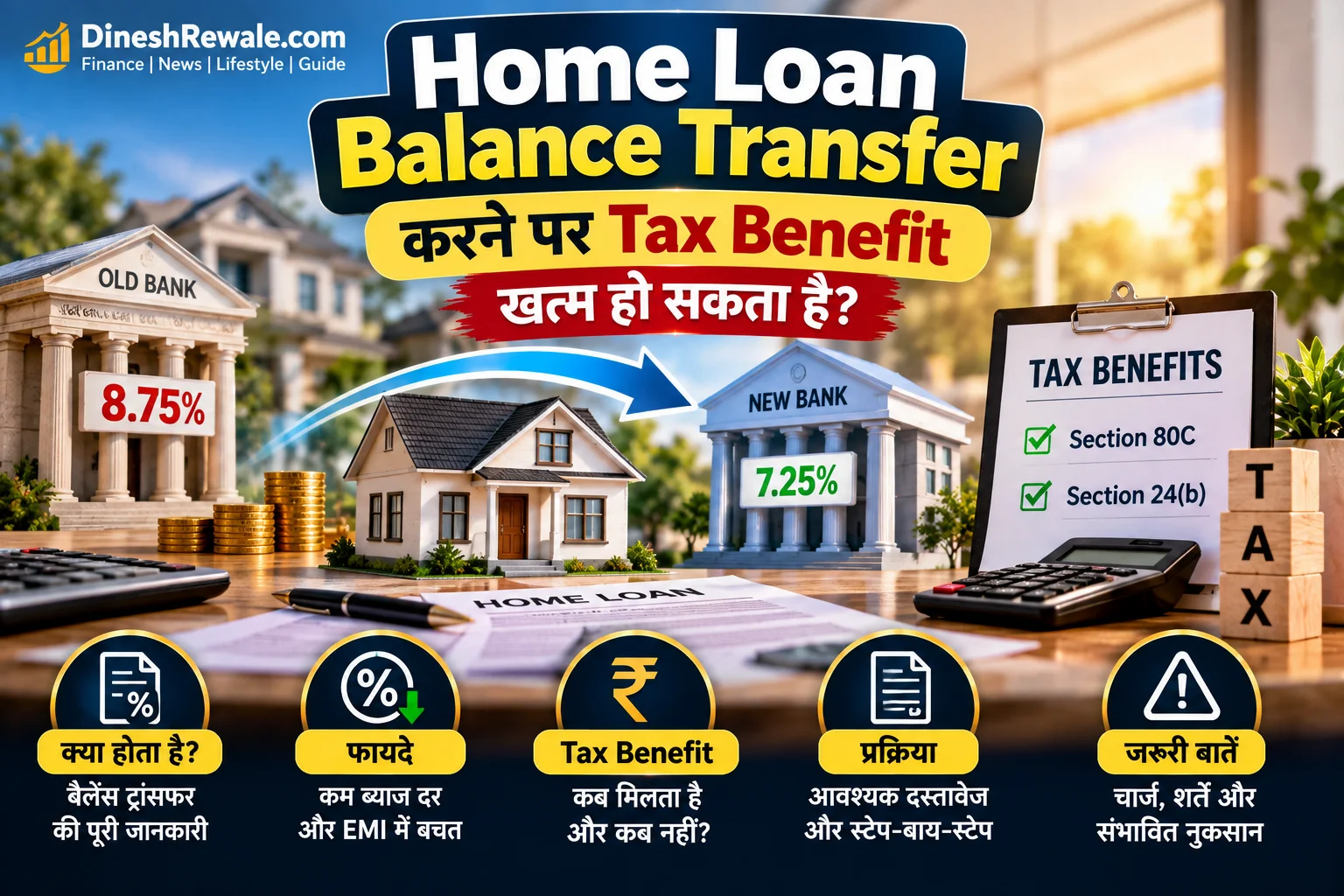
Home Loan Balance Transfer का मतलब है अपने मौजूदा home loan को एक lender से दूसरे lender में shift करना। आम तौर पर borrower यह कदम कम interest rate, बेहतर service या repayment terms के लिए उठाता है। अच्छी बात यह है कि केवल bank बदलने से home-loan tax benefit अपने आप खत्म नहीं होता। लेकिन नए loan की structure, property का use, ownership और आपकी tax regime की eligibility देखना जरूरी है।
In Short
- Balance transfer करने से tax benefit automatic खत्म नहीं होता।
- Section 24(b) के तहत eligible home-loan interest पर deduction मिल सकती है। Income Tax Department के अनुसार, original housing loan को repay करने के लिए लिया गया refinancing loan भी prescribed conditions के तहत interest deduction के लिए relevant हो सकता है।
- Self-occupied property पर old tax regime में Section 24(b) के तहत eligible interest deduction की सामान्य upper limit ₹2 लाख है, subject to conditions.
- 80C का principal repayment benefit old tax regime में available है और इसका combined limit ₹1.50 लाख है।
- New tax regime में self-occupied house के home-loan interest के लिए सामान्य ₹2 लाख वाला deduction उपलब्ध नहीं है। Let-out property के लिए Section 24(b) का treatment अलग है।
- Balance transfer का फैसला सिर्फ tax saving देखकर नहीं, बल्कि rate reduction, transfer cost और remaining tenure देखकर करें।
Home Loan Balance Transfer क्या है?
मान लीजिए आपका home loan Bank A से चल रहा है और दूसरे lender की interest rate कम है। आप outstanding loan को नए lender के पास transfer कराते हैं। नया lender पुराने lender की eligible outstanding liability को settle करता है और आगे EMI नए loan agreement के अनुसार चलती है।
इसे Home Loan Balance Transfer, home loan takeover या refinance भी कहा जाता है। Practical तौर पर इसका उद्देश्य borrowing cost कम करना होता है।
क्या Balance Transfer के बाद Tax Benefit खत्म हो जाता है?
नहीं, सिर्फ lender बदलने से tax benefit खत्म नहीं होता। Income Tax Department की guidance में यह स्पष्ट है कि original housing loan को repay करने के लिए लिए गए fresh loan/refinance के interest को prescribed conditions के तहत Section 24(b) के लिए consider किया जा सकता है। इसलिए balance transfer को केवल “पुराना loan बंद और नया loan शुरू” मानकर tax continuity को ignore करना सही नहीं है।
हालांकि इसका मतलब यह भी नहीं है कि हर borrower को हर deduction automatically मिल जाएगी। Tax benefit के लिए property का purpose, ownership, loan documents, repayment और चुनी गई tax regime की applicable conditions देखनी होती हैं।
Section 24(b): Balance Transfer पर Interest का Tax Benefit
Home-loan tax planning में Section 24(b) सबसे important provisions में से एक है। इसके तहत house property से जुड़े eligible borrowed capital पर interest deduction का provision है। Balance transfer की स्थिति में नया loan अगर पुराने housing loan को refinance या repay करने के लिए है, तो documentation और statutory conditions को properly maintain करना जरूरी है।
| Property / Situation | Tax Treatment का मुख्य point | क्या ध्यान रखें |
|---|---|---|
| Self-occupied + Old Regime | Eligible interest पर सामान्य upper limit ₹2 लाख | Loan purpose और statutory conditions check करें |
| Let-out + Old Regime | Eligible interest actual amount के आधार पर claim हो सकता है, subject to house-property loss rules | Set-off rules अलग से लागू होते हैं |
| Self-occupied + New Regime | सामान्य home-loan interest deduction उपलब्ध नहीं | ₹2 लाख old-regime limit को new regime पर apply न करें |
| Let-out + New Regime | Eligible interest deduction available हो सकती है | House-property loss set-off restrictions लागू हो सकती हैं |
Income Tax Department की AY 2026-27 guidance के अनुसार, old regime में self-occupied property के लिए eligible home-loan interest पर ₹2 लाख तक deduction का provision है। Let-out property के लिए actual eligible interest का अलग treatment है। New regime में let-out property के लिए Section 24(b) के तहत actual interest deduction का provision है, लेकिन house-property loss को अन्य heads से set off या future years में carry forward करने पर restrictions लागू हैं।
Section 80C: Principal Repayment का क्या होगा?
Home loan की EMI में principal और interest दो हिस्से होते हैं। इन दोनों को एक ही tax benefit समझना गलती हो सकती है। Section 80C में eligible housing-loan principal repayment शामिल है, लेकिन यह deduction old tax regime के Chapter VI-A benefits के तहत मिलता है।
Section 80C के तहत सभी eligible investments और payments का combined limit ₹1.50 लाख है। इसलिए अगर आपने PF, life insurance, ELSS या अन्य eligible 80C payments किए हैं, तो home-loan principal repayment के लिए पूरी ₹1.50 लाख limit अलग से नहीं मिलती।
Balance transfer के बाद principal repayment को claim करने से पहले नए lender के loan documents और repayment certificate संभालकर रखें। पुराने और नए lender के statements को मिलाकर eligible amount की working करना बेहतर है।
Old Tax Regime vs New Tax Regime
| Benefit | Old Tax Regime | New Tax Regime |
|---|---|---|
| Self-occupied home-loan interest | Section 24(b) के तहत eligible amount पर सामान्यतः ₹2 लाख तक | सामान्य ₹2 लाख self-occupied deduction उपलब्ध नहीं |
| Let-out property interest | Eligible actual interest, house-property loss rules के अधीन | Eligible actual interest; loss set-off/carry-forward restrictions लागू |
| Home-loan principal under 80C | Available subject to eligibility and combined ₹1.50 लाख limit | 80C deduction available नहीं |
| Balance transfer | Eligibility पुराने और नए loan की conditions/documentation पर depend करती है | Transfer itself tax benefit create नहीं करता; applicable new-regime rules देखें |
Balance Transfer में Tax Benefit कब प्रभावित हो सकता है?
असल risk bank बदलने में नहीं, बल्कि loan structure या property situation बदलने में होता है। उदाहरण के लिए, अगर balance transfer के साथ आपने बड़ा top-up loan भी लिया है, तो उस अतिरिक्त borrowing का tax treatment original home-loan balance transfer जैसा मान लेना सही नहीं होगा।
इसी तरह self-occupied और let-out property के rules अलग हैं। Tax regime बदलने पर भी available deductions बदल सकती हैं। इसलिए transfer के बाद पुराने tax benefit की working को नए loan statement के साथ update करना चाहिए।
Top-Up Loan पर Tax Benefit का Rule
Balance transfer के साथ कई lenders top-up facility भी offer करते हैं। Top-up loan का उपयोग personal expenses, renovation, education, business या किसी दूसरी जरूरत के लिए हो सकता है। इसका tax treatment funds के actual purpose और applicable tax provision पर depend करता है।
इसलिए home loan balance transfer और top-up amount को अलग-अलग track करें। Loan sanction letter और end-use related records संभालकर रखना future tax documentation के लिए useful रहेगा।
एक आसान Example से समझें
मान लीजिए आपके existing home loan पर अभी ₹30 लाख outstanding है और remaining tenure 12 साल है। नया lender interest rate कम offer करता है। Transfer के बाद EMI या total interest कम हो सकता है, लेकिन calculation में सिर्फ rate difference देखना काफी नहीं है।
आपको processing fee, valuation/legal charges, documentation cost, insurance-related cost और अन्य applicable charges को भी जोड़ना चाहिए। इसके बाद estimated interest saving निकालें। अगर total saving transfer cost से पर्याप्त अधिक है, तो balance transfer practical हो सकता है।
Tax benefit को इस calculation में bonus की तरह देखें, decision का अकेला आधार नहीं। आपकी actual tax saving tax regime और eligibility पर depend करेगी।
Home Loan Balance Transfer से पहले 7 Checks
- Interest rate: नई rate कितनी कम है और वह fixed है या floating, यह समझें।
- Remaining tenure: अगर loan लगभग खत्म होने वाला है, तो transfer की benefit कम हो सकती है।
- Total transfer cost: Processing, legal, valuation और documentation charges जोड़ें।
- Outstanding principal: केवल EMI नहीं, कुल outstanding और future interest दोनों compare करें।
- Tax regime: Old या New regime में आपके लिए कौन-से home-loan deductions relevant हैं, यह पहले देखें।
- Documents: पुराने lender से interest certificate, principal statement और closure/transfer documents लें।
- Top-up terms: Top-up को main balance transfer के साथ automatically combine न मानें। उसकी rate, tenure और end-use conditions अलग check करें।
Balance Transfer के लिए कौन-कौन से Documents रखें?
- Existing home-loan sanction letter और loan account statement
- Current year का interest certificate
- Principal repayment statement
- New lender का sanction letter
- New loan agreement और repayment schedule
- Property ownership और registration documents, जहां applicable हों
- Balance transfer/closure confirmation from the old lender
- Top-up लिया है तो उसका separate statement और relevant end-use records
क्या Balance Transfer से पहले Old Lender से Loan बंद करना जरूरी है?
Balance transfer process में नया lender सामान्यतः पुराने loan की outstanding liability को settle करने की प्रक्रिया संभालता है। Borrower को पुराने lender के closure statement, outstanding figure और required documents की पुष्टि करनी चाहिए।
Floating-rate individual loans में prepayment/foreclosure charges के बारे में RBI की applicable instructions भी देखनी चाहिए। कुछ loan categories पर charges को लेकर specific regulatory rules हैं, जबकि fixed-rate या अलग product structures में terms अलग हो सकते हैं। इसलिए अपने sanction letter और lender schedule of charges को भी पढ़ें।
Balance Transfer कब फायदे का सौदा हो सकता है?
आम तौर पर transfer तब ज्यादा meaningful होता है जब outstanding principal बड़ा हो, remaining tenure पर्याप्त लंबी हो और interest-rate difference meaningful हो। दूसरी तरफ केवल थोड़ी rate difference के लिए transfer करना, जबकि processing और अन्य charges ज्यादा हों, जरूरी नहीं कि profitable हो।
आप Home Loan लेने से पहले 15 जरूरी बातें पढ़कर loan लेने से पहले के important checks समझ सकते हैं। Loan जल्दी बंद करने की strategy के लिए Home Loan जल्दी खत्म करने के 7 Smart तरीके भी उपयोगी है।
Home Loan और Tax Planning से जुड़े Useful Articles
Home loan के साथ tax planning समझने के लिए Second Home Loan Tax Benefits देखें। Property खरीदते समय price evaluation समझने के लिए Flat की सही Price कैसे Calculate करें? पढ़ें।
Long-term money planning के लिए Asset Allocation by Age & Salary और investment planning के लिए ₹25 लाख Investment Options भी देख सकते हैं।
FAQs
1. क्या Home Loan Balance Transfer करने से Section 24(b) का benefit खत्म हो जाता है?
नहीं। सिर्फ lender बदलने से benefit automatic खत्म नहीं होता। Original housing loan को repay करने के लिए लिया गया refinance/new loan prescribed conditions के तहत relevant हो सकता है।
2. क्या Balance Transfer के बाद interest certificate फिर से लेना चाहिए?
हाँ। पुराने lender से transfer date तक का relevant interest statement/certificate और नए lender से balance period का interest certificate रखना बेहतर है। ITR filing के समय ये records useful हो सकते हैं।
3. क्या Section 80C का home-loan principal benefit new tax regime में मिलता है?
नहीं। Section 80C का deduction old tax regime के Chapter VI-A benefits का हिस्सा है। New tax regime चुनने वाले सामान्य individual taxpayer को 80C deduction उपलब्ध नहीं होता।
4. क्या self-occupied house पर new tax regime में ₹2 लाख interest deduction मिलती है?
सामान्यतः नहीं। ₹2 लाख वाली Section 24(b) self-occupied deduction old tax regime की व्यवस्था से जुड़ी है। New regime में self-occupied property के लिए इसे claim नहीं किया जा सकता।
5. क्या Balance Transfer के साथ Top-Up loan का पूरा interest भी home-loan interest माना जाएगा?
ऐसा automatically नहीं मानना चाहिए। Top-up amount के end-use और applicable tax provisions के आधार पर treatment अलग हो सकता है। Original balance और top-up को separate records में रखें।
6. क्या Balance Transfer का फैसला केवल tax saving देखकर करना चाहिए?
नहीं। पहले total interest saving, remaining tenure और transfer cost compare करें। इसके बाद अपनी actual tax eligibility को calculation में शामिल करें।
निष्कर्ष
Home Loan Balance Transfer tax benefit खत्म करने वाला कदम नहीं है। सही तरह से structured refinance में eligible interest benefit continue हो सकता है, लेकिन principal repayment, property type और tax regime के rules अलग-अलग हैं। Old regime में Section 24(b) और Section 80C का role महत्वपूर्ण है, जबकि new regime में self-occupied home-loan interest और 80C deductions की availability अलग है।
इसलिए transfer से पहले सिर्फ नई interest rate न देखें। Total transfer cost + remaining interest + tax regime + documentation + top-up terms को एक साथ compare करना ही बेहतर approach है।
उपयोगी संदर्भ
Home-property interest deductions और applicable tax rules की जानकारी के लिए Income Tax Department की official guidance देखें। Section 24(b) की statutory wording के लिए Income Tax India – Section 24 देखें। Loan prepayment और lending-related regulatory guidance के लिए Reserve Bank of India (RBI) की latest instructions देखें।
लेखक के बारे में
Dinesh Rewale personal finance, tax और real-estate finance पर practical, reader-focused content लिखते हैं। उनका उद्देश्य complex financial topics को सरल भाषा में समझाना है ताकि readers बेहतर financial decisions ले सकें।
Disclaimer
Home-loan tax deductions आपकी property, loan purpose, ownership, repayment और चुनी गई tax regime सहित कई conditions पर depend करती हैं। यह article सामान्य educational information है, personalised tax या financial advice नहीं। ITR filing या loan transfer से पहले अपने current loan documents और applicable Income Tax rules verify करें।