
30 साल की उम्र में Financial Planning: 7 जरूरी Steps
30 साल की उम्र में financial planning का मतलब सिर्फ SIP शुरू करना नहीं है। इस stage पर आपको income, खर्च, emergency fund, insurance, debt, investing, tax planning और retirement को एक ही plan में जोड़ना चाहिए। अच्छी planning का लक्ष्य यह नहीं कि आप हर महीने जितना हो सके उतना invest करें, बल्कि यह है कि आज की financial stability और कल के बड़े goals दोनों साथ चलें।
In Short: 30s में सबसे पहले अपना cash flow समझें, high-cost debt को control करें, 3–6 महीने का emergency fund बनाएं, जरूरी insurance लें, goals को अलग-अलग buckets में रखें और long-term goals के लिए disciplined investing शुरू करें। 30 की उम्र में बचत देर से शुरू होने का डर रखने से ज्यादा जरूरी है कि आप सही system आज से शुरू करें।
30 साल की उम्र में Financial Planning क्यों जरूरी है?
30s अक्सर career growth, शादी, घर खरीदने, family responsibilities और lifestyle upgrades का phase होता है। Income बढ़ सकती है, लेकिन उसी के साथ rent, EMI, travel, family expenses और future goals भी बढ़ते हैं। इसलिए सिर्फ salary बढ़ना financial progress नहीं है। Net worth, protection और goal-based savings भी बढ़नी चाहिए।
SEBI की investor education guidance भी investment decision लेते समय time horizon, risk appetite, liquidity, diversification और asset allocation जैसे factors पर ध्यान देने को कहती है। इसका practical मतलब है कि आपका पैसा एक ही जगह रखने के बजाय goal और risk के हिसाब से अलग किया जाए।
30 की उम्र में Financial Planning के 7 जरूरी Steps
1. सबसे पहले अपनी Financial Position लिखकर निकालें
Planning अनुमान से नहीं, numbers से शुरू होती है। एक simple sheet बनाइए और चार चीजें लिखिए: monthly take-home income, monthly expenses, total debt और current investments/savings। इसके बाद आपका net worth निकालें।
| चीज | क्या लिखें? | क्यों? |
|---|---|---|
| Income | Salary, business income, side income | कितना cash flow उपलब्ध है |
| Expenses | Rent, EMI, bills, food, lifestyle | कहां पैसा जा रहा है |
| Debt | Credit card, personal, car, home loan | Interest burden पता चले |
| Assets | Cash, FD, MF, stocks, EPF, property | कितनी wealth बन चुकी है |
Net worth formula: Total Assets − Total Liabilities.
आपका net worth कम है तो घबराने की जरूरत नहीं। 30 की उम्र financial race का final checkpoint नहीं है। यह वह point है जहां आपको अपनी direction साफ करनी है।
2. Emergency Fund को Investing से पहले Priority दें
Emergency fund का काम return कमाना नहीं, बल्कि financial shock के समय आपको expensive debt लेने से बचाना है। नौकरी जाने, medical expense, family emergency या अचानक बड़े खर्च के दौरान यही cash buffer काम आता है।
एक practical starting range 3–6 महीने के essential expenses की हो सकती है। अगर income unstable है, family responsibilities ज्यादा हैं या job security कम है, तो ज्यादा buffer useful हो सकता है। Emergency fund के लिए liquidity को return से ऊपर रखें।
इस topic पर detailed guide के लिए पढ़ें: Emergency Fund: 3, 6 या 9 महीने का कितना रखें? और Emergency Fund कहाँ रखें? Savings, FD या Liquid विकल्प.
3. High-Interest Debt को पहले Control करें
अगर आपके पास credit card outstanding या high-interest personal loan है, तो केवल investment return के पीछे भागना सही strategy नहीं हो सकती। पहले debt interest rate, outstanding balance और repayment timeline को समझें।
- Credit card bill को revolving balance बनाने से बचें।
- High-interest debt के लिए aggressive repayment plan बनाएं।
- Low-cost debt और asset-backed loan को high-cost unsecured debt से अलग देखें।
- Loan prepayment करते समय emergency fund और goal savings पूरी तरह खत्म न करें।
Credit card usage और credit score को समझने के लिए Credit Utilization Ratio क्या है? भी पढ़ सकते हैं।
4. Health Insurance और Life Insurance को अलग समझें
Insurance investment नहीं, financial protection है। 30s में यह बात खास तौर पर जरूरी है क्योंकि आपकी earning capacity कई future goals की backbone होती है।
Health insurance: Employer cover पर पूरी तरह निर्भर रहने से पहले देखें कि coverage, room-rent limits, waiting periods, exclusions, co-pay और family needs क्या हैं। नौकरी बदलने पर employer cover बदल सकता है, इसलिए personal policy की जरूरत आपके circumstances पर निर्भर कर सकती है। IRDAI के अनुसार health insurance policies में renewal और policy terms से जुड़े consumer protections लागू होते हैं, लेकिन actual coverage हमेशा policy wording पर depend करता है।
Term insurance: इसकी जरूरत खास तौर पर तब सामने आती है जब आपके ऊपर spouse, children, parents या किसी और dependent की financial responsibility हो, या आपके नाम पर बड़ा loan हो। Cover तय करने के लिए income replacement, outstanding liabilities और future goals को साथ देखें। सिर्फ “income का X गुना” देखकर amount तय करना हर व्यक्ति के लिए सही नहीं है।
5. अपने Goals को Short, Medium और Long Term में बांटें
एक ही investment से हर goal पूरा करने की कोशिश मत कीजिए। पहले goal की date और required amount तय करें। फिर उसी के हिसाब से product और risk level चुनें।
| Goal | Time Horizon | Focus |
|---|---|---|
| Emergency fund | तुरंत | Liquidity और safety |
| Car / travel / near-term purchase | 1–3 साल | Capital stability |
| Home down payment | 3–7 साल | Goal-based balance |
| Child education | 10+ साल | Long-term growth + review |
| Retirement | 20–30+ साल | Long-term diversification |
SEBI के अनुसार asset allocation तय करते समय financial goals, risk tolerance और investment horizon को साथ देखना चाहिए। लंबी अवधि होने का मतलब यह नहीं कि हर investor के लिए equity allocation एक जैसा होना चाहिए।
6. Retirement Planning 30 की उम्र से ही शुरू करें
Retirement दूर लगता है, लेकिन यही distance आपका सबसे बड़ा advantage है। ज्यादा time का मतलब compounding के लिए ज्यादा समय। इसलिए retirement planning को “बाद में करेंगे” वाली category में मत डालिए।
Retirement corpus calculate करते समय आज के monthly expenses को base बनाइए और inflation को ध्यान में रखिए। उदाहरण के लिए, ₹50,000 का current monthly expense अगर अगले 30 साल तक 6% average inflation से बढ़ता है, तो illustrative calculation में वह लगभग ₹2.87 लाख प्रति माह हो सकता है। यह केवल mathematical illustration है, actual inflation अलग हो सकती है।
Retirement के लिए EPF, NPS, PPF और long-term diversified investments जैसे अलग-अलग retirement buckets को अपनी eligibility, tax treatment, liquidity और risk के अनुसार evaluate किया जा सकता है। NPS को PFRDA regulate करता है और यह long-term retirement savings के लिए designed defined-contribution system है।
Detailed guides: Retirement Planning कितनी उम्र में शुरू करनी चाहिए? और NPS क्या है? Retirement के लिए कितना निवेश करें?.
7. SIP करें, लेकिन Goal और Risk के हिसाब से
30 की उम्र में SIP useful हो सकती है, क्योंकि regular investing आपको market timing पर कम निर्भर बनाती है। लेकिन SIP अपने आप में कोई investment category नहीं है; यह निवेश करने का तरीका है। जिस mutual fund में SIP होती है, उसका risk और asset allocation अलग से समझना जरूरी है।
एक illustrative example देखें: अगर आप 30 की उम्र से 30 साल तक हर महीने ₹15,000 invest करते हैं और केवल calculation के लिए 10% annual return assume करते हैं, तो future value लगभग ₹3.42 करोड़ हो सकती है। लेकिन 10% कोई guaranteed return नहीं है और actual market returns year-to-year काफी बदल सकते हैं। Taxes, costs और actual fund performance भी outcome बदलेंगे।
SEBI investor education के मुताबिक investment decision में risk appetite, time horizon, diversification, liquidity और tax implications को देखना चाहिए। इसलिए केवल “कौन सा fund सबसे ज्यादा return देगा?” की जगह “यह fund मेरे goal और risk के लिए suitable है?” पूछना ज्यादा useful है।
30 साल की उम्र में कितना Invest करना चाहिए?
इसका कोई universal percentage नहीं है। आपकी salary, rent, EMI, family responsibilities, existing assets और goals अलग हैं। फिर भी planning शुरू करने के लिए एक illustrative budget बनाया जा सकता है। इसे fixed rule न समझें।
| ₹1 लाख Take-Home का उदाहरण | Illustrative Amount | Purpose |
|---|---|---|
| Essential expenses | ₹50,000 | Rent, food, bills, routine needs |
| Long-term investing | ₹20,000 | Retirement और wealth creation |
| Short/medium-term goals | ₹10,000 | Home, travel, education आदि |
| Debt repayment / extra buffer | ₹10,000 | High-cost debt या future needs |
| Flexible spending | ₹10,000 | Lifestyle और discretionary खर्च |
इस example में percentages से ज्यादा important है कि हर rupee को कोई purpose मिले। Salary बढ़ने पर lifestyle inflation को पूरी तरह income के साथ बढ़ने देने के बजाय बढ़ी हुई income का एक हिस्सा investments और goals में direct किया जा सकता है।
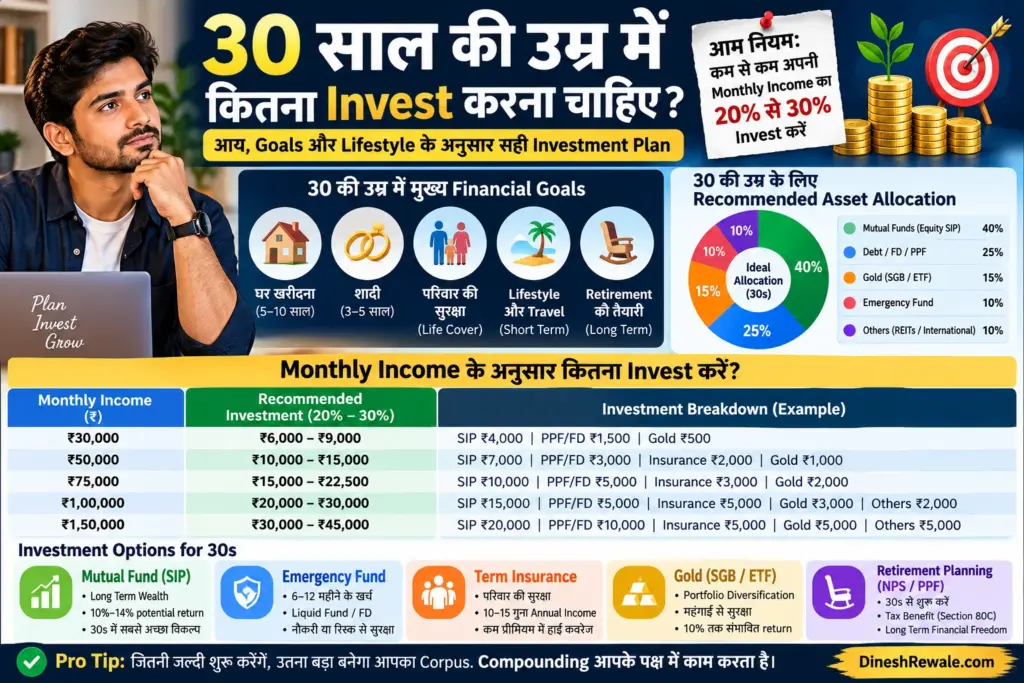
30s में Asset Allocation कैसे सोचें?
Asset allocation का मतलब equity, debt, cash, gold और अन्य assets को एक तय mix में रखना है। सही allocation आपकी age से सिर्फ एक number देखकर तय नहीं होता। Goal कब पूरा करना है, market गिरने पर आप कितना loss सह सकते हैं और कब पैसे की जरूरत होगी, ये सब factors important हैं।
- Near-term goals: capital stability और liquidity पर जोर दें।
- Long-term goals: growth assets का allocation आपकी risk capacity और goal horizon के अनुसार बढ़ाया जा सकता है।
- Gold: diversification के लिए उपयोग किया जा सकता है, लेकिन इसे पूरे portfolio का substitute न मानें।
- Debt: portfolio को stability और goal matching देने में मदद कर सकता है।
- Cash: emergency और very short-term needs के लिए रखें, long-term wealth creation के लिए नहीं।
Gold options की तुलना के लिए Gold Investment: Gold ETF vs SGB vs Physical Gold पढ़ें।
30 साल की उम्र में Tax Planning को कैसे शामिल करें?
Tax planning का मतलब केवल tax-saving investment खरीदना नहीं है। पहले यह देखें कि आपकी income structure, deductions, investment horizon और chosen tax regime क्या है। एक investment तभी useful है जब वह आपके goal के लिए भी suitable हो।
Assessment Year 2026-27 के लिए Income Tax Department की published information के अनुसार new tax regime में ₹4 लाख तक income पर nil slab, फिर ₹4–8 लाख पर 5%, ₹8–12 लाख पर 10%, ₹12–16 लाख पर 15%, ₹16–20 लाख पर 20%, ₹20–24 लाख पर 25% और ₹24 लाख से ऊपर 30% slab rates हैं। Section 87A के तहत eligible taxpayers के लिए rebate भी updated है। Tax rules बदल सकते हैं और सभी income types पर एक जैसा treatment नहीं होता, इसलिए filing या investment decision के समय current official rules verify करें।
30s में Home Loan लेना हो तो क्या करें?
घर खरीदना financial plan का बड़ा हिस्सा हो सकता है, लेकिन home loan को retirement और emergency fund के ऊपर नहीं रखना चाहिए। Down payment, EMI, maintenance, insurance, registration और future cash-flow को total ownership cost के रूप में देखें।
Home loan EMI आपकी monthly budget को बहुत ज्यादा tight कर दे तो future investments और emergency savings दब सकती हैं। EMI affordability समझने के लिए Home Loan EMI Salary का कितना % होना चाहिए? पढ़ें।
30 की उम्र में किन Financial Mistakes से बचना चाहिए?
- Emergency fund बनाए बिना aggressive investing शुरू करना।
- Credit card debt को minimum due देकर लगातार carry करना।
- Insurance को investment समझना और protection gap छोड़ देना।
- हर goal के लिए एक ही investment product पर निर्भर रहना।
- Salary बढ़ते ही lifestyle expenses को उसी speed से बढ़ाना।
- Past returns देखकर बिना risk और goal समझे fund चुनना।
- Retirement को 40 या 50 के बाद शुरू करने की सोच रखना।
- Nomination, account details और important financial documents को update न रखना।
30 साल की उम्र के लिए एक Simple Financial Checklist
- मेरी monthly income और essential expenses clear हैं।
- मेरे पास emergency fund बनाने की timeline है।
- मेरे high-interest debts की repayment strategy है।
- मेरे और dependents के लिए जरूरी insurance cover review किया गया है।
- मेरे short, medium और long-term goals लिखे हुए हैं।
- Retirement के लिए dedicated investment चल रही है।
- मेरी asset allocation risk और goal के हिसाब से है।
- हर साल income, expenses, insurance, investments और goals का review करता हूं।
हर साल Financial Plan का Review कैसे करें?
30 की उम्र में बनाया गया plan 35 की उम्र में exactly same रहने की जरूरत नहीं। शादी, बच्चा, salary jump, job change, business start, home loan या parents की responsibilities आने पर goals और cash-flow बदल सकते हैं। इसलिए कम से कम साल में एक बार review करें और बड़े life events पर तुरंत update करें।
Review के दौरान चार सवाल पूछें: क्या मेरी savings बढ़ी? क्या debt घटा? क्या protection पर्याप्त है? क्या मेरे goals के लिए निवेश सही दिशा में है? यही process financial planning को एक one-time activity की जगह ongoing system बनाता है।
30 साल की उम्र में Financial Planning का सबसे Practical Formula
Income बढ़ाओ → Expenses control करो → Emergency Fund बनाओ → High-cost Debt घटाओ → Insurance से protect करो → Goals तय करो → Long-term invest करो → हर साल review करो.
आपको 30 की उम्र में perfect financial plan की जरूरत नहीं है। आपको ऐसा system चाहिए जो आपकी income बढ़ने के साथ scale हो और responsibilities बढ़ने पर adjust हो सके। शुरुआत छोटी हो सकती है, लेकिन consistency और सही priorities लंबे समय में ज्यादा महत्वपूर्ण हैं।
30 साल की उम्र में 90-Day Financial Planning Action Plan
अगर पूरी planning एक साथ भारी लगती है, तो इसे 90 दिनों में लागू करें। पहले महीने का लक्ष्य clarity, दूसरे महीने का लक्ष्य protection और तीसरे महीने का लक्ष्य investing system बनाना रखें।
पहले 30 दिन: Numbers साफ करें
- पिछले 3 महीनों के expenses निकालकर essential और discretionary खर्च अलग करें।
- सभी loans, credit cards और outstanding balances एक जगह लिखें।
- Current savings, investments, EPF/NPS और other assets की list बनाएं।
- अपना emergency fund target तय करें।
अगले 30 दिन: Protection मजबूत करें
- Health insurance policy का sum insured, exclusions, waiting period और family coverage review करें।
- Dependents और liabilities के आधार पर term insurance की जरूरत assess करें।
- High-interest debt के लिए repayment priority तय करें।
- Nominee और important financial documents update करें।
अंतिम 30 दिन: Investing System बनाएं
- Short, medium और long-term goals के लिए target amount और deadline लिखें।
- Long-term goals के लिए suitable diversified investment plan शुरू करें।
- Income बढ़ने पर SIP या goal contribution को धीरे-धीरे step-up करने का नियम बनाएं।
- हर साल एक fixed महीने में financial review की तारीख calendar में रखें।
अगर 30 की उम्र में Income कम है तो क्या करें?
कम income होने पर financial planning का पहला लक्ष्य बड़ी investment amount बनाना नहीं, बल्कि financial leakage रोकना और system बनाना होना चाहिए। पहले essential expenses, high-cost debt और emergency buffer को address करें। उसके बाद छोटा लेकिन sustainable SIP या goal contribution शुरू किया जा सकता है।
Income कम है तो percentage-based planning ज्यादा practical हो सकती है। Salary ₹40,000 हो या ₹80,000, contribution वही रुपये का होना जरूरी नहीं। जैसे-जैसे income बढ़े, पुराने खर्चों को automatically बढ़ाने के बजाय investment और goal contribution को भी बढ़ाएं।
Salary बढ़े तो Financial Plan कैसे Upgrade करें?
30s में salary jump मिलने पर सबसे common mistake lifestyle को तुरंत upgrade करना है। एक बेहतर system यह हो सकता है कि हर increment का कुछ हिस्सा पहले से तय goals को दिया जाए। इससे income growth सीधे wealth creation में बदलती है और lifestyle inflation पर control रहता है।
उदाहरण के लिए, अगर monthly income ₹15,000 बढ़ती है, तो पूरी रकम lifestyle में लगाने के बजाय उसका एक हिस्सा retirement SIP, emergency fund completion या home down payment में divert किया जा सकता है। Exact split आपकी priorities पर depend करेगा।
30 साल की उम्र में Financial Planning: FAQs
क्या 30 की उम्र में Financial Planning शुरू करना late है?
नहीं। 30 की उम्र में भी आपके पास long-term goals के लिए काफी समय हो सकता है। सबसे जरूरी बात यह है कि आज की income को future goals, protection और wealth creation से जोड़कर एक workable system बनाया जाए।
30 की उम्र में Emergency Fund कितना होना चाहिए?
एक practical starting range 3–6 महीने के essential expenses की हो सकती है। आपकी income stability, dependents, नौकरी का nature और existing insurance के आधार पर requirement कम या ज्यादा हो सकती है।
30 साल की उम्र में हर महीने कितना invest करना चाहिए?
कोई एक सही number नहीं है। पहले essentials, emergency fund और high-cost debt को देखें। उसके बाद long-term goals के लिए affordable और sustainable amount तय करें। Salary बढ़ने पर investment amount को step-up करना practical तरीका हो सकता है।
क्या 30 की उम्र में Term Insurance लेना जरूरी है?
यह आपकी family responsibilities और liabilities पर depend करता है। अगर spouse, children, dependent parents या बड़ा loan है, तो income replacement और future obligations को देखते हुए term cover की जरूरत हो सकती है।
30 की उम्र में investment शुरू करने के लिए सबसे पहले क्या करें?
पहले अपना monthly cash flow लिखें, फिर emergency fund और debt position साफ करें। उसके बाद goals की date तय करके suitable investment buckets बनाएं। बिना goal और risk समझे सिर्फ popular investment product चुनना जरूरी नहीं।
अगर 30 तक मेरी savings बहुत कम है तो क्या करें?
Past को लेकर guilt करने के बजाय current numbers से शुरुआत करें। खर्च control करें, high-interest debt घटाएं, emergency fund build करें और छोटी लेकिन regular investment शुरू करें। Income growth के साथ savings rate बढ़ाते रहें।
लेखक
Dinesh Rewale
वित्त, Business और Real Estate जैसे विषयों पर reader-first और practical content लिखते हैं, ताकि complex financial topics को आसान भाषा में समझा जा सके।
Facebook पर Dinesh Rewale से जुड़ें
Disclaimer
यह लेख केवल educational और informational purpose के लिए है। इसमें दिए गए examples, percentages और calculations illustrative हैं, personalized financial advice नहीं। निवेश के returns guaranteed नहीं होते और market-linked products में risk रहता है। Insurance, loans, mutual funds, tax planning या अन्य investments का निर्णय लेने से पहले अपनी income, goals, risk profile, liabilities और applicable rules को ध्यान में रखें। जरूरत होने पर SEBI-registered investment adviser, tax professional या योग्य financial expert से सलाह लें।