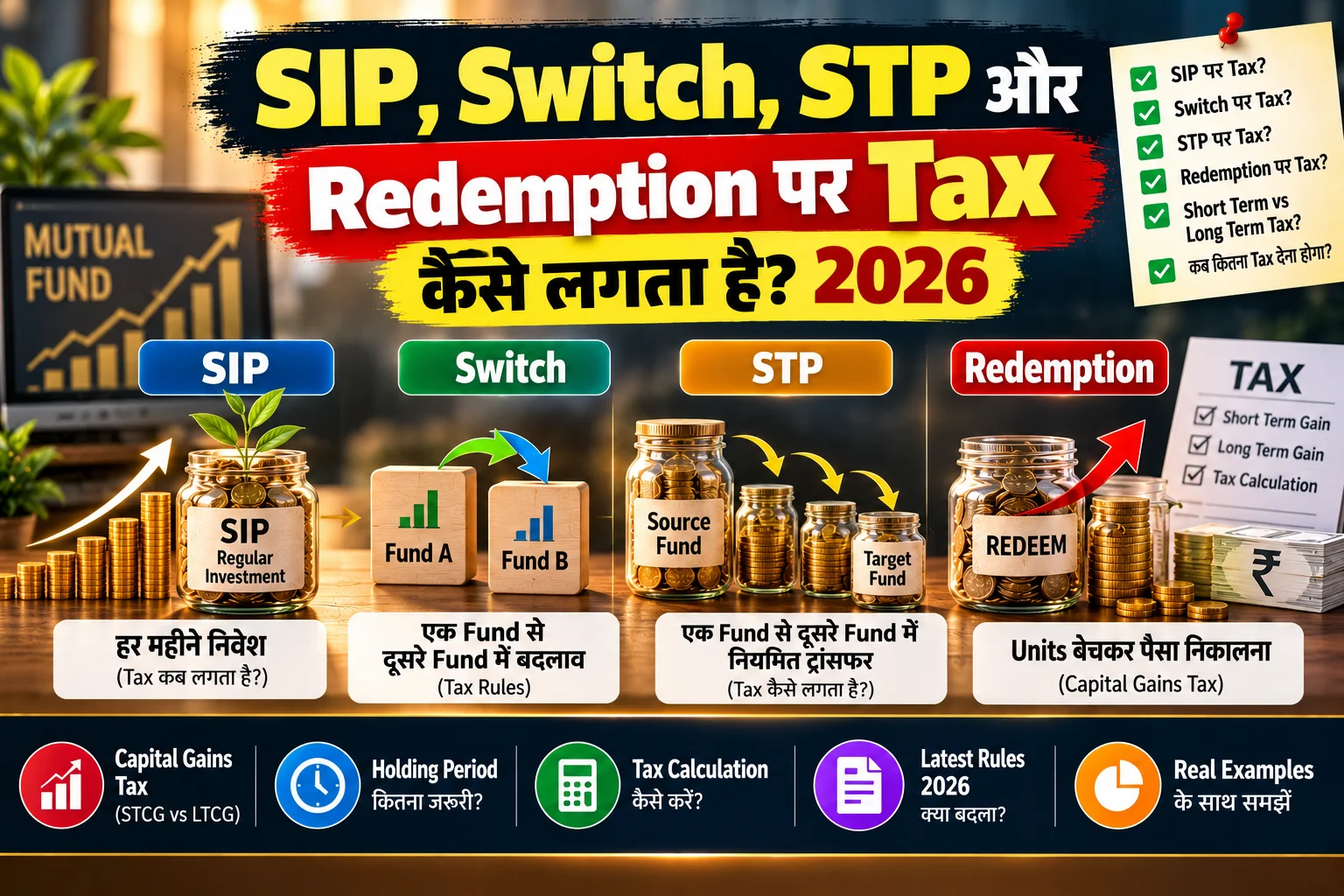
SIP में Switch, STP और Redemption पर Tax कैसे लगता है?
SIP में निवेश करते समय tax सिर्फ profit निकालने के समय नहीं समझना चाहिए. जब आप कई साल तक SIP करते हैं, तो हर instalment की अलग purchase date और cost होती है. बाद में redemption, switch या STP करने पर इन्हीं अलग-अलग units के आधार पर capital gain या loss calculate होता है.
सबसे common confusion यही है कि “मैंने पैसा withdraw नहीं किया, सिर्फ दूसरे mutual fund में switch किया” तो tax क्यों लगेगा? Current rules में सामान्य inter-scheme switch की outgoing side को redemption माना जाता है, इसलिए capital gain बन सकता है. STP में source scheme से होने वाला प्रत्येक transfer अलग redemption transaction की तरह देखा जा सकता है।
Quick Takeaway
SIP की instalment खरीदते समय capital gains tax नहीं लगता. Tax आमतौर पर तब लगता है जब units redeem, switch-out या किसी taxable transfer के जरिए बेची या ट्रांसफर की जाती हैं। हर SIP instalment की holding period अलग हो सकती है, और redemption में FIFO के कारण पुराने units पहले consider हो सकते हैं.
Mutual Fund Tax 2026 को आसान भाषा में समझें
Mutual fund tax को 4 steps में समझना सबसे आसान है:
- Purchase: SIP instalment या lump-sum investment से units खरीदे जाते हैं. सिर्फ खरीदने पर capital gains tax नहीं बनता.
- Holding: हर instalment की अलग acquisition date रहती है.
- Redemption / Switch-out: units बेचने या taxable switch-out पर gain/loss calculate होता है.
- Tax category: scheme का type और holding period तय करते हैं कि gain short-term है या long-term, और कौन-सा tax rate लागू होगा।
यही वजह है कि सिर्फ current NAV देखकर tax calculate करना काफी नहीं है. आपको purchase date, units, cost, redemption value और fund category देखनी पड़ती है.
SIP की हर instalment अलग investment क्यों मानी जाती है?
मान लीजिए आपने एक equity mutual fund में January 2025 से हर महीने ₹10,000 SIP शुरू की. January 2025 की purchase की date January 2025 होगी, February 2025 की purchase की date February 2025 और इसी तरह आगे.
अगर आप September 2026 में कुछ units redeem करते हैं, तो सभी units को September 2026 की purchase मानकर tax नहीं निकलेगा. हर purchase lot की अपनी holding period होगी।
| SIP instalment | Purchase date | September 2026 में redemption | Holding period |
|---|---|---|---|
| ₹10,000 | 10 Jan 2025 | 30 Sep 2026 | 12 महीने से ज्यादा |
| ₹10,000 | 10 Jan 2026 | 30 Sep 2026 | 12 महीने से कम |
अगर ये units equity-oriented fund की हों, तो पहली lot long-term और दूसरी lot short-term हो सकती है। इसलिए SIP investor के लिए “मैं कितने साल से SIP कर रहा हूँ?” से ज्यादा useful सवाल है: “जो units मैं redeem कर रहा हूँ, वे कब खरीदी गई थीं?”
Redemption पर tax कैसे calculate होता है?
Basic formula simple है:
Capital Gain = Redemption Value − Cost of Acquisition − Eligible Transfer Expenses
उदाहरण के लिए, आपने ₹1,00,000 की units खरीदीं और बाद में उनकी redemption value ₹1,30,000 हो गई. Basic capital gain ₹30,000 होगा. लेकिन tax rate इस बात पर depend करेगा कि यह equity-oriented fund है, specified mutual fund है या कोई अन्य category, और units कितने समय तक held थीं.
Equity mutual fund में short-term और long-term tax
Eligible equity-oriented mutual fund units के लिए 23 July 2024 के बाद के transfers पर, 12 महीने तक की holding को short-term और उससे अधिक holding को long-term माना जाता है. Short-term capital gain पर Section 111A के तहत 20% rate लागू है. Long-term capital gain पर Section 112A के तहत साल के कुल eligible LTCG में ₹1.25 लाख से ऊपर की राशि पर 12.5% tax लागू होता है, subject to applicable conditions.
इसमें surcharge और 4% Health & Education Cess जैसे applicable additions अलग हो सकते हैं.
एक आसान equity SIP example
मान लीजिए आपने दो SIP instalments कीं:
- January 2025: ₹10,000 निवेश, September 2026 में value ₹13,000
- January 2026: ₹10,000 निवेश, September 2026 में value ₹13,000
दोनों lots पर gain ₹3,000 है. पहली lot 12 महीने से ज्यादा held है, इसलिए equity fund होने पर यह LTCG हो सकती है. दूसरी lot 12 महीने से कम held है, इसलिए यह STCG हो सकती है.
अगर दूसरी lot का ₹3,000 gain 20% STCG rate पर taxable हो, तो basic tax ₹600 होगा, जबकि eligible LTCG की पहली lot का ₹3,000 gain अकेले ₹1.25 लाख annual LTCG threshold के अंदर होने पर tax नहीं बनाएगा. Final liability आपके पूरे financial year के gains और applicable rules पर depend करेगी.
FIFO क्या है और SIP redemption में क्यों जरूरी है?
FIFO यानी First In, First Out. इसका practical मतलब यह है कि एक ही mutual fund में अलग-अलग समय पर खरीदे गए units में redemption होने पर पुराने units पहले sold माने जा सकते हैं, subject to the applicable unit-accounting rules.
मान लीजिए आपके पास एक scheme में:
| Lot | Units | Cost per unit | Age |
|---|---|---|---|
| 2024 lot | 100 | ₹100 | Older |
| 2025 lot | 100 | ₹110 | Newer |
| 2026 lot | 100 | ₹120 | Newest |
अगर आप 100 units redeem करते हैं, तो tax calculation के लिए सबसे पहले oldest 100 units का cost relevant हो सकता है. इसलिए लंबे समय से SIP करने वाले investor को transaction-level capital gains statement संभालकर रखना चाहिए.
Switch करने पर tax क्यों लगता है?
Switch का सबसे important rule याद रखें: normal inter-scheme switch को “free transfer” समझना गलती है. Outgoing scheme से units का switch-out redemption side है, जबकि नई scheme में switch-in purchase side है. इसलिए source scheme में capital gain या loss हो सकता है.
मान लीजिए Fund A में आपका ₹2 लाख investment बढ़कर ₹2.50 लाख हो गया. आपने पूरा amount Fund B में switch कर दिया. आपके bank account में cash नहीं आया, फिर भी Fund A के ₹50,000 gain को applicable capital-gains rules के तहत consider करना पड़ सकता है.
नई Fund B में जो units मिली हैं, उनकी नई acquisition date और cost होगी. Future redemption पर Fund B की holding period उसी नई purchase से track होगी.
Switch example
| Step | Amount | Tax implication |
|---|---|---|
| Fund A cost | ₹2,00,000 | Original investment |
| Value at switch | ₹2,50,000 | Potential gain ₹50,000 |
| Switch-in Fund B | ₹2,50,000 before applicable loads/taxes | New purchase lot |
यहाँ exact tax इस बात पर निर्भर करेगा कि Fund A किस category का है और उसकी units कितने समय से held थीं।
STP पर tax कैसे लगता है?
STP यानी Systematic Transfer Plan में investor आमतौर पर एक source scheme से fixed amount को periodic basis पर दूसरी scheme में transfer करता है. Operationally इसे एक series of switch-out and switch-in transactions की तरह समझना आसान है.
इसका मतलब STP कोई tax-free shortcut नहीं है. हर STP installment में source scheme से निकला हिस्सा taxable redemption event बना सकता है, अगर उस transaction पर capital gain/loss arise होता है.
STP का example
आपके पास debt-oriented source fund में ₹6 लाख हैं और आप ₹50,000 प्रति महीने equity fund में STP करते हैं. अगर source units की cost ₹5.40 लाख है और value ₹6 लाख है, तो total unrealised gain ₹60,000 है. STP के दौरान source fund से हर transfer के साथ relevant units redeem होती हैं और उन्हीं units का proportionate gain/loss calculate हो सकता है.
यानी यह मानना गलत होगा कि “मैंने source fund sell नहीं किया, सिर्फ STP शुरू की है.” STP की outgoing leg tax calculation को trigger कर सकती है.
STP में exit load भी scheme-specific हो सकता है. Tax और exit load दो अलग चीजें हैं. Tax capital gain पर depend करता है, जबकि exit load scheme के applicable terms पर.
Exit load को अलग से समझने के लिए Mutual Fund में Exit Load क्या है? पढ़ें.
2026 में Debt Mutual Fund का tax rule क्या है?
यहाँ 2026 में एक जरूरी बदलाव समझना important है। Section 50AA के तहत Specified Mutual Fund की definition AY 2026-27 से बदली हुई है। AY 2026-27 से इसमें ऐसे mutual funds शामिल हैं जो अपने total proceeds का 65% से अधिक debt और money market instruments में invest करते हैं, या ऐसे specified mutual funds की units में 65% या अधिक invest करने वाले funds. ऐसे specified mutual fund units, यदि वे 1 April 2023 या उसके बाद acquire की गई हैं, तो transfer/redemption पर gain को short-term capital gain माना जाता है और applicable slab rate के अनुसार tax लगाया जाता है.
इसलिए 2026 में हर “debt fund” के लिए एक ही पुराना tax formula apply करना सही नहीं है. Scheme classification + purchase date + tax law तीनों देखना जरूरी है.
आप low-risk debt funds के अलग-अलग types की practical comparison Low-Risk Debt Funds: Liquid, Ultra-Short और Corporate Bond Funds में देख सकते हैं.
Other mutual funds का tax कैसे समझें?
Specified mutual funds और equity-oriented funds के अलावा कुछ mutual fund units पर holding-period rules अलग हो सकते हैं. Current framework में listed और unlisted units के लिए holding period भी अलग हो सकता है. इसलिए “24 महीने पूरे नहीं हुए तो short-term” जैसी blanket statement हर scheme पर लागू नहीं की जानी चाहिए.
ऐसे मामलों में scheme classification और latest capital-gains statement देखना बेहतर है। Capital-gains statement scheme-wise और transaction-wise calculation समझने में काफी मदद करता है।
क्या SIP बंद करने पर tax लगता है?
SIP बंद करना और SIP investment redeem करना दो अलग बातें हैं. अगर आपने सिर्फ future SIP instalments रोक दीं और existing units को touch नहीं किया, तो केवल SIP mandate stop करने से capital gain tax नहीं बनता.
लेकिन अगर SIP बंद करने के साथ existing units redeem कर दीं, तो उस redemption पर capital gains rules लागू हो सकते हैं.
यही distinction beginners अक्सर miss करते हैं. SIP बंद करना administrative action है; units बेचना taxable transaction हो सकता है.
Beginners के लिए SIP शुरू करने और manage करने की practical guide SIP कैसे शुरू करें? में उपलब्ध है.
Market गिरने पर SIP बेचने से tax कैसे बदल सकता है?
Tax सिर्फ profit पर नहीं, बल्कि gain या loss पर निर्भर करता है। अगर आपकी units cost से नीचे बिकती हैं, तो capital loss हो सकता है. Applicable rules के अनुसार eligible capital losses को कुछ शर्तों के अधीन future capital gains के साथ set-off और आगे carry forward किया जा सकता है।
इसलिए market correction में panic redemption करने से पहले दो चीजें देखें: investment goal और tax impact.
Market गिरने पर SIP रोकनी चाहिए या जारी रखनी चाहिए, इसे समझने के लिए Market गिरने पर SIP रोकें या जारी रखें? पढ़ें.
ELSS SIP का tax अलग कैसे दिखता है?
ELSS equity-oriented mutual fund है, लेकिन इसमें 3 साल का lock-in होता है. SIP करने पर हर instalment की lock-in अलग हो सकती है. इसलिए पहली SIP instalment और आखिरी SIP instalment एक ही तारीख को redeem नहीं की जा सकतीं.
Lock-in पूरा होने के बाद redemption पर equity mutual fund के applicable capital-gains rules लागू हो सकते हैं. ELSS में tax planning करते समय हर instalment की lock-in date को track करना इसलिए जरूरी है.
Redemption, Switch और STP में क्या फर्क है?
| Transaction | क्या होता है? | Tax event? |
|---|---|---|
| Redemption | Units बेचकर पैसा बाहर लेना | हाँ, gain/loss पर applicable rules |
| Switch | एक scheme से दूसरी scheme में move | आमतौर पर switch-out redemption taxable event हो सकता है |
| STP | Periodic switch/transfer | हर outgoing transaction पर gain/loss हो सकता है |
| SIP purchase | नए units खरीदना | सिर्फ purchase पर capital gains tax नहीं |
किन transactions में tax treatment अलग हो सकता है?
हर scheme movement taxable नहीं होता. AMFI guidance के अनुसार कुछ qualifying scheme consolidations और plans की specific reorganisations को Section 47 के तहत transfer न माना जा सकता है. इसलिए “हर fund movement पर tax” कहना भी गलत होगा. Exact exemption transaction की legal structure पर depend करती है.
2026 में Mutual Fund Tax बचाने की practical planning
1. सिर्फ return नहीं, holding period भी देखें
Equity fund में कई बार कुछ महीने का timing difference भी STCG और LTCG classification बदल सकता है. Redemption decision लेने से पहले relevant lots की purchase dates देखें.
2. Switch को tax-neutral न मानें
Fund खराब लगने पर switch करना जरूरी हो सकता है, लेकिन tax impact पहले calculate करें. कभी-कभी existing gain realise होने से immediate liability बनती है.
3. Capital-gains statement download करें
Broker, AMC या registrar का capital-gains report कई SIP lots की calculation को आसान बना देता है. खुद Excel में वर्षों की transactions reconstruct करने की जरूरत हमेशा नहीं पड़ती.
4. AIS से reconciliation करें
ITR filing से पहले अपने investment records और Annual Information Statement को cross-check करें. किसी mismatch को ignore करने के बजाय उसका reason identify करें.
5. Tax और exit load को अलग रखें
कम समय में redemption करने पर exit load हो सकता है, जबकि gain पर capital gains tax अलग calculation है. दोनों को एक ही “charge” समझना सही नहीं है.
एक नजर में: SIP, Switch, STP और Redemption Tax Rules
| Action | मुख्य बात | क्या track करें? |
|---|---|---|
| SIP Investment | खरीद पर capital gains tax नहीं | Purchase date, NAV, units, cost |
| Redemption | Gain/loss realise होता है | FIFO, holding period, scheme type |
| Switch | Switch-out redemption माना जा सकता है | Source scheme gain/loss |
| STP | Repeated switch-out + switch-in | हर outgoing lot का gain/loss |
| ELSS SIP | हर instalment का 3-year lock-in | प्रत्येक instalment की lock-in date |
Frequently Asked Questions
क्या SIP पर हर महीने tax देना पड़ता है?
नहीं. SIP instalment खरीदते समय capital gains tax नहीं लगता. Tax आमतौर पर taxable redemption, switch-out या अन्य transfer से हुए gain या loss के आधार पर निकलता है।
क्या mutual fund switch करने पर tax लगता है?
सामान्य inter-scheme switch में outgoing scheme का switch-out redemption transaction माना जाता है, इसलिए capital gain या loss हो सकता है।
क्या STP tax-free होता है?
नहीं. STP की outgoing leg को redemption transaction की तरह समझना चाहिए; अगर gain या loss होता है, तो applicable capital-gains rules लागू हो सकते हैं। Source units पर gain/loss होने पर applicable tax rules लग सकते हैं.
क्या SIP की सभी units की holding period एक जैसी होती है?
नहीं. हर SIP instalment की purchase date अलग होती है, इसलिए holding period भी अलग हो सकती है.
FIFO का क्या मतलब है?
FIFO यानी First In, First Out. Redemption में पुराने units पहले consider किए जाने के कारण उनका acquisition cost और holding period tax calculation में महत्वपूर्ण हो सकता है.
क्या SIP बंद करने से tax लगता है?
सिर्फ future SIP instalments रोकने से capital gains tax नहीं बनता. Existing units redeem करने पर applicable capital gains rules लागू हो सकते हैं.
Long-term portfolio allocation और goal-based investing को समझने के लिए ₹1 लाख Investment Portfolio: 3 Simple Models भी पढ़ें.
निष्कर्ष
SIP, Switch, STP और Redemption का tax समझने की सबसे जरूरी बात यह है कि transaction की तारीख और हर unit की purchase history matter करती है. SIP का मतलब यह नहीं कि पूरी investment एक ही tax lot बन गई. कई साल की SIP में दर्जनों या सैकड़ों अलग purchase lots हो सकते हैं.
Equity-oriented funds के eligible transfers में 12 महीने तक की holding पर STCG और 12 महीने से अधिक holding पर LTCG के अलग rules लागू होते हैं। 23 July 2024 के बाद के eligible equity STCG पर 20% और ₹1.25 लाख से अधिक eligible LTCG पर 12.5% rate लागू हो सकता है, subject to applicable conditions. वहीं AY 2026-27 से Section 50AA में Specified Mutual Fund की definition debt और money-market exposure के आधार पर लागू होती है।
इसलिए investment decision लेते समय सिर्फ return percentage न देखें. Tax, holding period, exit load, liquidity और goal को साथ रखकर decision लें. सबसे सुरक्षित तरीका है कि redemption या switch से पहले transaction-wise capital-gains statement check करें.
Useful official resources
Income Tax Department: Capital Gains और applicable tax provisions: Official Tax Guidance
Income Tax Department: Section 50AA और Specified Mutual Fund framework: Section 50AA
AMFI: Mutual Fund Tax Regime और investor guidance: AMFI Investor Resources
लेखक: Dinesh Rewale
Dinesh Rewale personal finance, investment, tax और money management जैसे विषयों पर सरल भाषा में practical और reader-focused जानकारी लिखते हैं.
Disclaimer: यह लेख केवल सामान्य educational information के लिए है और इसे व्यक्तिगत financial, investment या tax advice न माना जाए. Tax laws, rates और scheme classifications समय के साथ बदल सकते हैं. Capital gains की exact calculation आपके transactions, fund type, holding period, tax regime और अन्य income या gains पर निर्भर करती है। निवेश या tax filing से पहले latest official rules और अपने capital-gains statement की जाँच करें. जरूरत होने पर SEBI-registered investment adviser या qualified tax professional से सलाह लें.