₹1 लाख Investment Portfolio: 3 Simple Models
₹1 लाख Investment Portfolio बनाने के लिए आपको 5-10 अलग-अलग products खरीदने की जरूरत नहीं है। एक simple portfolio goal, time horizon, emergency fund और risk capacity के हिसाब से बनाया जा सकता है। सबसे पहले यह तय करें कि ₹1 लाख की जरूरत कब पड़ सकती है। 1-2 साल में पैसा चाहिए तो capital stability और liquidity ज्यादा important हैं; 5-10 साल या उससे ज्यादा का horizon हो तो diversified growth assets की भूमिका बढ़ सकती है।
SEBI भी investors को investment से पहले risks समझने और product को अपनी जरूरत के साथ match करने की सलाह देता है। Mutual funds में Riskometer देखकर scheme का risk level समझना useful है, जबकि SIP regular investing की एक methodology है, कोई अलग investment product नहीं।
In Short
- पहले emergency fund check करें: अगर emergency savings नहीं है, तो ₹1 लाख का पूरा amount long-term investment में लगाना सही नहीं हो सकता।
- Goal के हिसाब से portfolio बनाएं: short-term goal और long-term goal के लिए एक जैसा allocation जरूरी नहीं है।
- Beginner के लिए 1-3 अच्छी तरह चुने हुए funds/instruments वाला portfolio कई बार पर्याप्त होता है।
- Equity growth दे सकती है, debt/liquid assets stability दे सकते हैं और gold diversification दे सकता है।
- SIP investing discipline बनाने का तरीका है, लेकिन अगर ₹1 लाख पहले से available है तो lump sum या phased deployment का decision अलग तरह से लिया जाता है।
- Mutual fund returns guaranteed नहीं हैं और past performance future return की guarantee नहीं है।
₹1 लाख Investment करने से पहले सबसे जरूरी सवाल
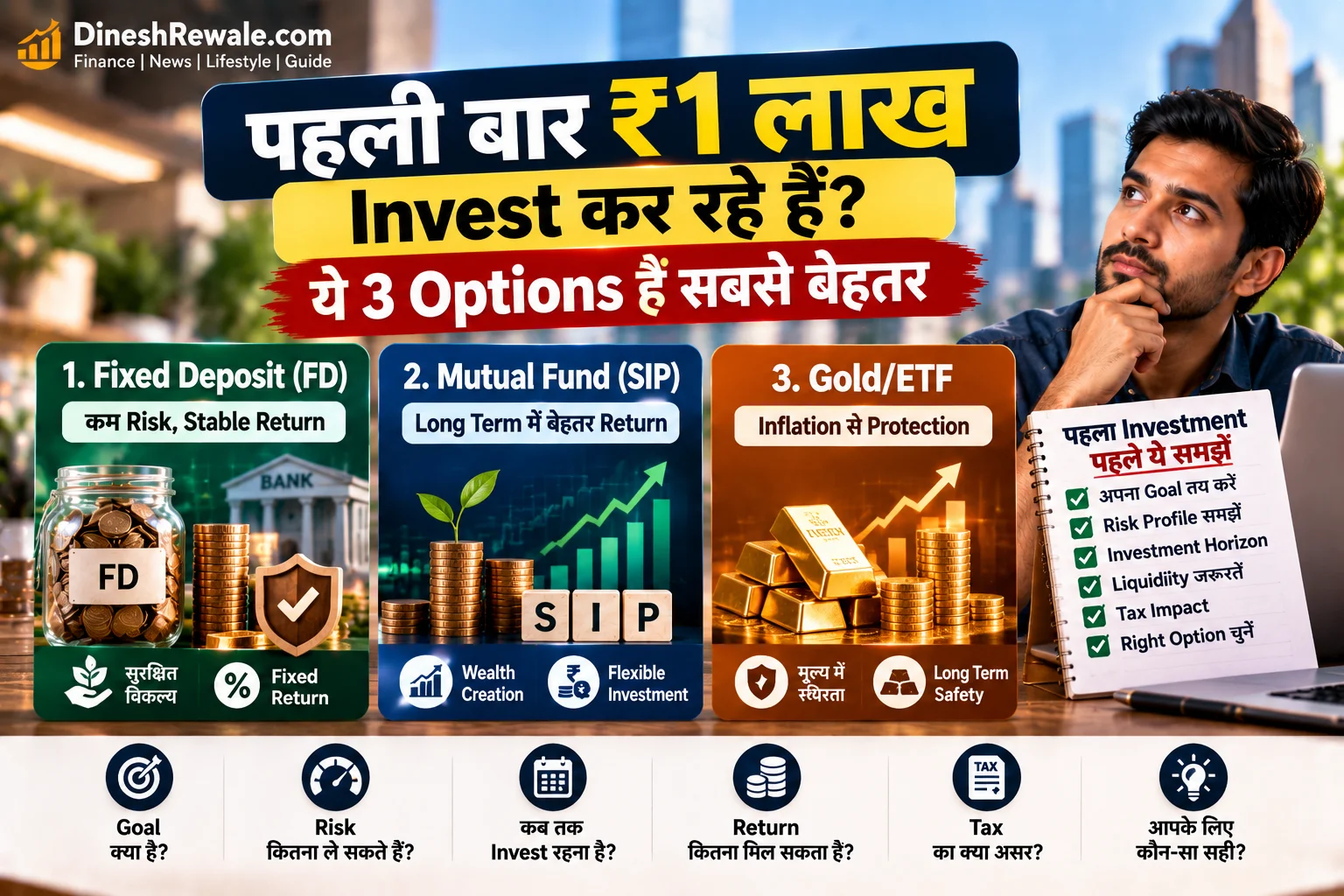
Portfolio बनाने से पहले इन पाँच सवालों का जवाब दें:
- पैसा कब चाहिए? कुछ महीनों में, 3 साल बाद या 10 साल बाद?
- Emergency fund अलग है? अचानक medical, job loss या family expense आने पर क्या दूसरा cash reserve है?
- Loss सहने की क्षमता कितनी है? क्या 15-20% temporary fall देखकर आप investment बेच देंगे?
- Existing investments क्या हैं? अगर पहले से equity ज्यादा है, तो नया ₹1 लाख भी पूरा equity में डालना जरूरी नहीं।
- Debt/loan कितना है? High-cost debt होने पर उसका repayment कई बार investment से पहले ज्यादा useful हो सकता है।
Emergency Fund नहीं है तो क्या करें?
यह सबसे important checkpoint है। मान लीजिए आपके पास कुल ₹1 लाख cash है और अभी कोई emergency fund नहीं है। ऐसी स्थिति में “maximum return” खोजने के बजाय liquidity बनाना ज्यादा practical हो सकता है।
अगर emergency reserve पहले से बना हुआ है, तभी यह ₹1 लाख long-term investable money की तरह consider करें। Emergency fund planning के लिए Emergency Fund: Savings Account, FD या Liquid Fund? और Emergency Fund vs FD guides देखें।
Goal और Time Horizon के हिसाब से ₹1 लाख का Portfolio
| Time Horizon | ₹1 लाख पर focus | पहले क्या देखें | क्या avoid करें |
|---|---|---|---|
| 0-2 years | Liquidity और capital stability | Savings/FD, suitable low-duration options, withdrawal needs | High equity allocation |
| 3-5 years | Balanced risk | Debt + limited growth exposure, goal date | Very aggressive portfolio |
| 5+ years | Long-term growth | Diversified equity, asset allocation, costs | Frequent switching |
| 10+ years | Compounding | Equity allocation, diversification, annual review | Short-term performance chasing |
₹1 लाख के 3 Simple Portfolio Models
नीचे दिए models educational examples हैं। इन्हें fixed recommendation नहीं, बल्कि educational examples मानना चाहिए। Actual allocation आपकी existing portfolio और financial goals के अनुसार बदल सकती है।
Model 1: Conservative Portfolio
उन investors के लिए जिनके लिए capital stability अधिक important है और horizon relatively short है:
| Asset | Allocation | ₹ Amount | Role |
|---|---|---|---|
| FD / suitable debt option | 60% | ₹60,000 | Stability and income visibility |
| Broad-market index fund | 25% | ₹25,000 | Limited long-term growth exposure |
| Gold exposure | 15% | ₹15,000 | Diversification |
इस model में equity हिस्सा सीमित है, इसलिए high-growth potential कम होगा। लेकिन short-term goal वाले investor को volatility कम रखने में मदद मिल सकती है। फिर भी FD, debt fund और gold के risk/tax structure अलग हैं।
Model 2: Balanced Portfolio
5 साल या उससे ज्यादा का horizon और moderate risk capacity रखने वाले investor के लिए एक illustrative mix:
| Asset | Allocation | ₹ Amount | Purpose |
|---|---|---|---|
| Broad-market index fund | 50% | ₹50,000 | Long-term growth |
| FD / suitable debt allocation | 30% | ₹30,000 | Stability |
| Gold exposure | 10% | ₹10,000 | Diversification |
| Cash / short-term reserve | 10% | ₹10,000 | Flexibility |
यह model moderate risk के लिए illustration है। अगर existing portfolio में पहले से बहुत equity है, तो नया ₹1 लाख इसी percentage में रखना जरूरी नहीं।
Model 3: Growth-Focused Portfolio
Long-term goal, high risk capacity और 7-10 साल या उससे ज्यादा का horizon रखने वाले investors equity allocation ज्यादा रख सकते हैं:
| Asset | Allocation | ₹ Amount | Purpose |
|---|---|---|---|
| Broad-market index / diversified equity fund | 70% | ₹70,000 | Long-term growth |
| Debt / FD / suitable low-risk allocation | 20% | ₹20,000 | Stability |
| Gold exposure | 10% | ₹10,000 | Diversification |
Growth-focused model में market volatility ज्यादा हो सकती है। अगर ₹1 लाख की जरूरत 2-3 साल में पड़ सकती है, तो ऐसा equity-heavy allocation suitable नहीं माना जाना चाहिए।
₹1 लाख के लिए Beginner को कितने Mutual Funds रखने चाहिए?
₹1 लाख की छोटी शुरुआत के लिए portfolio को unnecessarily complicated बनाने की जरूरत नहीं है। अगर long-term goal है, तो एक broad-market index fund से शुरुआत करना और बाकी money को suitable debt/FD या liquidity bucket में रखना कई investors के लिए easier framework हो सकता है।
दो या तीन funds तभी जोड़ें जब उनका purpose अलग हो। उदाहरण के लिए एक broad-market equity fund, एक suitable debt allocation और optional gold exposure। चार अलग-अलग equity funds खरीदकर वही stocks बार-बार hold करने से diversification जरूरी नहीं बढ़ती।
SEBI Investor material भी mutual funds में diversification और risk awareness पर जोर देता है। Riskometer देखकर scheme का current risk level समझना useful habit है।
Index investing समझने के लिए Index Fund vs Mutual Fund और plan/cost comparison के लिए Direct vs Regular Mutual Fund तथा Expense Ratio guides पढ़ें।
₹1 लाख Lump Sum करें या धीरे-धीरे Invest करें?
जब ₹1 लाख पहले से आपके bank account में available है, तब पूरे ₹1 लाख को एक साथ invest करना SIP नहीं कहलाता। SIP में आम तौर पर fixed amount को नियमित intervals पर invest किया जाता है। SIP एक periodic investment method है। AMFI के अनुसार SIP में fixed amount को नियमित intervals पर mutual-fund scheme में invest किया जाता है।
अगर पूरा ₹1 लाख long-term investable money है, तो investor lump-sum investment कर सकता है। कुछ investors market-entry timing को लेकर psychologically uncomfortable होते हैं, वे amount को predefined tranches में deploy करने पर विचार कर सकते हैं। यह return को guarantee नहीं करता और phased investing का उद्देश्य market timing को predict करना नहीं होना चाहिए।
एक important point: अगर phased approach अपनाई जाती है, तो unused money कहाँ रखा गया है, उसका return और risk भी portfolio outcome को affect करता है। इसलिए decision सिर्फ “market अभी ऊपर है या नीचे” देखकर न लें।
₹1 लाख 10 साल में कितना बन सकता है?
यह पूरी तरह return पर depend करता है। नीचे सिर्फ mathematical illustration है, guarantee नहीं:
| Illustrative annual return | 10 years बाद ₹1 लाख approx | ध्यान रखें |
|---|---|---|
| 8% | ₹2.16 लाख | Illustration only |
| 10% | ₹2.59 लाख | Actual return अलग हो सकता है |
| 12% | ₹3.11 लाख | Fixed/guaranteed return नहीं |
Actual investment value taxes, costs, market performance और investment timing से प्रभावित हो सकती है। इसलिए calculator की एक ही return assumption के बजाय multiple scenarios बनाना बेहतर है।
₹1 लाख Portfolio में Tax को कैसे देखें?
Portfolio में FD, equity mutual funds, debt mutual funds और gold जैसे अलग products हैं तो उनकी tax treatment भी अलग हो सकती है। सिर्फ “mutual fund” नाम देखकर एक ही tax rule apply न करें। Purchase date, asset type, holding period और applicable tax law के आधार पर treatment बदल सकता है।
Debt-oriented mutual funds के लिए Section 50AA जैसे provisions भी relevant हो सकते हैं। AMFI के current tax-regime explanation के अनुसार specified mutual-fund framework में debt-oriented schemes के gains पर special tax treatment लागू हो सकता है। इसलिए redemption से पहले current Income Tax rules verify करें।
Tax को investment का अकेला reason न बनाएं। पहले goal और risk, फिर post-tax return compare करें।
Mutual Fund चुनते समय 8 Checks
- Category: Index, flexi-cap, debt या कोई दूसरी category क्यों चुन रहे हैं?
- Riskometer: Scheme का current risk level देखें।
- Expense ratio: Cost long-term outcome पर असर डाल सकती है।
- Portfolio overlap: दूसरे funds के साथ holdings कितनी मिल रही हैं?
- Benchmark: Fund किस index/benchmark के against compare होता है?
- Fund objective: Scheme का stated objective आपकी जरूरत से match करता है या नहीं?
- Exit rules: Exit load और redemption terms समझें।
- Tax treatment: Current applicable rules verify करें।
₹1 लाख Invest करते समय 7 Mistakes से बचें
- पूरा पैसा सिर्फ इसलिए एक stock में लगाना क्योंकि किसी ने tip दी है।
- Past top-performing fund देखकर बिना research के invest करना।
- Emergency fund को ignore करना।
- Short-term goal के लिए aggressive equity portfolio बनाना।
- Portfolio में सिर्फ fund count बढ़ाते रहना।
- Market correction आते ही panic selling करना।
- Tax और exit costs को ignore करके सिर्फ gross return देखना।
₹1 लाख Portfolio का Annual Review कैसे करें?
हर महीने portfolio में unnecessary changes करने की जरूरत नहीं है। साल में एक बार यह review करें कि आपका goal बदला है या नहीं, asset allocation कितना बदल गया है, कोई fund लगातार अपने stated objective से अलग तो नहीं जा रहा, costs उचित हैं या नहीं और upcoming financial needs क्या हैं।
अगर equity allocation बहुत बढ़ गया है और goal date नजदीक आ रही है, तो धीरे-धीरे risk कम करने की जरूरत हो सकती है। इसी तरह income बढ़ने पर हर साल additional investment या step-up SIP से portfolio को expand किया जा सकता है।
₹10 लाख या उससे बड़ा future portfolio build करने के लिए ₹10 लाख Investment Options और long-term planning framework के लिए 30 साल की उम्र में Financial Planning देखें।
किस Investor के लिए कौन-सा Model?
| Investor profile | Illustrative model | Priority |
|---|---|---|
| Capital stability first | Conservative | Liquidity and lower volatility |
| Moderate risk, 5+ years | Balanced | Growth + stability |
| High risk capacity, 7-10+ years | Growth-focused | Long-term capital growth |
| Emergency fund not built | Investable portfolio रोकें/कम करें | पहले liquidity reserve |
FAQs: ₹1 लाख Investment Portfolio
क्या ₹1 लाख को एक ही mutual fund में invest करना चाहिए?
जरूरी नहीं। Long-term goal के लिए एक broad-market fund और अलग stability/liquidity allocation वाला simple portfolio कई beginners के लिए easier हो सकता है। लेकिन existing portfolio और goal देखकर decision लेना चाहिए।
₹1 लाख के लिए कौन-सा mutual fund best है?
कोई एक universally best fund नहीं है। Category, goal, risk profile, cost, portfolio और holding period देखकर fund चुनना चाहिए।
क्या ₹1 लाख की पूरी रकम SIP में लगा सकते हैं?
SIP regular periodic investing method है। अगर ₹1 लाख अभी available है, तो उसे lump sum invest करना या predetermined tranches में deploy करना अलग decision है।
₹1 लाख के investment पर कितना return मिलेगा?
Fixed answer नहीं है। Return asset class और market performance पर depend करेगा। ऊपर दिए 8%, 10% और 12% numbers सिर्फ mathematical illustrations हैं।
क्या ₹1 लाख को FD में रखना बेहतर है या mutual fund में?
यह goal पर depend करता है। Short-term capital stability के लिए FD useful हो सकती है, जबकि long-term growth के लिए diversified equity mutual fund पर विचार किया जा सकता है। दोनों products का risk, return structure और tax treatment अलग है।
क्या ₹1 लाख में gold रखना जरूरी है?
जरूरी नहीं। Gold optional diversification asset हो सकता है। अगर पहले से पर्याप्त gold exposure है, तो नया allocation किसी और जरूरत के अनुसार रखा जा सकता है।
क्या ₹1 लाख invest करने से पहले loan चुकाना चाहिए?
अगर high-cost debt है, तो उसका interest burden और investment के संभावित post-tax return को compare करना चाहिए। Investment decision को loan situation से अलग करके नहीं देखना चाहिए।
₹1 लाख portfolio कितनी बार review करें?
Goal और asset allocation की broad review साल में एक बार useful हो सकती है। हर छोटी market movement पर portfolio बदलना जरूरी नहीं है।
और पढ़ें
Emergency Fund: Savings Account, FD या Liquid Fund?
30 साल की उम्र में Financial Planning
उपयोगी संदर्भ
SEBI Investor: Riskometer पर mutual-fund scheme risk levels और investor guidance देखें।
AMFI पर SIP और mutual-fund investing की official investor information देखें।
Income Tax Department पर current tax rules और applicable capital-gains provisions verify करें।
लेखक के बारे में
Dinesh Rewale personal finance, mutual funds और investment planning पर practical, reader-focused guides लिखते हैं। उनका उद्देश्य complex financial topics को आसान language, examples और useful comparisons के साथ समझाना है, ताकि readers informed financial decisions ले सकें।
Disclaimer
यह article सामान्य educational information के लिए है और इसे personalised investment advice न माना जाए। ऊपर दिए portfolio models illustrative हैं, guaranteed recommendations नहीं। Mutual funds और अन्य market-linked investments में risk होता है। Investment से पहले goal, time horizon, liquidity needs, risk profile, costs और current tax rules की समीक्षा करें।