
Index Fund vs Mutual Fund: 2026 Beginner के लिए कौन बेहतर है?
मान लीजिए आपने investing शुरू करने का फैसला किया है। आपने YouTube, apps और finance blogs पर कुछ research की और अब आपके सामने दो शब्द बार-बार आ रहे हैं: Index Fund और Mutual Fund। फिर सवाल आता है, “मैं beginner हूँ, तो Index Fund लूँ या Mutual Fund?”
यहीं से सबसे आम confusion शुरू होता है। असल में Index Fund और Mutual Fund दो पूरी तरह अलग investment products नहीं हैं। Index Fund खुद Mutual Fund का एक प्रकार है। SEBI की 2026 scheme categorisation में passive schemes के उदाहरण के तौर पर Index Funds और ETFs को अलग category में रखा गया है। दूसरी तरफ, active mutual funds में fund manager portfolio के securities को चुनने और बदलने में active decisions लेता है। SEBI की 2026 Mutual Fund categorisation
इसलिए इस article में हम “Index Fund vs Mutual Fund” को उस practical अर्थ में समझेंगे जिसमें beginner आमतौर पर यह सवाल पूछता है: Index Fund vs Actively Managed Mutual Fund।
Index Fund का लक्ष्य market index को करीब से follow करना होता है। Active Mutual Fund का लक्ष्य benchmark से बेहतर performance देने की कोशिश करना होता है। दोनों में market risk है, दोनों SIP से खरीदे जा सकते हैं, दोनों में अच्छे और खराब choices हो सकते हैं, और दोनों में सिर्फ पिछला return देखकर फैसला करना ठीक नहीं है।
इस guide में आप cost, risk, fund manager की भूमिका, tracking error, tax, SIP suitability और fund selection का एक simple framework समझेंगे। साथ में ₹10,000 monthly SIP का practical calculation भी देखेंगे ताकि आपको यह सिर्फ theory न लगे।
Quick Answer: Beginner के लिए कौन बेहतर?
- Index Fund अक्सर उस beginner के लिए एक सरल starting point हो सकता है जो broad-market exposure, transparency और कम management complexity चाहता है।
- Active Mutual Fund तब relevant हो सकता है जब आप fund manager की strategy, portfolio construction और benchmark के मुकाबले performance को समझकर higher relative return की संभावना के लिए active approach लेना चाहते हैं।
- Index Fund भी Mutual Fund है, इसलिए comparison सही तरीके से “Index Fund vs Active Mutual Fund” होना चाहिए।
- Index Fund का return index के return के बराबर नहीं होता। Expense ratio, transaction costs, cash holdings और tracking difference की वजह से actual return अलग हो सकता है। SEBI: Index Mutual Funds
- Active fund का नाम सुनकर यह मान लेना भी गलत है कि वह index से जरूर बेहतर करेगा। SPIVA India Year-End 2025 के अनुसार Indian Equity Large-Cap category में 1-year period में 75.0% और 10-year period में 76.3% active funds अपने benchmark से underperform हुए। यह हर category या हर fund पर लागू होने वाला rule नहीं है, लेकिन active management की consistency का एक useful warning signal है। SPIVA India Year-End 2025
- Beginner के लिए “best” fund वह है जिसे आप समझते हैं, उसकी cost और portfolio आपको स्वीकार्य है, और जिसे आप अपने goal और time horizon के हिसाब से लंबे समय तक maintain कर सकते हैं।
सबसे पहले समझिए: Index Fund और Mutual Fund का रिश्ता क्या है?
Mutual Fund एक broad investment structure है जिसमें कई investors का पैसा pool करके scheme के mandate के अनुसार securities में लगाया जाता है। इस broad universe में active और passive approaches दोनों मिलती हैं।
Index Fund passive approach अपनाता है। इसका उद्देश्य Nifty 50, Nifty 500, Sensex जैसे underlying index को replicate करना होता है। Fund manager का काम market को हराने के लिए लगातार stock picks बदलना नहीं, बल्कि fund को अपने benchmark के साथ aligned रखना होता है। AMFI भी active funds और passive funds को इसी मूल अंतर के आधार पर समझाता है। AMFI: Types of Mutual Fund Schemes
Active Mutual Fund में fund manager research और judgement के आधार पर securities खरीदने, बेचने या allocation बदलने का निर्णय लेता है। उद्देश्य benchmark से बेहतर risk-adjusted return देना हो सकता है, लेकिन ऐसा करना guaranteed नहीं है।
Practical Tip: जब भी कोई “Index Fund vs Mutual Fund” comparison पढ़ें, पहले देखें कि लेखक Mutual Fund को active fund के अर्थ में इस्तेमाल कर रहा है या पूरे mutual-fund universe के अर्थ में। यही confusion अक्सर गलत comparison पैदा करता है।
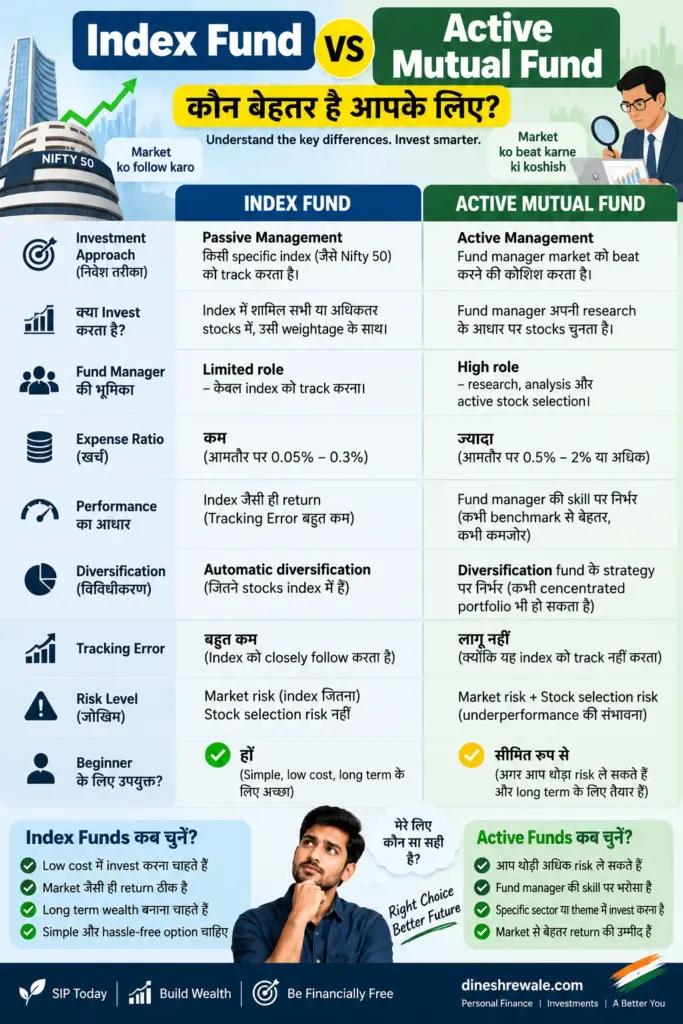
Index Fund vs Active Mutual Fund: सबसे बड़ा अंतर
| फैक्टर | Index Fund | Active Mutual Fund |
|---|---|---|
| Management style | Passive | Active |
| मुख्य लक्ष्य | Index को closely track करना | Benchmark से बेहतर performance देने की कोशिश |
| Fund manager की भूमिका | Index replication और rebalancing | Stock selection, allocation और risk management |
| Cost | आमतौर पर कम, लेकिन scheme-specific | आमतौर पर अधिक, scheme-specific |
| Performance का driver | Underlying index + tracking difference | Portfolio decisions + market + benchmark-relative skill |
| Tracking error की अहमियत | बहुत महत्वपूर्ण | Primary selection metric नहीं |
| Research requirement | तुलनात्मक रूप से कम | ज्यादा analysis की जरूरत |
| Transparency | Index constituents और methodology से आसानी से समझी जा सकती है | Strategy, portfolio changes और fund manager decisions समझने पड़ते हैं |
| Beginner friendliness | Simple approach पसंद करने वालों के लिए useful | Fund selection में ज्यादा judgement की जरूरत |
Index Fund क्या है और यह कैसे काम करता है?
मान लीजिए कोई Index Fund Nifty 50 को track करता है। इसका उद्देश्य Nifty 50 में शामिल companies और उनके weights के साथ portfolio को जितना संभव हो उतना closely align करना है। इससे investor को एक ही scheme के जरिए कई companies का exposure मिल सकता है।
लेकिन एक जरूरी बात है: Index Fund index को beat करने की कोशिश नहीं करता। उसका लक्ष्य index के return के आसपास रहना है। इसलिए अगर index ने किसी अवधि में X return दिया, तो fund का actual investor return X से थोड़ा कम या अलग हो सकता है। इसमें fund expenses और tracking-related differences की भूमिका हो सकती है। SEBI Investor: Index Mutual Funds
Index Fund के प्रमुख फायदे
1. Simplicity: आपको हर महीने यह decide नहीं करना पड़ता कि fund manager अगली बार कौन-सा stock खरीदेगा। आपका focus underlying index और fund की quality पर रहता है।
2. Diversification: Broad index fund आपको एक basket of securities का exposure दे सकता है। इससे single-stock concentration का risk घट सकता है, हालांकि index-level market risk बना रहता है।
3. Lower-cost potential: Passive management में research और trading activity कम हो सकती है, इसलिए many index funds active funds की तुलना में lower-cost होते हैं। Exact cost हर scheme में अलग हो सकती है।
Active Mutual Fund क्या है?
Active fund में fund manager benchmark को देखकर portfolio decisions लेता है, लेकिन portfolio benchmark की exact copy नहीं होता। Manager उन companies को चुन सकता है जिन्हें वह undervalued मानता है, sector allocation बदल सकता है या कुछ holdings से बाहर निकल सकता है।
यही active management का आकर्षण भी है और risk भी। अगर decisions सही साबित हुए तो fund benchmark से बेहतर कर सकता है। अगर decisions गलत हुए तो fund benchmark से पीछे रह सकता है। इसलिए active fund चुनते समय सिर्फ “3 साल का return” देखना पर्याप्त नहीं है।
Active fund में किन चीजों को देखना चाहिए?
- Benchmark और investment mandate
- Long-term performance, सिर्फ एक अच्छे साल का return नहीं
- Consistency और downside behaviour
- Portfolio concentration और sector exposure
- Expense ratio और अन्य costs
- Fund manager/team और strategy continuity
- AUM, liquidity और scheme-specific risk factors
Index Fund vs Mutual Fund में Cost का असली असर
Beginners अक्सर expense ratio को छोटी percentage समझकर ignore कर देते हैं। लेकिन long-term investing में cost लगातार compound होती है। फर्क सिर्फ यह नहीं है कि “आज कितनी fee लगी”; फर्क यह है कि कम cost वाला return base समय के साथ कितना बड़ा हो सकता है।
Calculation: ₹10,000 monthly SIP पर cost difference
Assumptions: Monthly SIP ₹10,000, investment period 15 years, gross market return 12% per year. समझाने के लिए हम simplified net-return assumption लेते हैं: एक option में 1.0 percentage point annual cost drag के बाद 11% और दूसरे में 0.2 percentage point drag के बाद 11.8% annual return। यह किसी specific scheme का forecast नहीं है। Actual expense ratio, portfolio return, tracking difference और tax अलग हो सकते हैं।
Method: Monthly SIP future value formula के जरिए approximate corpus निकाला गया है।
| Assumed net annual return | Monthly SIP | 15 years approx. corpus |
|---|---|---|
| 11.0% | ₹10,000 | ₹45.89 लाख |
| 11.8% | ₹10,000 | ₹49.50 लाख |
Approximate difference ₹3.62 लाख है। यह calculation सिर्फ यह समझाने के लिए है कि recurring cost का छोटा annual difference long term में meaningful हो सकता है। इसे “Index Fund हमेशा ₹3.62 लाख ज्यादा देगा” जैसी prediction न समझें।
Watch Out: सिर्फ lower expense ratio देखकर Index Fund चुनना भी गलत है। अगर दो funds same index track करते हैं, तो आपको expense ratio के साथ tracking difference, tracking error, fund size और implementation quality भी देखनी चाहिए।
Tracking Error और Tracking Difference में फर्क
यह वह हिस्सा है जिसे बहुत से beginner comparisons छोड़ देते हैं, जबकि index investing में यह बेहद practical metric है।
Tracking Error
Tracking error यह बताता है कि fund के returns और benchmark के returns के बीच difference कितना fluctuate करता है। SEBI के investor education material में इसे benchmark और portfolio returns के difference की standard deviation के रूप में समझाया गया है। Lower tracking error आम तौर पर better replication consistency का संकेत देता है। SEBI: Understanding Tracking Error
Tracking Difference
Tracking difference को सरल भाषा में fund return और index return के बीच actual return gap की तरह सोच सकते हैं। यह gap expenses, cash holdings, corporate actions, transaction costs, index changes और implementation factors से पैदा हो सकता है। SEBI Passive Fund documentation
Beginner rule: Same index track करने वाले दो funds में comparison करते समय केवल “expense ratio कौन सा कम है?” न पूछें। पूछें: “कौन fund index को consistently कितना closely track कर रहा है?”
क्या Index Fund का Risk कम होता है?
यहाँ भी एक common misconception है। Index Fund passive है, इसलिए उसे low-risk investment समझ लेना सही नहीं है। अगर आपका index equity-based है, तो market गिरने पर fund भी गिर सकता है।
Index Fund का बड़ा risk यह नहीं है कि fund manager गलत stock pick कर देगा। इसका main risk underlying index का market risk है। दूसरी तरफ active fund में market risk के साथ manager selection risk, portfolio concentration और style drift जैसे risks भी हो सकते हैं।
| Risk | Index Fund | Active Fund |
|---|---|---|
| Overall market decline | हाँ | हाँ |
| Single-stock selection error | Broad index में कम concentration, लेकिन constituent risk मौजूद | Manager decisions पर ज्यादा निर्भर |
| Manager underperformance | कम relevance, क्योंकि mandate index-tracking है | बहुत relevant |
| Tracking risk | महत्वपूर्ण | Primary issue नहीं |
| Style drift | Index methodology से constrained | Strategy execution पर निर्भर |
Return के मामले में कौन बेहतर है?
इसका honest answer है: कोई universal winner नहीं है।
Active funds benchmark को beat कर सकते हैं, लेकिन consistently beat करना मुश्किल हो सकता है। SPIVA India Year-End 2025 में Indian Equity Large-Cap funds के लिए 75.0% underperformance rate 1-year horizon पर और 76.3% 10-year horizon पर reported हुई। Mid-/small-cap category में picture अलग थी: 2025 में underperformance rate 12.1% थी, लेकिन 10-year horizon पर यह 79.0% तक थी। इससे एक important lesson मिलता है: active vs passive result category और period के हिसाब से बदलता है। SPIVA India Year-End 2025 Report
इसलिए “Active Mutual Fund हमेशा better” और “Index Fund हमेशा better” दोनों statements oversimplification हैं। आपका comparison benchmark, category, period, costs और fund implementation के context में होना चाहिए।
Tax: क्या Index Fund और Mutual Fund पर Tax अलग होता है?
यहाँ भी product label से ज्यादा fund की tax classification और underlying assets matter करते हैं। इसलिए “Index Fund पर tax कम है” जैसा blanket statement सही नहीं है।
उदाहरण के लिए equity-oriented fund units के transfer पर, वर्तमान tax rules के अनुसार specified equity-oriented units के short-term capital gains पर applicable Section 111A rate 20% है जब transfer 23 July 2024 या उसके बाद होता है। Long-term capital gains पर Section 112A के तहत 12.5% rate ₹1.25 लाख से अधिक के aggregate eligible gain पर लागू होती है, subject to the relevant conditions. Income Tax Department: Capital Gains
Important: किसी specific mutual fund की tax treatment तय करने से पहले यह देखना जरूरी है कि वह equity-oriented, debt-oriented या किसी अन्य category में आता है और उस समय के लागू tax rules क्या हैं। Tax laws बदल सकते हैं, इसलिए transaction के समय official Income Tax guidance verify करें।
Direct Plan vs Regular Plan: यह Index vs Active से अलग सवाल है
कई beginners एक और confusion कर बैठते हैं। वे सोचते हैं कि Index Fund मतलब Direct Plan और Active Fund मतलब Regular Plan। ऐसा नहीं है।
Direct vs Regular distribution route से related choice है, जबकि Index vs Active investment management approach से related choice है। एक active fund Direct या Regular दोनों हो सकता है। इसी तरह index fund भी Direct या Regular plan में उपलब्ध हो सकता है, जहाँ applicable product structure ऐसा हो।
SEBI documentation के अनुसार Direct Plan में distribution expenses/commission charge नहीं किए जाते और Direct Plan का expense ratio Regular Plan से lower होना चाहिए। SEBI Mutual Fund Master Circular material
Practical Tip: Fund compare करते समय चार अलग सवाल रखें: Active या Passive? Index कौन-सा है? Direct या Regular? Total cost कितना है? इन्हें एक ही decision मानने से गलत selection हो सकता है।
Beginner के लिए कौन सा approach ज्यादा simple है?
Index Fund आपके लिए ज्यादा fit हो सकता है अगर:
- आप investing की शुरुआत कर रहे हैं और portfolio simple रखना चाहते हैं।
- आप broad-market exposure चाहते हैं।
- आप fund manager selection risk को कम करना चाहते हैं।
- आप long-term investing कर रहे हैं और frequent fund switching नहीं करना चाहते।
- आप cost पर ध्यान देना चाहते हैं।
- आप index methodology समझने के बाद relatively rules-based approach पसंद करते हैं।
Active Mutual Fund आपके लिए fit हो सकता है अगर:
- आप actively managed strategy में विश्वास रखते हैं।
- आप fund manager, portfolio और benchmark-relative performance analyse कर सकते हैं।
- आप समझते हैं कि higher cost higher return की guarantee नहीं देता।
- आप category-specific active opportunities के लिए research करने को तैयार हैं।
- आप short-term noise की बजाय long-term rolling performance को evaluate करेंगे।
एक practical decision framework: 5 सवाल पूछिए
- Goal क्या है? Retirement, long-term wealth creation, child education या कोई दूसरा goal?
- Time horizon कितना है? Equity-oriented funds के लिए short-term जरूरत और long-term goal को अलग नजर से देखना चाहिए।
- Market volatility कितना सह सकते हैं? Index Fund भी equity risk से बाहर नहीं है।
- क्या आप manager selection करना चाहते हैं? नहीं तो passive approach ज्यादा straightforward हो सकता है।
- Cost + tracking + consistency: Index fund में expense ratio के साथ tracking difference देखें। Active fund में cost के साथ long-term benchmark-relative consistency देखें।
₹50,000 Salary वाले Beginner का simple example
मान लीजिए आपकी monthly take-home salary ₹50,000 है और आप अभी investing शुरू कर रहे हैं। आपका पहला उद्देश्य “सबसे ज्यादा return वाला fund” ढूँढना नहीं होना चाहिए। पहले emergency fund, insurance और goal clarity जैसी basics मजबूत करना ज्यादा जरूरी है। Monthly cash flow को व्यवस्थित करने के लिए आप salary budget बनाने की practical guide भी देख सकते हैं। उसके बाद equity investing के लिए एक simple diversified fund approach पर विचार किया जा सकता है।
अगर आप एक ऐसी equity exposure चाहते हैं जिसे आपको बार-बार research नहीं करना पड़े, तो broad-market Index Fund एक practical starting framework हो सकता है। वहीं, अगर आपको active fund research करना आता है और आप manager skill तथा portfolio strategy को समझते हैं, तो active option पर विचार किया जा सकता है।
आप अपने monthly cash flow को समझने के लिए हमारी ₹50,000 Salary पर कितना SIP करें guide भी पढ़ सकते हैं।
₹1 Lakh Salary वाले Investor के लिए क्या बदलेगा?
High income का मतलब यह नहीं कि आपको automatically ज्यादा funds रखने चाहिए। मान लीजिए आपकी salary ₹1 लाख है। तब बड़ा सवाल “Index Fund या 5 Mutual Funds?” से बदलकर “मेरे goals के हिसाब से कितनी equity exposure, कितनी debt exposure और कितना emergency reserve?” होना चाहिए।
इस context में एक broad Index Fund portfolio का core बन सकता है, जबकि active fund को जरूरत के अनुसार satellite allocation की तरह इस्तेमाल किया जा सकता है। यह कोई universal allocation recommendation नहीं है, बल्कि portfolio construction की एक decision concept है।
आपका cash-flow framework देखने के लिए ₹1 Lakh Salary वालों का Investment Plan article उपयोगी अगला step हो सकता है।
दो गलतियाँ जो Beginner को नहीं करनी चाहिए
1. केवल 1-year return देखकर fund चुनना
एक साल का winner जरूरी नहीं कि 5 या 10 साल का winner भी हो। Market cycles और styles बदलते हैं। Active fund में short-term outperformance को skill का final proof मानना गलत हो सकता है।
2. एक साथ बहुत सारे funds खरीदना
चार अलग apps में आठ mutual funds खरीद लेने से portfolio automatically diversified नहीं हो जाता। कई funds में same underlying companies का overlap हो सकता है। Beginner के लिए simplicity अक्सर monitoring और behaviour दोनों में मदद करती है।
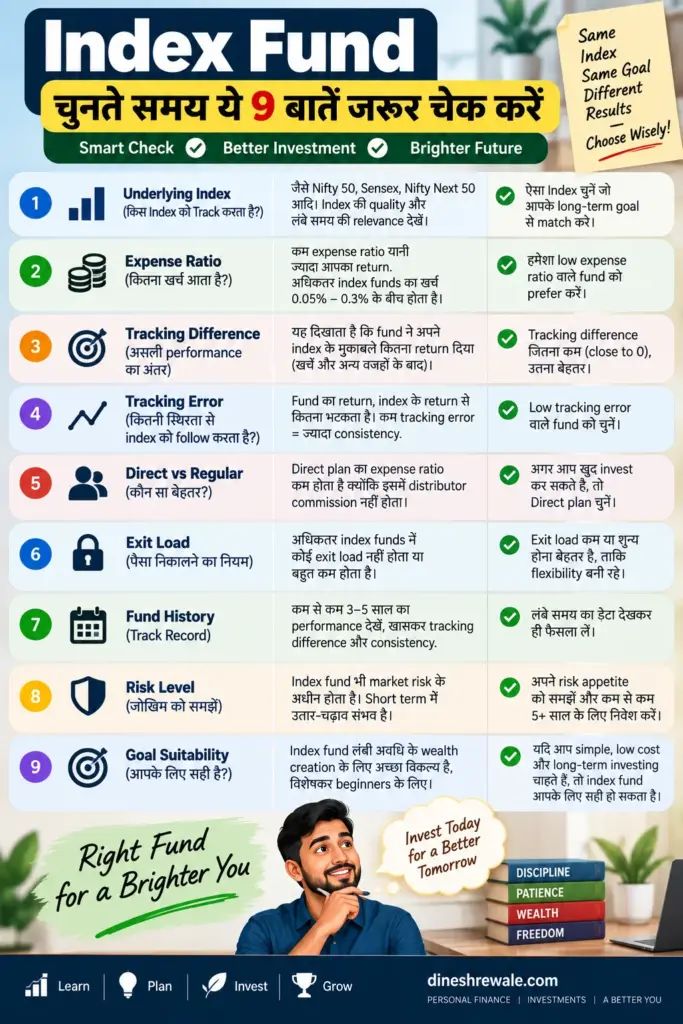
Checklist: Index Fund चुनने से पहले क्या देखें?
- Underlying index समझें
- Expense ratio देखें
- Tracking difference देखें
- Tracking error और उसकी consistency देखें
- Fund size और operational history को context में देखें
- Direct/Regular plan अलग से check करें
- Exit load और applicable tax rules देखें
- देखें कि यह fund आपके goal और time horizon के लिए suitable है या नहीं
Checklist: Active Mutual Fund चुनने से पहले क्या देखें?
- Benchmark क्या है?
- Fund का stated objective और category क्या है?
- 5–10 year rolling performance कहाँ stand करती है?
- Downside periods में fund ने कैसा व्यवहार किया?
- Expense ratio कितना है?
- Portfolio में concentration कितना है?
- Fund manager/team और strategy में significant बदलाव हुए हैं या नहीं?
- क्या आपका investment thesis सिर्फ past returns पर आधारित है?
क्या Index Fund में SIP कर सकते हैं?
हाँ, eligible mutual fund schemes में SIP एक common way of investing है। SIP कोई अलग fund type नहीं है। यह investment करने का तरीका है, जबकि Index Fund या Active Fund underlying scheme approach को describe करता है। इसलिए आप Index Fund में SIP कर सकते हैं, और Active Mutual Fund में भी SIP कर सकते हैं।
SIP का सबसे उपयोगी benefit beginners के लिए discipline हो सकता है। लेकिन SIP market loss को eliminate नहीं करता और न ही return guarantee करता है। SIP amount तय करने से पहले आपका monthly budget और cash flow clear होना चाहिए।
Mutual Fund या Index Fund में निवेश शुरू करने के लिए platform चुनने की जरूरत हो तो हमारी Groww vs Kotak Neo vs Zerodha comparison guide देख सकते हैं। वहीं, खर्च, savings और investing को track करने के लिए Best Personal Finance Apps in India guide उपयोगी हो सकती है।
Index Fund कब खराब choice हो सकता है?
Index Fund simple होने का मतलब यह नहीं कि हर index अच्छा investment है। अगर आपने बहुत narrow sectoral या thematic index चुना, तो diversification उतनी broad नहीं रहेगी। उसी तरह किसी poorly implemented fund में tracking difference अपेक्षा से अधिक हो सकता है।
इसलिए “Index Fund है, इसलिए अच्छा है” भी उतनी ही अधूरी सोच है जितनी “Active Fund है, इसलिए manager बेहतर return देगा।”
Active Mutual Fund कब खराब choice हो सकता है?
Active fund आपके लिए problem बन सकता है अगर आप हर 6–12 महीने past return देखकर fund switch करते हैं। Active management का फायदा तभी capture हो सकता है जब investment thesis और time horizon compatible हों। लगातार winners का पीछा करने से transaction costs, tax impact और behavioural mistakes portfolio को नुकसान पहुँचा सकते हैं।
असल winner क्या है: Index Fund या Mutual Fund?
अब मूल सवाल पर लौटते हैं। अगर “Mutual Fund” से आपका मतलब Active Mutual Fund है, तो beginner के लिए कोई universal winner नहीं है। लेकिन purely process और simplicity की दृष्टि से, कई self-directed beginners के लिए a broad, low-cost, well-tracking Index Fund एक आसान starting framework हो सकता है।
दूसरी तरफ, active fund भी उचित choice हो सकता है अगर आप उसकी strategy, benchmark, costs और long-term execution को समझकर निवेश करते हैं। Active fund चुनने का कारण “किसी app पर पिछले साल सबसे ज्यादा return” नहीं होना चाहिए।
सबसे उपयोगी mindset यह है: पहले asset allocation और goal तय करें, फिर fund approach चुनें, और उसके बाद individual scheme।
Index Fund vs Mutual Fund: Final Comparison
| अगर आपकी priority है… | Likely better starting fit | क्यों? |
|---|---|---|
| Simple long-term investing | Broad Index Fund | Rules-based approach और कम decision complexity |
| Benchmark beat करने की कोशिश | Active Mutual Fund | Manager को portfolio decisions की flexibility |
| Lower ongoing cost की priority | Index Fund | Passive management में fees आमतौर पर कम हो सकती हैं |
| Manager skill पर विश्वास | Active Mutual Fund | Active decision-making का benefit capture करने की संभावना |
| Fund selection में कम time | Index Fund | Index methodology के कारण evaluation comparatively simple |
| Active research करने की क्षमता | Active Mutual Fund | Portfolio और manager decisions का analysis किया जा सकता है |
यह भी पढ़ें
- Emergency Fund कितना होना चाहिए?
- ₹50,000 Salary पर कितना SIP करें?
- ₹1 Lakh Salary वालों का Investment Plan
Real User Questions: Beginner आमतौर पर क्या पूछते हैं?
Online investing discussions में बार-बार तीन तरह के questions आते हैं: “मैं सिर्फ ₹2,000–₹5,000 से शुरू कर रहा हूँ, तो कौन सा fund?”, “एक ही Index Fund पर्याप्त है या active fund भी जोड़ूँ?”, और “अगर active fund ज्यादा return दे सकता है तो index क्यों लें?”। इन सवालों का common answer है कि investment amount से पहले structure समझिए।
सितंबर 2026 की एक public Reddit discussion में एक beginner ने ₹600–₹700 monthly SIP से शुरुआत करते समय Flexi Cap और Nifty 50 Index Fund के बीच confusion बताया। दूसरी 2026 discussion में एक नए investor ने ₹5,000 monthly SIP, 15+ year horizon और Index Fund बनाम Flexi Cap जैसे choices पर guidance मांगी। ये discussions financial authority नहीं हैं, लेकिन वे दिखाती हैं कि beginners की असली समस्या अक्सर “कौन सा fund?” से पहले “किस category और कितनी complexity?” होती है। Reddit: beginner SIP question और Reddit: beginner ₹5,000 SIP question
FAQs
1. क्या Index Fund भी Mutual Fund होता है?
हाँ। Index Fund Mutual Fund का एक passive प्रकार है। यह किसी stated market index को closely track करने के लिए design किया जाता है।
2. Beginner के लिए Index Fund बेहतर है या Active Mutual Fund?
कई beginners के लिए broad-market, low-cost और well-tracking Index Fund simpler starting framework हो सकता है। लेकिन final choice goal, risk tolerance, time horizon और आपकी ability to evaluate active funds पर निर्भर करती है।
3. क्या Index Fund का return हमेशा index के बराबर होता है?
नहीं। Expense ratio, transaction costs, cash holdings, corporate actions और अन्य implementation factors की वजह से fund return index से थोड़ा अलग हो सकता है। इसे tracking difference से समझा जाता है।
4. क्या Active Mutual Fund Index Fund से ज्यादा return दे सकता है?
हाँ, कुछ periods और categories में active fund benchmark से बेहतर कर सकता है। लेकिन outperformance guaranteed नहीं है और consistency category तथा time period के अनुसार बदलती है।
5. Index Fund का risk कम होता है क्या?
Passive होने से equity market risk खत्म नहीं होता। Broad diversification single-stock concentration risk को कम कर सकती है, लेकिन index गिरने पर fund भी गिर सकता है।
6. Index Fund में SIP कर सकते हैं?
हाँ, जहाँ scheme SIP facility देती है वहाँ आप Index Fund में SIP कर सकते हैं। SIP investment method है, fund category नहीं।
7. क्या Index Fund में Expense Ratio ही सबसे important factor है?
नहीं। Expense ratio important है, लेकिन same-index funds compare करते समय tracking difference, tracking error, implementation quality और plan type भी देखें।
8. Direct Plan और Index Fund क्या एक ही चीज हैं?
नहीं। Index Fund passive investment approach बताता है। Direct Plan distribution route और associated cost structure से जुड़ा है। Active fund और Index Fund दोनों में Direct या Regular plan उपलब्ध हो सकते हैं।
9. क्या एक ही Index Fund से पूरा portfolio बन सकता है?
यह आपके goals और asset allocation पर निर्भर करता है। एक broad equity index fund equity exposure का simple हिस्सा हो सकता है, लेकिन emergency fund, debt और other goals के लिए अलग asset allocation की जरूरत हो सकती है।
10. Index Fund चुनते समय सबसे पहले क्या देखें?
पहले underlying index समझें। उसके बाद expense ratio, tracking difference, tracking error, fund history, liquidity/size, plan type, exit load और आपके goal के साथ suitability देखें।
Methodology
Methodology: इस article में Index Fund को Mutual Fund के passive category के रूप में और “Mutual Fund” comparison को primarily actively managed equity mutual funds के संदर्भ में interpret किया गया है, क्योंकि यही beginner search intent में सामान्य confusion पैदा करता है। Regulatory और tax points के लिए official SEBI और Income Tax sources को प्राथमिकता दी गई है। Performance discussion के लिए SPIVA India 2025 report का उपयोग किया गया है। Reddit discussions केवल recurring beginner concerns को identify करने के लिए उपयोग की गई हैं, financial authority के रूप में नहीं।
Last Updated: 10 September 2026
Author: Dinesh Rewale
Conclusion
“Index Fund vs Mutual Fund” का सबसे जरूरी lesson यह है कि Index Fund, Mutual Fund का ही एक प्रकार है। इसलिए असली comparison “Index Fund vs Active Mutual Fund” है।
अगर आप beginner हैं और एक simple, rules-based, broadly diversified और cost-conscious approach चाहते हैं, तो a suitable broad Index Fund एक practical starting point हो सकता है। अगर आप active research को समझते हैं और manager skill के लिए higher cost तथा benchmark risk स्वीकार करते हैं, तो Active Mutual Fund भी उचित हो सकता है।
लेकिन किसी भी choice में सिर्फ past return, app ranking या “सबसे अच्छा fund” जैसी language पर भरोसा न करें। Goal → Asset Allocation → Fund Approach → Specific Scheme → Cost → Ongoing Review इस sequence से निर्णय लेना ज्यादा disciplined तरीका है।
Financial Disclaimer
यह article केवल educational और informational purpose के लिए है, personalized investment advice नहीं। Mutual Funds और Index Funds market-linked products हैं और इनमें capital loss का जोखिम रहता है। किसी specific scheme में निवेश से पहले उसका Scheme Information Document, risk factors, costs, applicable tax rules और अपने financial goals तथा risk profile को carefully evaluate करें। Tax laws, regulations और fund characteristics समय के साथ बदल सकते हैं, इसलिए निवेश या redemption से पहले संबंधित official source या योग्य SEBI-registered professional से वर्तमान जानकारी verify करें।