Credit Card Holder की Death पर क्या होता है? India के 7 Rules
सीधा जवाब: भारत में credit card holder की death होने पर बकाया dues अपने-आप माफ नहीं होते, लेकिन spouse, बच्चों या अन्य legal heirs को सिर्फ रिश्ता होने के कारण अपने personal पैसे से पूरा bill चुकाने के लिए automatically liable नहीं माना जाता। Bank outstanding को deceased व्यक्ति की estate—यानी उनके छोड़े हुए assets—से recover करने का दावा कर सकता है। Deceased की estate से recovery का claim और legal heir की personal liability अलग सवाल हैं। कई मामलों में recovery deceased की estate से की जाती है, लेकिन exact liability applicable succession law, contract, estate की स्थिति और किसी guarantee/co-obligation पर निर्भर करती है। केवल रिश्ते की वजह से personal liability अपने-आप नहीं बनती।
RBI की 2025 Credit Card Directions में card issuers को death/permanent incapacity की स्थिति में dues recovery की procedure और available insurance cover की details अपने card terms/MITC में बताने को कहा गया है। RBI के rules यह भी कहते हैं कि add-on card के dues की liability principal cardholder की होती है, add-on cardholder की नहीं। इसलिए सबसे पहले bank को death inform करें, card/account block/close करने की written request दें और itemised outstanding statement माँगें।
Credit Card Holder की Death होने पर क्या होता है?
Credit card एक unsecured credit facility है। Cardholder की death पर bank account को deceased customer के रूप में mark करने और recovery/closure process शुरू करने के लिए अपने documents माँग सकता है। Outstanding bill, interest, fees और pending transactions का final calculation card agreement तथा applicable rules के अनुसार होगा। केवल death होने से पूरी रकम स्वतः write-off नहीं होती; इसी तरह केवल legal heir होने से पूरी रकम personal liability भी नहीं बन जाती।
India के Code of Civil Procedure, 1908 की Section 50(2) में decree को deceased के legal representative के विरुद्ध execute करने पर liability deceased की उस property की सीमा तक बताई गई है जो legal representative के पास आई हो और विधिवत dispose न की गई हो। यह court decree execution का provision है; किसी खास credit card dispute में liability और recovery के सवाल facts, contract, estate, succession law तथा court process पर निर्भर कर सकते हैं। Official text: Code of Civil Procedure, 1908 — Section 50.
क्या पत्नी, पति, बच्चे या माता-पिता को credit card का bill भरना पड़ता है?
आम तौर पर सिर्फ spouse, child, parent या legal heir होने से deceased cardholder के unsecured credit card debt की personal liability नहीं बनती। लेकिन इसका मतलब यह नहीं कि debt गायब हो गया। Bank deceased की estate से lawful recovery का claim कर सकता है। अगर किसी family member ने अलग से guarantee/co-obligation स्वीकार की हो, business/corporate card agreement में liability ली हो, या कोई valid settlement/undertaking sign की हो, तो अलग legal analysis जरूरी है।
| Situation | सामान्य position | क्या करें? |
|---|---|---|
| Spouse या बच्चा legal heir है | सिर्फ रिश्ते की वजह से personal liability स्वतः नहीं बनती; estate claim अलग है। | Bank से written outstanding statement और legal basis माँगें। |
| Family member add-on/supplementary cardholder है | RBI Directions के अनुसार dues की liability principal cardholder पर है, add-on cardholder पर नहीं। | Card type और agreement की copy लेकर issuer को point out करें। |
| Legal heir को assets inherit हुए हैं | Deceased की estate से valid claim recover हो सकता है; inherited estate की सीमा और applicable law महत्वपूर्ण हैं। | Estate details और bank claim को legal advice के साथ review करें। |
| Co-obligor, guarantor या corporate liability है | Signed agreement या card product के terms के कारण व्यक्तिगत/business liability अलग हो सकती है। | Liability स्वीकार करने से पहले agreement और legal advice check करें। |
| Outstanding से ज्यादा estate/assets नहीं हैं | Legal representative की liability कुछ मामलों में inherited estate तक सीमित हो सकती है; लेकिन CPC Section 50 मुख्यतः decree execution से जुड़ा है। Estate का disposal, signed guarantee/co-obligation और applicable succession law से परिणाम बदल सकता है। | Estate, loan/card documents और applicable law के आधार पर written response दें। |
यह सामान्य जानकारी है, किसी case का final legal opinion नहीं। Family property, joint ownership, business cards, foreign-card terms या inheritance dispute में qualified lawyer से सलाह लें। Bank के हर demand letter को ignore न करें; पहले उसकी authenticity और legal basis जाँचें।
Add-on Credit Card Holder की liability क्या होती है?
RBI की Commercial Banks – Credit Cards and Debit Cards: Issuance and Conduct Directions, 2025 के paragraph 18 में add-on card के लिए स्पष्ट है कि liability principal cardholder की होती है और dues की liability solely principal cardholder पर रहती है, add-on cardholder पर नहीं। इसीलिए, यदि पत्नी/पति या परिवार के किसी सदस्य के पास primary cardholder का add-on card था, तो केवल add-on card रखने या इस्तेमाल करने से उन्हें अपने-आप primary holder के पूरे outstanding dues की personal liability नहीं हो जाती।
Corporate/business cards अलग हो सकते हैं क्योंकि RBI directions के अनुसार business card पर company और employee की responsibilities product terms के अनुसार तय हो सकती हैं। Cardholder की death के बाद किसी भी family member को “मैं पूरा debt personally pay करूँगा/करूँगी” जैसी undertaking तुरंत sign नहीं करनी चाहिए; पहले document पढ़ें और legal position समझें। RBI source: RBI Credit Card and Debit Card Directions (2025 directions; issuer की current MITC/policy भी देखें).
Credit Card Holder की Death के बाद Bank को क्या करना चाहिए?
Bank-specific process अलग हो सकता है, पर RBI directions में card issuers से कहा गया है कि वे अपने Most Important Terms and Conditions (MITC) में death/permanent incapacity की स्थिति में dues recovery procedure और उपलब्ध insurance cover/nomination details disclose करें। Card issuer के bill/statement पर designated grievance-redressal officer का contact भी होना चाहिए।
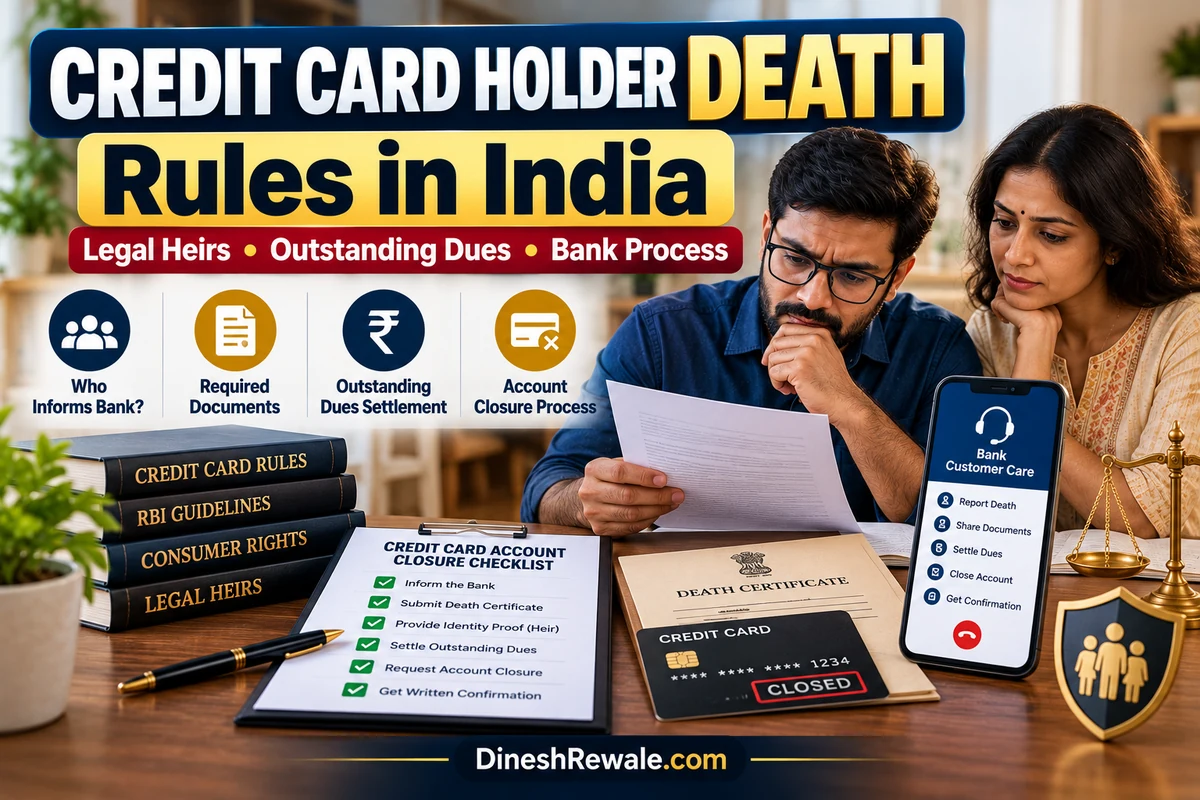
परिवार को issuer से ये details लिखित रूप में माँगनी चाहिए:
- Death report acknowledge होने और card/account को block या deceased status में mark करने की confirmation।
- Death की तारीख तक outstanding का itemised statement—principal/transactions, interest, fees, pending EMI और death के बाद हुई entries अलग-अलग।
- Card agreement, applicable MITC और death/permanent incapacity recovery policy।
- Cardholder के लिए credit-card protection/loan protection insurance था या नहीं, policy number, insurer, nomination और claim process।
- Estate से settlement का process, required documents और account/card closure की written confirmation।
Death के बाद card से कोई नई transaction न करें। अगर कोई post-death transaction या suspicious debit statement में दिखे, तो तुरंत issuer को dispute register करने को कहें और evidence सुरक्षित रखें। किसी भी family member को deceased व्यक्ति का PIN/OTP/password इस्तेमाल नहीं करना चाहिए।
Credit Card पर insurance था तो क्या outstanding माफ हो सकता है?
कुछ card issuers/insurance partners कार्ड के साथ optional card-protection, credit shield या similar insurance offer कर सकते हैं; हर credit card पर यह cover automatically नहीं होता। Premium/payment records, policy schedule, nominee details और exclusions जाँचें। Policy valid होने पर insurer outstanding का पूरा या कुछ हिस्सा terms के अनुसार cover कर सकता है। Death certificate देने के बाद भी claim approval guaranteed नहीं होता—policy coverage, sum insured, cause of death और claim conditions check होती हैं।
Bank से केवल “insurance था” सुनकर नहीं रुकें। Insurer का नाम, policy document, coverage amount, nominee और claim form लिखित में माँगें। अगर policy नहीं है या claim reject होता है, तो remaining genuine dues पर estate और liability rules लागू हो सकते हैं।
Bank को death inform कैसे करें? Step-by-step
- Issuer के official helpline या branch से संपर्क करें: Credit card के पीछे छपे नंबर, bank की verified website या statement में दिए grievance contacts का इस्तेमाल करें। किसी unknown caller को documents/OTP न दें।
- Written intimation भेजें: Email या branch letter में deceased cardholder का नाम, card के आखिरी चार digits, customer relationship/reference और death date लिखें। Full card number, CVV या PIN email में न भेजें।
- Documents attach करें: Death certificate की copy और request करने वाले व्यक्ति का identity proof दें। Bank जरूरत के अनुसार proof of relationship, legal-heir/authorisation documents, estate representative details या other forms माँग सकता है। Exact list issuer से लें।
- Outstanding और insurance details माँगें: Itemised final statement, transactions, interest/fees, card policy, insurance/credit shield cover और settlement procedure लिखित में लें।
- Estate और liability जाँचें: Deceased के assets और debts का record तैयार करें। बिना legal review किए personal liability acknowledge करने वाला form/undertaking sign न करें।
- Settlement/closure का confirmation लें: Payment estate से हो तो receipt और no-dues/settlement letter लें। अगर कोई रकम disputed है, तो उसे separate लिखित रूप में challenge करें।
- Credit reporting और remaining balance verify करें: Bank से पूछें कि account deceased/closed/settled status में कैसे report होगा और closure/settlement के बाद credit information update कब होगी। Documents संभालकर रखें।
Bank Manager को देने के लिए death intimation letter
यह format bank को inform करने और account details माँगने के लिए है। इसमें किसी legal heir की personal liability स्वीकार नहीं की जाती; अपनी circumstances के अनुसार text edit करें।
सेवा में,
Credit Card Grievance Officer / Branch Manager
[Bank Name]
विषय: Primary Credit Cardholder की death की सूचना और outstanding/closure details देने के संबंध में
महोदय/महोदया,
मैं आपको सूचित करना चाहता/चाहती हूँ कि [Cardholder Full Name], आपके बैंक के credit card account (card के आखिरी चार digits: [XXXX]) के cardholder थे/थीं। उनका निधन [date] को हुआ है। Death certificate की copy इस request के साथ संलग्न है।
कृपया card/account को deceased customer के रूप में mark करके आवश्यक blocking/closure procedure बताएं। साथ ही, death date तक का itemised outstanding statement, लागू MITC/credit-card agreement, death/permanent-incapacity recovery policy और यदि कोई insurance/card-protection cover उपलब्ध हो तो policy/claim details साझा करें। कृपया required documents और settlement/closure process भी लिखित रूप में बताएं।
कृपया इस request का complaint/reference number दें। यह intimation स्वयं में मेरे द्वारा किसी personal liability की acceptance नहीं है; कोई liability applicable agreement, law और estate facts के अनुसार निर्धारित की जानी चाहिए।
धन्यवाद,
नाम: [नाम]
संपर्क: [मोबाइल/ईमेल]
Relationship/Authority: [यदि लागू हो]
Date: [date]
अगर Bank परिवार को अपने personal पैसे से payment के लिए दबाव दे तो?
पहले written demand, call details, messages और bank correspondence सुरक्षित रखें। Bank से पूछें कि वह demand estate के representative के रूप में कर रहा है या व्यक्ति को independently liable मान रहा है, और किस signed agreement/section के आधार पर। केवल family relationship के आधार पर personal liability स्वीकार करने या inherited property से बाहर के assets pledge करने से पहले legal advice लें।
- Harassment या aggressive recovery के मामले में communication को bank के official grievance officer तक escalate करें।
- अगर bank ने unauthorised transaction, incorrect charge, add-on card liability या estate-limited liability को गलत तरीके से handle किया है, तो supporting documents के साथ written complaint करें।
- पहले card issuer/bank में complaint करें। अगर bank 30 दिनों में जवाब नहीं देता—या जहाँ RBI, NPCI या Card Network की कोई अधिक समय-सीमा लागू हो, वह अवधि पूरी हो जाती है—या reply से संतुष्टि नहीं है, तो Reserve Bank–Integrated Ombudsman Scheme, 2026 की conditions के अधीन RBI CMS पर शिकायत कर सकते हैं।
RBI Integrated Ombudsman Scheme, 2026, 1 July 2026 से लागू है। Official FAQ के अनुसार, पहले bank/regulated entity को complaint देना आवश्यक है; relevant time limit के भीतर response न मिले या response असंतोषजनक हो तो RBI Complaint Management System (CMS) के जरिए complaint की जा सकती है। यह process service deficiency पर है और हर disputed debt को स्वतः waive नहीं करता। Official guidance: RBI Integrated Ombudsman Scheme, 2026 FAQs.
Death के बाद Credit Card Dues से जुड़ी 6 गलतियाँ न करें
- Card को continue use करना: Deceased का card, PIN, OTP या online access इस्तेमाल न करें।
- यह मान लेना कि debt पूरी तरह माफ हो गया: Death पर debt automatically disappear नहीं होता; estate claim या policy cover हो सकता है।
- हर legal heir को personally liable मान लेना: पहले estate, add-on status, guarantee/co-obligation और signed terms जाँचें।
- Itemised statement लिए बिना payment करना: Amount, interest, post-death entries और fees reconcile करें।
- Insurance cover ignore करना: Issuer से policy/insurer details माँगें और claim eligibility check करें।
- Bank notices ignore करना: Recovery/claim notice मिले तो deadline देखें, written response दें और जरूरत पर lawyer से सलाह लें।
FAQs: Credit Card Holder Death Rules in India
1. क्या Credit Card Holder की death पर पूरा outstanding माफ हो जाता है?
नहीं। Debt automatic waive नहीं होता। Bank deceased की estate से lawful recovery claim कर सकता है; insurance cover हो तो policy के अनुसार payment मिल सकती है।
2. क्या पत्नी या बच्चे को अपने पैसे से credit card का bill भरना होगा?
सिर्फ spouse/child/legal heir होने से personal liability automatic नहीं बनती। Estate से recovery और किसी signed guarantee/co-obligation की स्थिति अलग है। कोई legal notice मिले तो उसे ignore न करें और legal advice लें।
3. क्या add-on cardholder को deceased के पूरे credit card dues देने होंगे?
RBI की 2025 directions के अनुसार add-on card के dues की liability principal cardholder की होती है, add-on holder की नहीं। फिर भी bank को account facts और applicable terms बताकर written response माँगें; corporate/business card arrangements अलग हो सकते हैं।
4. Bank को death certificate देना जरूरी है?
Issuer को death inform करने के लिए death certificate और requestor की identity/authority से जुड़े documents माँगे जा सकते हैं। Exact checklist card issuer और case के हिसाब से लें।
5. Credit card insurance outstanding pay कर सकता है?
अगर relevant insurance/credit-shield policy थी और claim policy conditions पूरी करता है, तो insurer पूरा या कुछ amount cover कर सकता है। हर card पर insurance होना जरूरी नहीं है।
6. Bank personal assets से recovery माँगता है तो क्या करें?
Demand letter और agreement की copy लें। पूछें कि personal liability किस legal/contractual आधार पर बताई जा रही है। Estate से inherited assets की सीमा और any guarantee/co-obligation पर legal advice लें; जरूरत पर bank grievance channel या RBI CMS का इस्तेमाल करें।
निष्कर्ष
Credit card holder की death के बाद सबसे जरूरी है bank को तुरंत inform करना, card का misuse रोकना, outstanding का itemised statement लेना और available insurance cover check करना। Genuine dues deceased की estate से recover किए जा सकते हैं, लेकिन legal heirs पर personal liability सिर्फ रिश्ते की वजह से automatic नहीं बनती। RBI directions add-on cards के dues की liability principal cardholder पर रखती हैं। अगर bank family members से personal payment माँगता है, तो written legal basis लें और जरूरत पर qualified lawyer से सलाह करें।
संबंधित गाइड: CIBIL Score में गलत Entry ठीक करें · Bank Account Freeze होने पर क्या करें · Minimum Balance Charge Refund · Personal Loan Apply Process · E-Mandate (NACH) Cancel Process
लेखक: Dinesh Rewale
Dinesh Rewale banking, credit cards, personal finance और consumer rights पर reader-focused guides लिखते हैं। नए updates के लिए Facebook पर जुड़ें।
Disclaimer: यह लेख केवल सामान्य जानकारी के लिए है, legal advice नहीं। Credit card recovery, estate liability, inheritance और guarantee की स्थिति agreement, estate facts और applicable law पर निर्भर करती है। Bank notice या court papers प्राप्त होने पर response deadline देखें और जरूरत पर qualified lawyer से advice लें।