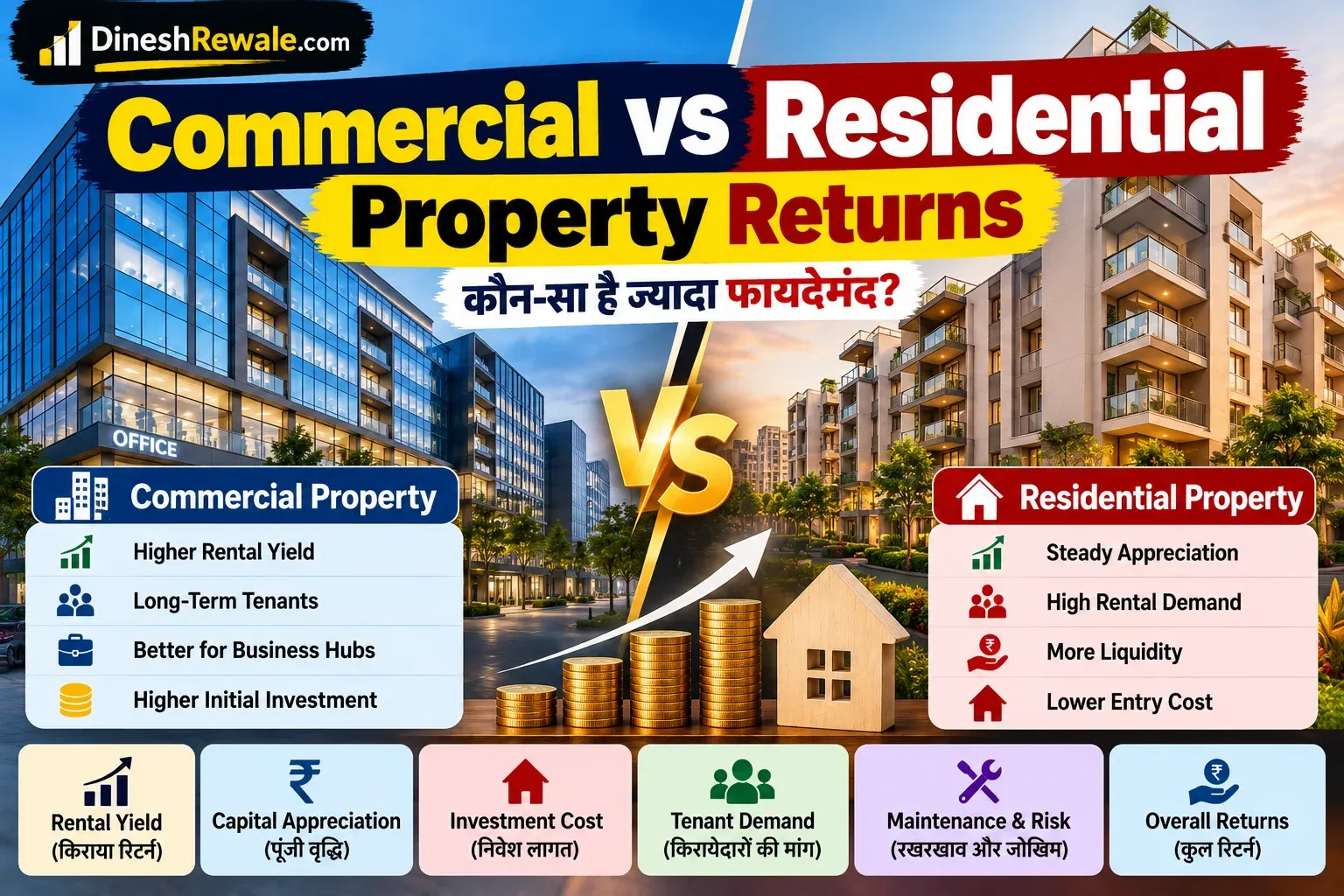
Commercial vs Residential Property: 10 Return Differences
Commercial vs Residential Property Returns को compare करते समय सिर्फ property price बढ़ने की उम्मीद देखना काफी नहीं है। Real estate return में आमतौर पर rental income + capital appreciation – vacancy, maintenance, taxes और transaction costs का पूरा picture देखना चाहिए। इसी वजह से कोई एक property type हर investor के लिए automatically बेहतर…
Commercial vs Residential Property Returns को compare करते समय सिर्फ property price बढ़ने की उम्मीद देखना काफी नहीं है। Real estate return में आमतौर पर rental income + capital appreciation – vacancy, maintenance, taxes और transaction costs का पूरा picture देखना चाहिए। इसी वजह से कोई एक property type हर investor के लिए automatically बेहतर नहीं होती.
सीधी बात: India में commercial property में rental yield अक्सर residential property से ज्यादा हो सकती है, लेकिन commercial asset में vacancy, tenant risk, location sensitivity और entry cost भी ज्यादा हो सकते हैं। Residential property में rental yield कई markets में कम रहती है, लेकिन end-user demand, wider tenant pool और कुछ locations में बेहतर liquidity इसे अलग risk-return profile देता है। एक recent market comparison में residential gross rental yield लगभग 3%-5% और commercial 6%-10% के indicative range में बताई गई है, लेकिन actual yield city, property type, tenant और purchase price पर काफी बदलती है। Kotak की commercial vs residential comparison इस difference को explain करती है।
In Short: Commercial property आम तौर पर higher rental income दे सकती है, जबकि residential property का return profile rental income से ज्यादा capital appreciation, end-user demand और lower entry complexity पर depend कर सकता है। इसलिए सही comparison gross yield नहीं, net return + risk + liquidity के आधार पर होना चाहिए.
Property Returns में क्या-क्या शामिल होता है?
Property का return दो मुख्य हिस्सों में समझा जा सकता है:
- Rental Return: सालभर में मिलने वाला net rent divided by total invested cost.
- Capital Appreciation: खरीद price और future selling price के बीच बढ़ोतरी.
इसके अलावा maintenance, property tax, insurance, brokerage, vacancy, repairs, furnishing, loan interest और sale-related transaction costs return को कम कर सकते हैं। इसलिए headline rental yield और actual investor return एक ही चीज नहीं हैं.
Commercial vs Residential Property: 10 बड़े फर्क
Commercial Property का Rental Yield क्यों ज्यादा हो सकता है?
Commercial spaces जैसे office, shop, high-street retail या warehouse में tenant business income generate करने के लिए जगह लेता है। Successful location में tenant longer lease और escalation clause के साथ rent दे सकता है। यही वजह है कि commercial assets की gross rental yield कई cases में residential assets से higher होती है.
लेकिन higher gross yield का मतलब automatically higher net return नहीं है। Empty periods, brokerage, fit-out, common-area charges, property tax, repairs और tenant incentives को subtract करने के बाद effective yield कम हो सकती है.
2026 में India का office market भी active रहा है। CBRE के अनुसार Q3 2026 में office absorption करीब 21.0 million sq. ft. रहा, जो सालाना आधार पर 6% अधिक था, और 9M 2026 absorption करीब 66.4 million sq. ft. के record level पर पहुंचा। यह commercial demand का broad market indicator है, लेकिन किसी individual office unit के return की guarantee नहीं है। CBRE India Office Figures Q3 2026 देखें.
Residential Property का Rental Yield कितना हो सकता है?
Residential rental yield आम तौर पर purchase price के मुकाबले कम होती है क्योंकि residential property की pricing में end-user demand और land value का हिस्सा बड़ा हो सकता है। India का gross residential rental yield अलग markets में काफी अलग है। Q2 2026 में Global Property Guide के अनुसार India का average gross rental yield 5.16% था, जबकि Mumbai में listed apartment segments लगभग 3.2%-3.8% के आसपास दिख रहे थे। ये indicative averages हैं, किसी specific flat की expected return नहीं। India rental yield data में city-wise details देखी जा सकती हैं.
Mumbai में residential return समझते समय purchase price बहुत important है। High entry price की वजह से rent बढ़ने के बावजूद yield compressed रह सकती है। इसलिए सिर्फ monthly rent देखकर flat को high-return asset मानना सही नहीं है.
Capital Appreciation में कौन-से factors ज्यादा महत्वपूर्ण हैं?
Residential और commercial दोनों में appreciation का सबसे बड़ा driver अक्सर location + demand + connectivity + supply + asset quality होता है। सिर्फ property category देखकर future appreciation तय नहीं की जा सकती.
Residential property में schools, employment hubs, metro connectivity, road infrastructure, redevelopment और neighbourhood livability demand को influence कर सकते हैं। Commercial property में office demand, footfall, business ecosystem, catchment, access, parking और tenant profile ज्यादा महत्वपूर्ण हो सकते हैं.
Mumbai में 2026 के premium residential segment ने भी price growth दिखाई है। Knight Frank की Q2 2026 data के अनुसार Mumbai prime residential prices में 6.2% year-on-year growth दर्ज हुई। यह city-level premium segment data है, इसलिए इसे हर residential property पर लागू नहीं किया जाना चाहिए। Knight Frank India research में broader market reports उपलब्ध हैं.
₹1 करोड़ Property पर Return का Simple Example
मान लीजिए आपके पास ₹1 करोड़ का investment budget है.
यह calculation सिर्फ gross rental yield illustration है। इसमें vacancy, maintenance, tax, brokerage, repairs, fit-out, financing cost और transaction expenses शामिल नहीं हैं। इसलिए ₹58,333 monthly gross rent को ₹58,333 का net return समझना सही नहीं होगा.
Net Return कैसे Calculate करें?
Real estate investment को compare करने के लिए यह simple formula उपयोगी है:
Net Rental Yield = (Annual Rent – Annual Property Expenses) ÷ Total Investment Cost × 100
उदाहरण के लिए अगर ₹1 करोड़ property से ₹7 लाख gross annual rent आता है और सालभर के property-related expenses ₹1 लाख हैं, तो net rental income ₹6 लाख होगी। Net rental yield लगभग 6% होगी, capital appreciation को छोड़कर.
Vacancy और Tenant Risk का फर्क
Commercial property में एक अच्छे tenant के साथ long lease cash-flow visibility दे सकता है। लेकिन tenant निकलने पर vacancy period ज्यादा लंबा हो सकता है और नए tenant के लिए fit-out या brokerage expenses भी हो सकते हैं.
Residential property में tenant replacement कई markets में relatively easier हो सकता है, लेकिन frequent turnover, repairs और rent negotiation भी return को प्रभावित कर सकते हैं। इसलिए vacancy rate को investment model में पहले से include करें.
Liquidity में क्या फर्क पड़ता है?
Residential market में end-users का बड़ा buyer pool होने के कारण कुछ locations में resale easier हो सकती है। Commercial property में buyer pool asset-specific हो सकता है, खासकर अगर property specialized, expensive या tenant-dependent है.
इसका मतलब यह नहीं कि हर residential property liquid होगी या हर commercial property illiquid होगी। Micro-market, title, price, tenant, building quality और financing availability का बड़ा role होता है.
Hidden Costs Return को कितना बदल सकते हैं?
- Purchase costs: stamp duty, registration और brokerage.
- Holding costs: maintenance, property tax, insurance और repairs.
- Vacancy cost: खाली रहने के दौरान lost rent और marketing expense.
- Tenant costs: fit-out contribution, brokerage और lease-related expenses.
- Sale costs: brokerage, legal expenses और applicable taxes.
- Loan cost: interest, processing fee और other borrowing expenses.
Income Tax Department की property-related return documentation में let-out property की gross rent और eligible standard deduction जैसे items अलग दिखाए जाते हैं। Tax treatment property use और taxpayer circumstances के अनुसार बदल सकता है, इसलिए actual tax calculation के लिए Income Tax Department के latest rules देखें.
Mumbai में Commercial vs Residential Return कैसे देखें?
Mumbai में land cost और entry price बहुत high होने के कारण residential property की rental yield कई locations में compressed रह सकती है। दूसरी तरफ prime commercial locations में strong tenant demand rental income को support कर सकती है, लेकिन purchase ticket और vacancy risk दोनों ज्यादा material हो सकते हैं.
2026 में Mumbai office market में strong leasing activity बनी हुई है और India-wide office absorption भी मजबूत रहा है। इससे commercial sector में demand का broader backdrop दिखता है, लेकिन किसी specific shop, office या commercial unit की return उसके micro-location और tenant economics से तय होगी। Savills Mumbai Office Q1 2026 snapshot में local office-market context भी देखा जा सकता है.
Residential side पर Mumbai, Navi Mumbai और Thane के बीच pricing, connectivity और rental economics अलग हैं। Mumbai vs Navi Mumbai vs Thane Property Investment वाली guide में यह comparison विस्तार से पढ़ें.
किस investor profile में कौन-सा asset fit हो सकता है?
Commercial vs Residential Investment में 7 Common Mistakes
- सिर्फ rental yield देखकर property खरीदना.
- Gross rent को net return समझ लेना.
- Vacancy period को calculation में include न करना.
- Property की micro-location को ignore करना.
- Loan interest को investment return से अलग न करना.
- Exit liquidity और buyer pool को check न करना.
- Tax, maintenance और transaction costs को बाद में सोचने की गलती करना.
Property खरीदने से पहले 10 Checks
- Current market rent verify करें.
- Realistic purchase price और total acquisition cost calculate करें.
- Gross और net rental yield अलग-अलग निकालें.
- Vacancy assumption रखें.
- Tenant demand और local rental history देखें.
- Property title और approvals verify करें.
- Maintenance और recurring charges लिखित में लें.
- Potential resale buyer pool समझें.
- Loan EMI और interest cost को return calculation में include करें.
- Worst-case vacancy और exit scenario में cash flow check करें.
और पढ़ें
Property की सही price calculate करने के लिए Flat की सही Price कैसे Calculate करें? पढ़ें।
Rental income और appreciation के फर्क के लिए Capital Appreciation vs Rental Income वाली guide देखें।
1 BHK और 2 BHK investment comparison के लिए 1 BHK vs 2 BHK Investment भी पढ़ सकते हैं.
Final Takeaway
Commercial vs Residential Property Returns में सबसे बड़ा फर्क rental income profile, tenant risk, entry cost और liquidity का है। Commercial property में gross rental yield कई markets में higher हो सकती है, लेकिन higher yield के साथ vacancy और asset-specific risks भी आ सकते हैं। Residential property में rental yield कम हो सकती है, लेकिन end-user demand, self-use value और selected locations में capital appreciation का अलग role रहता है.
इसलिए property चुनते समय केवल “किसमें ज्यादा return है?” पूछने के बजाय यह देखें कि आपका expected net return, risk, cash flow, holding period और exit plan क्या है। Real estate में सही asset अक्सर वही होता है जिसकी economics आपके budget और risk capacity के साथ match करती है.
Commercial vs Residential Property: FAQs
Commercial property का return residential से ज्यादा होता है?
Rental yield कई markets में commercial property की higher होती है, लेकिन total return automatically higher नहीं माना जा सकता। Vacancy, maintenance, tenant risk, appreciation और transaction costs को भी include करना पड़ता है.
Residential property की rental yield कम क्यों होती है?
Residential property की pricing में end-user demand, land value और location premium का बड़ा role हो सकता है। इसलिए rent property value की तुलना में relatively lower percentage हो सकता है.
₹1 करोड़ commercial property में 7% yield हो तो rent कितना होगा?
7% gross yield पर annual rent लगभग ₹7 लाख और monthly gross rent करीब ₹58,333 होगा। यह illustrative calculation है और vacancy या expenses शामिल नहीं हैं.
Property return calculate करने का सही formula क्या है?
Rental-focused comparison के लिए Net Rental Yield = (Annual Rent – Annual Property Expenses) ÷ Total Investment Cost × 100. Capital appreciation को अलग से calculate करके total return estimate में जोड़ें.
Commercial property में सबसे बड़ा risk क्या है?
एक important risk tenant और vacancy concentration है। अगर property लंबे समय तक खाली रहती है, तो high expected yield के बावजूद actual annual return काफी कम हो सकती है.
Residential property में सबसे important return factor क्या है?
Location, purchase price, rental demand, connectivity, supply और long-term buyer demand important factors हैं। कोई single factor future return guarantee नहीं करता.
क्या Mumbai में commercial property हमेशा better return देती है?
ऐसा universal rule नहीं है। Mumbai में micro-location, property type, ticket size, tenant demand, lease terms और exit liquidity के कारण returns asset-to-asset काफी बदल सकते हैं.
क्या loan लेकर commercial या residential property खरीदना चाहिए?
Decision करते समय rent yield के साथ EMI, interest cost, vacancy risk और expected holding period देखें। Borrowing cost return को materially बदल सकती है.
लेखक
Dinesh Rewale
Dinesh Rewale एक independent content creator और personal finance writer हैं, जो banking, credit cards, saving, investing और everyday money decisions को आसान भाषा में समझाने पर लिखते हैं। उनका फोकस practical, reader-first और responsible financial information पर है.
Facebook पर Dinesh Rewale से जुड़ें
Disclaimer
यह लेख केवल सामान्य financial और real estate education के उद्देश्य से है। Property returns location, property type, purchase price, rent, vacancy, financing, taxes, maintenance और transaction costs के अनुसार बदल सकते हैं। किसी property में निवेश से पहले legal due diligence, title verification, local market checks और अपने financial situation के अनुसार independent professional advice पर विचार करें.