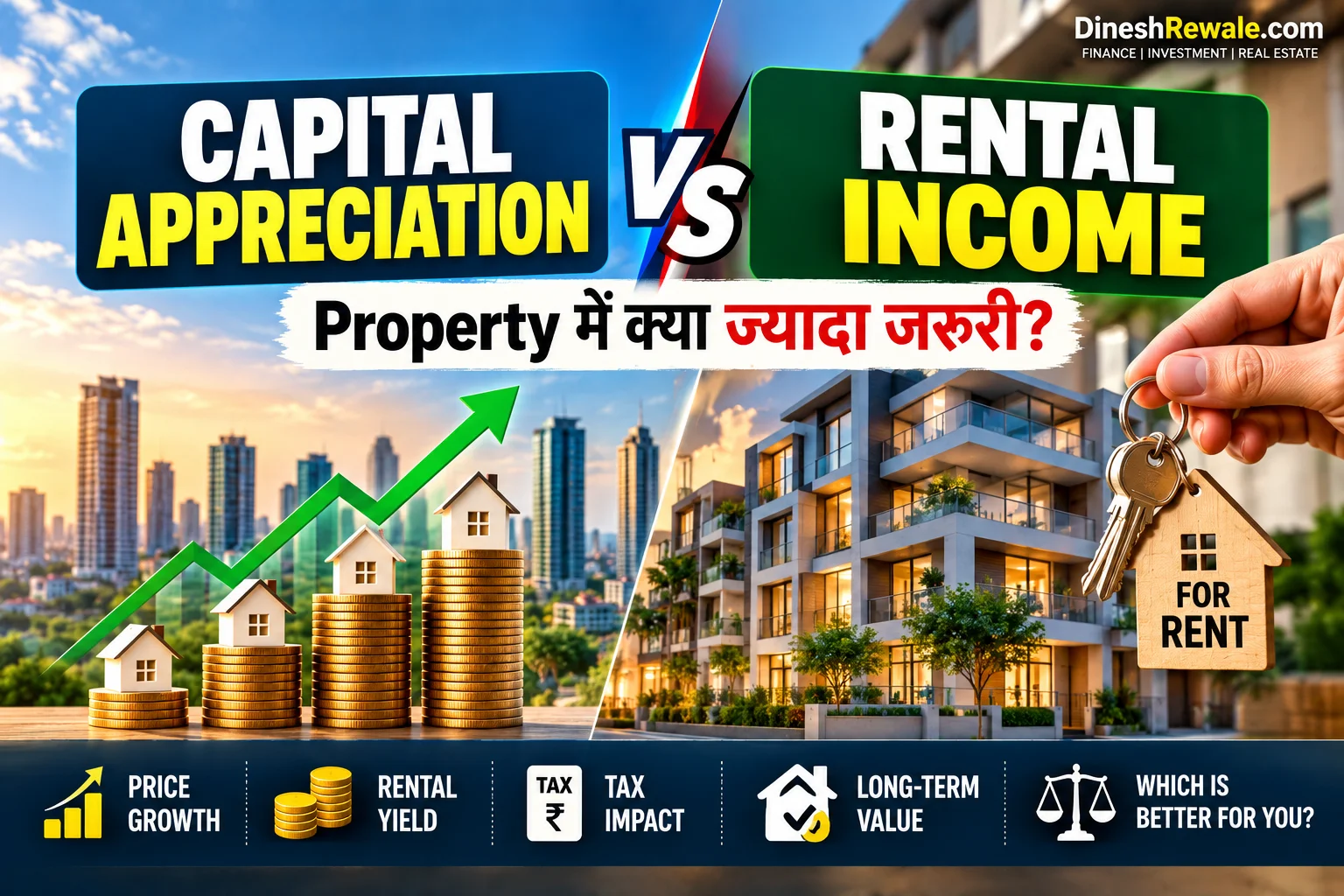
Capital Appreciation vs Rental Income: 7 जरूरी फर्क
Property में investment करते समय एक सवाल बार-बार सामने आता है: Capital Appreciation ज्यादा जरूरी है या Rental Income? इसका जवाब सिर्फ “property की price बढ़ेगी” या “हर महीने rent आएगा” से नहीं निकलता। दोनों returns का nature अलग है, cash flow अलग है और risk भी अलग तरह का होता है।
एक तरफ Capital Appreciation आपकी property की market value बढ़ने से मिलने वाला potential gain है। दूसरी तरफ Rental Income property को rent पर देकर मिलने वाला regular cash flow है। सही comparison के लिए आपको purchase cost, rental yield, vacancy, maintenance, financing cost, taxes, selling costs और holding period को साथ में देखना चाहिए।
इस guide में आप समझेंगे कि Capital Appreciation और Rental Income में क्या अंतर है, दोनों की calculation कैसे करें, किस situation में कौन-सा factor अधिक relevant हो सकता है और property खरीदने से पहले कौन-से numbers check करने चाहिए।
Property में क्या ज्यादा जरूरी है?
Capital Appreciation और Rental Income दोनों महत्वपूर्ण हैं, लेकिन उनका महत्व आपके goal पर निर्भर करता है. Long-term wealth building में property value growth relevant हो सकती है, जबकि regular cash flow की जरूरत होने पर rent अधिक important हो सकता है। कई investors के लिए सबसे practical approach दोनों को एक साथ evaluate करना है।
Capital Appreciation क्या होता है?
Capital Appreciation का मतलब है property की market value का समय के साथ बढ़ना। उदाहरण के लिए आपने एक flat कुल ₹1 करोड़ में खरीदा और कुछ वर्षों बाद उसकी market value ₹1.30 करोड़ हो गई, तो paper appreciation ₹30 लाख है।
ध्यान रखें कि यह gain तब तक realised profit नहीं है जब तक property बेची नहीं जाती। Sale के समय brokerage, taxes, legal or transaction costs और अन्य applicable charges net amount को प्रभावित कर सकते हैं। Income Tax Department के अनुसार immovable property को transfer के लिए long-term capital asset मानने में 24 महीने की holding period relevant है, हालांकि actual tax calculation कई factors पर निर्भर करती है।
Capital Appreciation किन factors से प्रभावित होती है?
- Location और आसपास की demand
- Road, Metro, rail और other infrastructure improvements
- Employment hubs और business activity
- Population growth और rental demand
- Project quality, developer reputation और maintenance
- Supply-demand balance
- Redevelopment या land-use changes जैसे local factors
इनमें से कोई भी factor future appreciation की guarantee नहीं देता। Property market location-specific होता है, इसलिए सिर्फ पुराने price trend देखकर future return assume करना ठीक नहीं है।
Rental Income क्या होता है?
Rental Income वह regular income है जो आपको property किसी tenant को देकर मिलती है। इसे monthly rent, quarterly rent या contract के अनुसार अलग frequency पर receive किया जा सकता है। Residential property में rent amount location, carpet area, furnishing, building quality, connectivity और local tenant demand से प्रभावित हो सकता है।
Rental Income का सबसे बड़ा practical advantage यह है कि property hold करते हुए cash flow मिल सकता है। लेकिन पूरा rent आपकी जेब में नहीं आता। Vacancy period, repairs, maintenance, society charges, property tax, brokerage, management cost और loan interest जैसे cash expenses actual return को कम कर सकते हैं। Tax treatment भी applicable rules और आपकी individual situation पर निर्भर करता है।
Gross Rental Yield का Formula
Gross Rental Yield = (Annual Rent ÷ Total Property Cost) × 100
मान लीजिए:
- Total Property Cost = ₹1,00,00,000
- Monthly Rent = ₹35,000
- Annual Rent = ₹4,20,000
तो:
Gross Rental Yield = ₹4,20,000 ÷ ₹1,00,00,000 × 100 = 4.2%
यह सिर्फ gross yield है। Net cash return इससे कम हो सकती है क्योंकि vacancy और operating expenses को इसमें घटाया नहीं गया है।
Capital Appreciation vs Rental Income: 7 जरूरी फर्क
| Factor | Capital Appreciation | Rental Income |
|---|---|---|
| Return का source | Property value में growth | Regular rent |
| Cash flow | आमतौर पर sale पर realised | Monthly/periodic |
| Holding period | अक्सर longer horizon में देखा जाता है | Holding period के दौरान भी income |
| Main risk | Price stagnation या fall | Vacancy, tenant और maintenance |
| Liquidity | Sale process पर निर्भर | Property sale किए बिना cash flow possible |
| Calculation | Purchase value vs future/sale value | Rent ÷ total cost |
| Investor focus | Wealth growth | Cash flow |
1. Cash Flow चाहिए या Long-Term Value Growth?
यह सबसे पहला सवाल है। अगर आपका primary objective regular monthly cash flow है, तो rental potential को शुरुआत से analyse करना जरूरी है। दूसरी ओर, अगर आपका objective long-term wealth creation है और आपको कई वर्षों तक property hold करने में सुविधा है, तो appreciation potential ज्यादा relevant हो सकता है।
यही वजह है कि एक ही property दो अलग investors के लिए अलग तरह से attractive दिख सकती है। किसी investor को ₹40,000 monthly rent useful लग सकता है, जबकि दूसरा investor lower rent लेकिन stronger long-term location fundamentals को ज्यादा महत्व दे सकता है।
2. Rental Yield को सिर्फ Rent देखकर judge न करें
Monthly rent बड़ा दिखाई दे सकता है, लेकिन वास्तविक yield calculate करने के लिए Total Acquisition Cost का इस्तेमाल करें। इसमें property price के साथ applicable purchase costs भी शामिल करना अधिक useful हो सकता है।
उदाहरण:
- Agreement/Property Cost = ₹90 लाख
- Other purchase and transaction costs = ₹10 लाख
- Total Acquisition Cost = ₹1 करोड़
- Annual Rent = ₹4.2 लाख
अगर आप सिर्फ ₹90 लाख पर yield निकालेंगे तो figure ज्यादा दिखेगी। ₹1 करोड़ total cost पर gross yield 4.2% है। इसलिए different properties compare करते समय same methodology रखें।
3. Net Rental Return और Gross Yield अलग हैं
एक investor की calculation यहाँ अक्सर अधूरी रह जाती है। Gross rental yield में annual rent लिया जाता है, लेकिन net cash flow के लिए vacancy और operating expenses भी देखना चाहिए।
Illustrative Net Rental Cash Flow = Annual Rent − Vacancy Loss − Maintenance − Property Tax − Management/Brokerage − Other Cash Expenses
यह cash-flow calculation है। Taxable rental income की calculation अलग tax rules के अनुसार होती है। Income Tax Department की current guidance में house property income और eligible deductions का अलग framework है, इसलिए investment decision लेते समय cash return और tax return को एक ही number न मानें।
4. Capital Appreciation को Percentage और CAGR दोनों से देखें
मान लीजिए property की value ₹1 करोड़ से बढ़कर 5 साल में ₹1.30 करोड़ हो जाती है। Total appreciation ₹30 लाख है, यानी 30%। लेकिन 5 साल की annualised growth समझने के लिए CAGR देखना ज्यादा meaningful हो सकता है।
CAGR = (Ending Value ÷ Starting Value)^(1/Years) − 1
इस example में annualised growth लगभग 5.4% per year बैठती है। यह केवल illustrative calculation है। Actual return में purchase costs, sale costs, taxes, financing cost और holding-period expenses जोड़ने पर investor का net outcome अलग हो सकता है।
5. Vacancy Risk को हमेशा calculation में रखें
Rental property में tenant हर महीने available रहेगा, यह assume करना safe नहीं है। Tenant change, relocation, renovation, market slowdown या property-specific issues के कारण vacancy हो सकती है।
उदाहरण के लिए ₹35,000 monthly rent वाली property एक महीने vacant रही, तो annual gross rent ₹4.20 लाख के बजाय ₹3.85 लाख रह सकता है। इस simple change से gross yield भी नीचे आएगी।
इसलिए rental analysis करते समय 100% occupancy assumption की जगह realistic occupancy scenario देखना बेहतर है।
6. Loan लिया है तो Return का पूरा picture बदल सकता है
Property investment में leverage एक महत्वपूर्ण factor है। Home loan लेने पर rent का एक हिस्सा EMI और interest servicing में जा सकता है। ऐसे में property की market value बढ़ने के साथ-साथ आपकी outstanding loan balance भी देखनी चाहिए।
मान लीजिए property की value बढ़ी, लेकिन EMI, interest, maintenance और vacancy के कारण annual cash flow negative रहा। इसका मतलब यह नहीं कि investment automatically खराब है या automatically अच्छा है। आपको equity return, cash flow और total holding cost को साथ में देखना होगा।
Let-out property के home-loan interest पर tax treatment भी taxpayer की tax regime और applicable rules के अनुसार अलग considerations रख सकता है। Current Income Tax Department guidance को transaction से पहले verify करना जरूरी है।
7. Selling Time पर सिर्फ Property Price नहीं, Net Realisation देखें
Capital appreciation का फायदा realise करते समय sale price को final profit समझना सही नहीं है। Selling brokerage, documentation, taxes और अन्य applicable transaction costs net proceeds को कम कर सकते हैं।
Net Sale Proceeds = Sale Price − Selling Costs − Applicable Taxes/Charges − Outstanding Loan
यही वजह है कि “मैंने property ₹1 करोड़ में खरीदी और ₹1.30 करोड़ में बेच दी” कहना सिर्फ एक gross picture है। वास्तविक wealth gain निकालने के लिए total invested capital और net sale proceeds की तुलना करनी चाहिए।
एक Practical Example: दोनों Returns को साथ में कैसे देखें?
मान लीजिए आपने एक property में total ₹1 करोड़ invest किए। Monthly rent ₹35,000 है, यानी annual gross rent ₹4.20 लाख। पाँच साल बाद property की market value ₹1.30 करोड़ हो जाती है।
| Metric | Illustrative Result |
|---|---|
| Total Initial Cost | ₹1,00,00,000 |
| Monthly Rent | ₹35,000 |
| Annual Gross Rent | ₹4,20,000 |
| Gross Rental Yield | 4.2% |
| Value after 5 years | ₹1,30,00,000 |
| Gross Capital Appreciation | ₹30,00,000 |
| Approx. Appreciation CAGR | 5.4% p.a. |
इस example में investor को एक तरफ rental cash flow मिला और दूसरी तरफ property value में increase हुआ। लेकिन final return निकालने के लिए vacancy, maintenance, tax, financing cost और selling costs भी consider करने होंगे। इसलिए rental yield और appreciation को अलग-अलग देखने के बजाय total return framework में analyse करना ज्यादा useful है।
Capital Appreciation कब ज्यादा relevant हो सकती है?
Capital Appreciation को ज्यादा weight देने वाली situations में आम तौर पर ये conditions देखी जाती हैं:
- आपका investment horizon कई वर्षों का है।
- आप regular monthly cash flow पर निर्भर नहीं हैं।
- Location में demand drivers और infrastructure pipeline समझ में आती है।
- आप property को लंबे समय तक hold कर सकते हैं।
- आप valuation और entry price को carefully assess कर रहे हैं।
यहाँ भी appreciation guarantee नहीं है। Infrastructure announcement और actual execution के बीच बड़ा फर्क हो सकता है। इसलिए announced project को completed benefit मानकर calculation न करें।
Rental Income कब ज्यादा relevant हो सकती है?
Rental Income को ज्यादा weight देने वाली situations में आपको खासकर ये points check करने चाहिए:
- आपको recurring cash flow की जरूरत है।
- Location में tenant demand दिखाई देती है।
- Property का rent purchase cost के मुकाबले reasonable yield देता है।
- Vacancy और maintenance risk manageable है।
- आप tenant management या professional property management handle कर सकते हैं।
यहाँ भी सिर्फ high advertised rent देखकर decision न लें। Nearby comparable properties, actual achieved rents और vacancy periods check करना ज्यादा practical है।
Hybrid Approach: Rental Income + Capital Appreciation
कई property investors के लिए binary choice जरूरी नहीं होती। वे ऐसी property तलाशते हैं जहाँ reasonable rental income के साथ long-term appreciation potential भी हो।
ऐसी property evaluate करते समय आपको चार numbers एक साथ देखने चाहिए:
- Total acquisition cost
- Net rental cash flow
- Expected holding period
- Potential net sale value
इसके बाद अलग-अलग scenarios बनाएं: conservative, base और optimistic। यह approach आपको किसी एक attractive number पर over-rely करने से बचा सकती है।
Property खरीदने से पहले 10 Checks
- Total acquisition cost: सिर्फ agreement price नहीं।
- Carpet area: comparable basis के लिए documented area देखें।
- Current market rent: actual local listings और comparable deals देखें।
- Gross rental yield: annual rent ÷ total cost।
- Net rental cash flow: vacancy और regular expenses के बाद।
- Location fundamentals: jobs, connectivity, social infrastructure और demand।
- Supply: आसपास future inventory कितना आ रहा है।
- Loan burden: EMI और interest को cash-flow model में रखें।
- Exit costs: brokerage, taxes और other selling expenses।
- Legal/RERA verification: project documents और approvals independently check करें।
RERA और Official Records क्यों Check करें?
Property investment decision में advertised brochure को final source न मानें। RERA framework project-related disclosures के लिए important reference देता है। RERA Act में apartment के carpet area जैसी details के disclosure का framework है, और Maharashtra में registered projects को MahaRERA portal पर search किया जा सकता है।
MahaRERA Official Website पर project registration और available project information verify करें। RERA की statutory text के लिए India Code भी reference source है।
Rental Property की Tax Planning भी समझें
Rental income और capital gains दोनों पर tax implications हो सकते हैं, लेकिन उनका tax treatment एक जैसा नहीं होता। Income Tax Department house property income और capital gains के लिए अलग provisions लागू करता है। इसलिए investment return calculate करते समय gross return, net cash return और post-tax return को अलग-अलग रखें।
Latest rules और अपनी individual situation के लिए Income Tax Department की official information देखें और जरूरत हो तो CA या qualified tax professional से advice लें।
आगे क्या पढ़ें?
- Flat की सही Price कैसे Calculate करें?
- New Flat vs Resale Flat
- Ready-to-Move vs Under-Construction Flat
- Home Loan EMI Salary का कितना % होना चाहिए?
FAQs
1. Capital Appreciation और Rental Income में basic difference क्या है?
Capital Appreciation property value में increase है, जबकि Rental Income property को rent पर देकर मिलने वाला recurring cash flow है।
2. Property investment में Rental Yield कैसे निकालते हैं?
Gross Rental Yield = Annual Rent ÷ Total Property Cost × 100। Net yield के लिए vacancy और operating expenses भी consider करें।
3. क्या high rental yield का मतलब property अच्छा investment है?
जरूरी नहीं। Tenant demand, vacancy, property condition, location, legal risk, price valuation, resale liquidity और future demand भी equally important factors हैं।
4. क्या capital appreciation guaranteed होती है?
नहीं। Property prices location, economic conditions, supply-demand, infrastructure, interest rates और local market factors के कारण बढ़ भी सकती हैं, स्थिर रह सकती हैं या घट सकती हैं।
5. Loan लेकर rental property खरीदना सही है?
इसका जवाब आपकी EMI affordability, expected rent, vacancy risk, interest cost, holding period और overall finances पर निर्भर करता है। सिर्फ rent से EMI cover हो रही है या नहीं, इतना देखना पर्याप्त नहीं है।
6. Property compare करते समय सबसे जरूरी number कौन-सा है?
एक single number पर निर्भर न रहें। Total acquisition cost, net rental cash flow, valuation और realistic exit value को साथ में देखें।
7. क्या Mumbai, Navi Mumbai और Thane में rental yield और appreciation एक जैसी होती है?
नहीं। हर micro-market में purchase price, rent, tenant profile, infrastructure, supply और demand अलग हो सकती है। इसलिए city-level assumption की जगह locality-level data compare करें।
निष्कर्ष
Capital Appreciation vs Rental Income का सवाल वास्तव में “कौन ज्यादा अच्छा है?” से ज्यादा “आपका investment goal क्या है?” का सवाल है.
Capital Appreciation long-term wealth growth का potential दिखाती है, जबकि Rental Income property hold करते हुए recurring cash flow दे सकती है। एक property high rent दे सकती है लेकिन limited price growth दिखाए, जबकि दूसरी property का rent modest हो सकता है लेकिन long-term value drivers मजबूत हो सकते हैं।
इसलिए property खरीदने से पहले सिर्फ future price या monthly rent पर focus न करें। Total cost + net rent + holding period + financing cost + taxes + exit value को एक साथ model करें। यही approach आपको property investment को ज्यादा practical तरीके से समझने में मदद करेगी।
Author: Dinesh Rewale
Dinesh Rewale एक independent content creator और blogger हैं, जो personal finance, business, investments, technology, real estate और current affairs को आसान, reader-friendly भाषा में समझाने पर ध्यान देते हैं.
Facebook: https://www.facebook.com/profile.php?id=61574859401427
Financial Disclaimer: यह article केवल educational और informational purpose के लिए है। Property prices, rents, taxes, financing costs, rental demand, capital appreciation और local regulations समय तथा location के अनुसार बदल सकते हैं। किसी property में investment करने से पहले RERA/project records, title documents, agreement, local market comparables और applicable tax rules को independently verify करें तथा जरूरत के अनुसार qualified property lawyer, CA या financial professional से सलाह लें।