
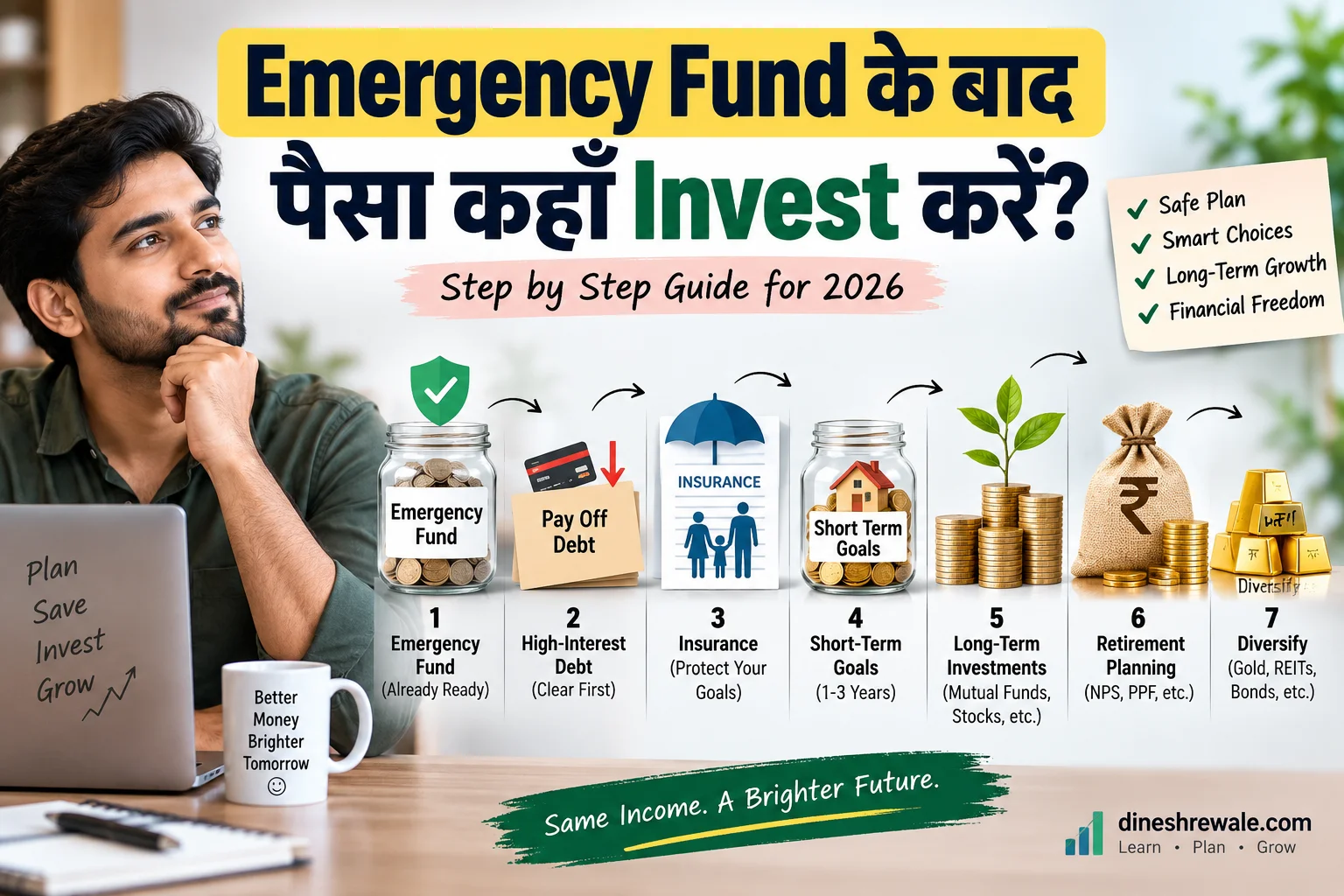
Emergency Fund के बाद पैसा कहाँ Invest करें? 2026 Guide
अगर आपका Emergency Fund पूरा हो चुका है, तो अगला सवाल अक्सर होता है: “अब पैसा कहाँ लगाऊँ?” यहीं पर बहुत से investors गलती करते हैं। Emergency fund बनने के बाद सीधे किसी random mutual fund, stock या gold में पैसा डालना जरूरी नहीं है। अगला कदम आपके debt, insurance, short-term goals और investment horizon पर निर्भर करता है।
इस guide का सबसे महत्वपूर्ण idea है: Emergency Fund के बाद अगला investment product नहीं, अगला financial job चुनिए। जिस पैसे की जरूरत 2 साल में है उसका काम wealth creation नहीं है। जिस पैसे को 10-15 साल नहीं छूना है, उसे बहुत ज्यादा cash में रखना भी opportunity cost पैदा कर सकता है।
Quick Answer: Emergency Fund के बाद पैसा कहाँ लगाएँ?
- High-interest debt है: पहले उसे कम या खत्म करने पर विचार करें।
- Insurance gaps हैं: health insurance और जरूरत के अनुसार term cover की समीक्षा करें।
- 1-3 साल का goal है: equity से बचते हुए goal-specific low-volatility options देखें।
- 5-10+ साल का goal है: diversified equity mutual funds या broad-market index approach पर विचार किया जा सकता है।
- Retirement goal है: EPF/PPF/NPS और long-term equity को एक साथ देखकर allocation बनाएं।
- Portfolio पहले से equity-heavy है: सिर्फ इसलिए दूसरा equity fund न जोड़ें कि पैसा available है। Asset allocation पहले देखें।
सबसे पहले यह तय करें: पैसा कब चाहिए?
Emergency fund पूरा होने के बाद बचने वाला हर रुपया long-term investment नहीं होता। आपकी अगली decision-making तीन buckets से शुरू होनी चाहिए।
| पैसे की जरूरत | मुख्य priority | आम तौर पर किस तरह का approach? |
|---|---|---|
| 0-3 साल | Capital stability + liquidity | Savings/FD/RD और suitable short-term debt options |
| 3-5 साल | Goal protection + limited growth | Debt-oriented या suitable hybrid allocation, goal के हिसाब से |
| 5-10+ साल | Long-term growth | Diversified equity / index-oriented approach, risk capacity के अनुसार |
महत्वपूर्ण: यह कोई fixed product prescription नहीं है। Mutual fund category चुनने से पहले scheme का objective, portfolio, Riskometer, costs, exit load और taxation देखें। AMFI के अनुसार equity schemes long-term growth के लिए होती हैं लेकिन short term में volatile हो सकती हैं। AMFI की scheme categorization guidance देखें।
Step 1: Emergency Fund के बाद High-Interest Debt Check करें
मान लीजिए आपके पास ₹3 लाख का emergency fund है और उसके ऊपर ₹2 लाख surplus है। लेकिन credit card या महंगे personal loan पर भारी interest चल रहा है। ऐसे में सिर्फ investment return की उम्मीद में पूरा ₹2 लाख market में डालना जरूरी नहीं।
अगर किसी debt की effective cost आपकी realistic after-tax investment expectation से काफी अधिक है, तो debt reduction एक मजबूत financial use हो सकता है। यह “guaranteed investment return” नहीं है, बल्कि interest expense बचाने का गणित है।
एक आसान calculation
मान लें outstanding high-cost debt ₹1,00,000 है और effective annual interest cost 18% है। अगर आप principal ₹1,00,000 घटा देते हैं, तो एक साल के लिए roughly ₹18,000 interest cost बचने की क्षमता बनती है, हालांकि actual saving repayment schedule और compounding पर निर्भर करेगी।
यानी emergency fund के बाद पहला सवाल “कौन सा mutual fund?” नहीं, बल्कि “क्या मेरा expensive debt मुझे पीछे खींच रहा है?” होना चाहिए।
Step 2: Insurance को Investment समझने की गलती न करें
Emergency fund cash-flow shock संभालता है। Insurance बड़े financial risks को transfer करने में मदद करता है। दोनों का काम अलग है।
- Health insurance की coverage और exclusions review करें।
- Dependents होने पर term insurance की जरूरत और adequacy देखें।
- Employer insurance को permanent personal cover मानने से पहले उसकी portability और job-loss implications समझें।
अगर insurance में gap है, तो emergency fund के ऊपर उपलब्ध surplus का एक हिस्सा protection setup को मजबूत करने में जाना investment से पहले ज्यादा जरूरी हो सकता है।
Step 3: Short-Term Goals के पैसे को Equity से अलग रखें
यह सबसे common mistake है। Emergency fund पूरा होने के बाद कोई व्यक्ति car down payment, higher education या अगले दो साल में होने वाली शादी के पैसे को भी equity SIP में डाल देता है। Market correction ठीक उसी समय आ गया तो goal की date बदलनी पड़ सकती है।
मान लें आपका goal ₹3,00,000 है और आपको 24 महीने बाद पैसा चाहिए। आपने इसे equity में रखा और market गिरने के कारण value 20% कम हो गई। अगर पूरा ₹3 लाख invested था, तो temporary value करीब ₹2.40 लाख रह सकती है। आपको ₹60,000 का gap भरने के लिए extra saving या goal postponement करना पड़ सकता है। यह calculation केवल risk illustration है, market prediction नहीं।
इसलिए short-term goal के लिए return से पहले date certainty देखें।
Step 4: Long-Term पैसा Equity में काम कर सकता है
अगर emergency fund मजबूत है, expensive debt controlled है, insurance adequate है और पैसा 7-10 साल या उससे ज्यादा समय के लिए है, तब diversified equity investing portfolio का growth engine बन सकता है।
Beginners के लिए broad-market index fund एक simple route हो सकता है, जबकि कुछ investors diversified active mutual funds चुन सकते हैं। SEBI के अनुसार mutual funds diversified portfolios, disclosures और regulatory framework के साथ operate करते हैं, लेकिन investment risk बना रहता है। SEBI Investor की mutual fund guidance देखें।
Direct या Regular?
अगर आप खुद research, selection और review कर सकते हैं, तो Direct Plan की lower expense structure useful हो सकती है। SEBI investor material के अनुसार Direct Plans में intermediary commission नहीं होता और expense ratio Regular Plan की तुलना में कम होता है। लेकिन lower cost का मतलब यह नहीं कि हर investor के लिए self-management automatically बेहतर है। SEBI की Direct vs Regular guidance देखें।
आपके ब्लॉग पर पहले से मौजूद Direct vs Regular Mutual Fund guide इस decision को detail में समझाती है।
Emergency Fund के बाद Equity में कितना डालें?
यह salary का fixed percentage नहीं होना चाहिए। पहले आपका asset allocation तय होना चाहिए। उदाहरण के लिए एक 30 वर्षीय investor जिसका goal 15 साल दूर है और जिसकी risk capacity अच्छी है, वह equity का बड़ा हिस्सा रख सकता है। वहीं 45 वर्षीय व्यक्ति जिसका घर खरीदने का goal 4 साल दूर है, उसी allocation को copy नहीं कर सकता।
आप उम्र और salary के हिसाब से Asset Allocation वाली guide से अपनी overall allocation सोच सकते हैं।
| Situation | पहली priority | अगला कदम | किससे बचें? |
|---|---|---|---|
| Emergency fund पूरा, credit card debt बाकी | Debt reduction | फिर long-term investing बढ़ाएँ | High-cost debt के साथ aggressive investing |
| Emergency fund पूरा, 2 साल में goal | Goal protection | Low-volatility parking | 100% equity |
| Emergency fund पूरा, 10+ साल का goal | Growth | Diversified equity / index approach | Random stock picking |
| Retirement focus | Asset allocation | EPF/PPF/NPS + market investments को साथ देखें | सिर्फ एक product पर निर्भर रहना |
| पहले से बहुत equity | Rebalancing | Debt/fixed-income allocation देखें | Overlap वाले नए funds जोड़ना |
₹50,000 Monthly Surplus का Practical Example
मान लें आपकी salary ₹1,00,000 है और emergency fund पहले ही target तक पहुंच चुका है। आपके पास हर महीने ₹20,000 निवेश के लिए बचते हैं। यह केवल एक illustrative allocation है, recommendation नहीं:
- ₹12,000: long-term diversified equity / index-oriented investment
- ₹5,000: medium-term goal bucket
- ₹3,000: retirement-specific allocation, यदि आपके existing EPF/PPF/NPS position को देखते हुए इसकी जरूरत है
अगर आपका कोई medium-term goal नहीं है और retirement allocation पहले से पर्याप्त है, तो ₹5,000 को long-term goal में shift किया जा सकता है। यही वजह है कि “हर व्यक्ति के लिए 70:20:10” जैसे fixed formulas हमेशा useful नहीं होते।
एक और Calculation: SIP का फर्क समय से बनता है
मान लें आप ₹15,000 प्रति माह 15 साल तक निवेश करते हैं। कुल contribution = ₹15,000 × 12 × 15 = ₹27 लाख।
अगर केवल illustration के लिए 10% annualised return assume करें, तो future value लगभग ₹62 लाख के आसपास हो सकती है। यह guaranteed return नहीं है। Actual market return अलग होगा, taxes/costs का प्रभाव हो सकता है और SIP returns linear नहीं होते।
इस example का point 10% return promise करना नहीं है। Point यह है कि emergency fund पूरा होने के बाद long-term money को बहुत लंबे समय तक idle रखने की opportunity cost हो सकती है।
Gold, PPF और NPS कहाँ Fit होते हैं?
Gold
Gold को portfolio diversifier के रूप में देखा जा सकता है, लेकिन इसे emergency fund या primary wealth-creation asset मानना जरूरी नहीं। Gold allocation आपके overall asset mix और risk profile के अनुसार होना चाहिए।
PPF
PPF long-term fixed-income oriented government-backed savings framework का हिस्सा है, लेकिन इसमें liquidity और tenure constraints हैं। इसलिए अगले 2-3 साल में चाहिए पैसा केवल PPF में डालना उचित नहीं होगा।
NPS
NPS retirement-focused product है। PFRDA के अनुसार All Citizen Model में asset allocation के लिए Equity, Corporate Bonds और Government Securities जैसी asset classes उपलब्ध हैं और Active Choice में equity allocation की सीमा 75% तक हो सकती है। PFRDA की NPS guidance देखें।
NPS को सिर्फ “tax saving product” की तरह न देखें। इसे retirement objective, liquidity rules और existing EPF/PPF/equity allocation के साथ evaluate करें।
Tax को Investment Decision के बाद नहीं, पहले देखें
एक investment का headline return और आपका actual after-tax outcome अलग हो सकता है। Income Tax Department की current AY 2026-27 information और relevant capital-gains provisions को investment बेचने से पहले check करना जरूरी है। Equity shares और equity-oriented funds के लिए Section 112A जैसे provisions लागू हो सकते हैं, जबकि अलग asset classes के tax rules अलग हो सकते हैं। Income Tax Department की capital gains information देखें।
Rule of thumb: केवल tax benefit देखकर investment मत चुनिए। पहले goal और risk, फिर liquidity, फिर tax efficiency देखें।
Emergency Fund के बाद पैसा Invest करने का Decision Framework
- क्या कोई high-interest debt है? हाँ तो पहले उसकी cost देखें।
- क्या health/term insurance में gap है? अगर हाँ, protection मजबूत करें।
- पैसा कब चाहिए? 3 साल, 5 साल या 10+ साल?
- अगर market 20-30% गिर जाए तो क्या आप investment बेचेंगे? अगर हाँ, equity allocation शायद ज्यादा है।
- आपका current portfolio किस asset class में ज्यादा है? नया investment उसी concentration को बढ़ा रहा है या balance कर रहा है?
- Tax और costs क्या हैं? Product चुनने से पहले देखें।
- क्या investment किसी specific goal से जुड़ा है? Goal-based investing random fund collection से बेहतर framework देता है।
किन Investments में जल्दबाजी न करें?
- Individual stocks: Emergency fund पूरा होने का मतलब stock-picking के लिए तैयार होना नहीं है।
- Sectoral/thematic funds: concentrated exposure के कारण इन्हें core portfolio का automatic replacement न बनाएं।
- Long lock-in products: जिस पैसे की liquidity चाहिए उसे lock-in में न डालें।
- Insurance-cum-investment products: insurance और investment needs को अलग-अलग समझे बिना सिर्फ “दोनों एक साथ” देखकर खरीदारी न करें।
- Too many mutual funds: पांच अलग funds रखना diversification नहीं, overlap भी हो सकता है।
एक Simple Portfolio Order जो Beginners समझ सकते हैं
Emergency Fund → High-cost Debt → Insurance → Short-term Goals → Long-term Equity → Retirement Allocation → Diversification → Periodic Rebalancing
यह universal financial prescription नहीं है। इसे एक decision sequence की तरह देखें। किसी व्यक्ति की situation में debt repayment और investing parallel चल सकते हैं। किसी दूसरे व्यक्ति के लिए retirement contribution पहले से employer structure के कारण पर्याप्त हो सकता है।
5 गलतियाँ जो Emergency Fund बनने के बाद होती हैं
- पूरा surplus एक ही mutual fund में डाल देना।
- Emergency fund को बढ़ाते-बढ़ाते long-term investing बहुत देर से शुरू करना।
- Goal date ignore करना।
- Tax और exit rules देखे बिना product खरीदना।
- Portfolio review किए बिना हर साल नया fund जोड़ना।
आपके लिए 10-Minute Action Checklist
- अपने emergency fund की target amount लिखें और verify करें।
- सभी high-interest debt की outstanding amount और effective cost लिखें।
- Health और term insurance coverage check करें।
- अगले 5 साल के बड़े financial goals की list बनाएं।
- हर goal के सामने target date लिखें।
- Existing investments को equity, debt, gold और cash में classify करें।
- Overlapping mutual funds पहचानें।
- Long-term money के लिए asset allocation तय करें।
- Tax और investment costs check करें।
- फिर ही नया SIP या lump-sum investment शुरू करें।
अक्सर पूछे जाने वाले सवाल
1. क्या Emergency Fund पूरा होते ही SIP शुरू करनी चाहिए?
अगर high-interest debt controlled है, insurance basics ठीक हैं और long-term goal है, तो SIP शुरू या बढ़ाई जा सकती है। लेकिन short-term goal का पैसा अलग रखें।
2. Emergency Fund के बाद FD बेहतर है या Mutual Fund?
यह पैसे की जरूरत और risk पर निर्भर है। Emergency fund की liquidity priority है, जबकि long-term surplus के लिए market-linked investments अधिक relevant हो सकते हैं।
3. क्या पूरा surplus Equity Mutual Fund में डालना सही है?
नहीं। पहले short-term goals और existing asset allocation देखें। जरूरत के पैसे को equity में रखने से timing risk बढ़ सकता है।
4. क्या NPS को Mutual Fund का replacement मान सकते हैं?
नहीं। NPS का retirement-oriented structure और withdrawal rules अलग हैं। इसे overall retirement allocation के हिस्से के रूप में देखें।
5. Emergency Fund के बाद Gold खरीदना चाहिए?
Gold portfolio diversification में भूमिका निभा सकता है, लेकिन allocation आपकी overall portfolio risk और goals के हिसाब से होना चाहिए।
6. ₹50,000 salary में Emergency Fund के बाद कहाँ invest करें?
पहले essential expenses, debt और goals देखें। आपके लिए salary-based planning समझने के लिए ₹50,000 Salary Save & Invest Guide उपयोगी starting point है।
7. Index Fund या Active Mutual Fund?
अगर आप low-cost, broad-market approach चाहते हैं तो index fund एक option हो सकता है। Active fund चुनते समय strategy, costs और consistency को समझें। Index Fund vs Mutual Fund comparison देखें।
8. Emergency Fund के बाद investment कितनी बार review करना चाहिए?
हर market move पर portfolio बदलने के बजाय goals, asset allocation और life changes के आधार पर periodic review करें। नया loan, शादी, बच्चा, job change या बड़ा goal allocation बदल सकता है।
आपके लिए Related Guides
- Emergency Fund कितना होना चाहिए?
- उम्र और Salary के हिसाब से Asset Allocation
- ₹1 Lakh Salary वालों का Investment Plan
Bottom Line
Emergency Fund के बाद पैसा कहाँ Invest करें? इसका सही जवाब “फलाँ mutual fund” नहीं है। सही जवाब आपकी financial priorities के क्रम में छिपा है। पहले महंगा debt और protection gaps देखें। फिर short-term goals का पैसा सुरक्षित रखें। उसके बाद 5-10+ साल के पैसे को diversified long-term investments में काम करने दें।
अगर आप beginner हैं, तो एक simple portfolio अक्सर दस अलग-अलग products से बेहतर समझ आता है। आपका लक्ष्य हर available investment खरीदना नहीं, बल्कि हर रुपये को सही समय और सही काम देना होना चाहिए।
Financial Disclaimer
यह लेख केवल educational और informational purpose के लिए है। इसमें दिए गए examples, calculations और allocation illustrations व्यक्तिगत investment advice नहीं हैं और किसी specific mutual fund, stock, NPS, PPF, FD या अन्य financial product की recommendation नहीं हैं। Market-linked investments में loss का जोखिम होता है। Tax rules, interest rates और product features समय के साथ बदल सकते हैं, इसलिए निवेश या redemption से पहले संबंधित official source और current product documents verify करें। जरूरत होने पर SEBI-registered investment adviser या योग्य tax professional से व्यक्तिगत सलाह लें।