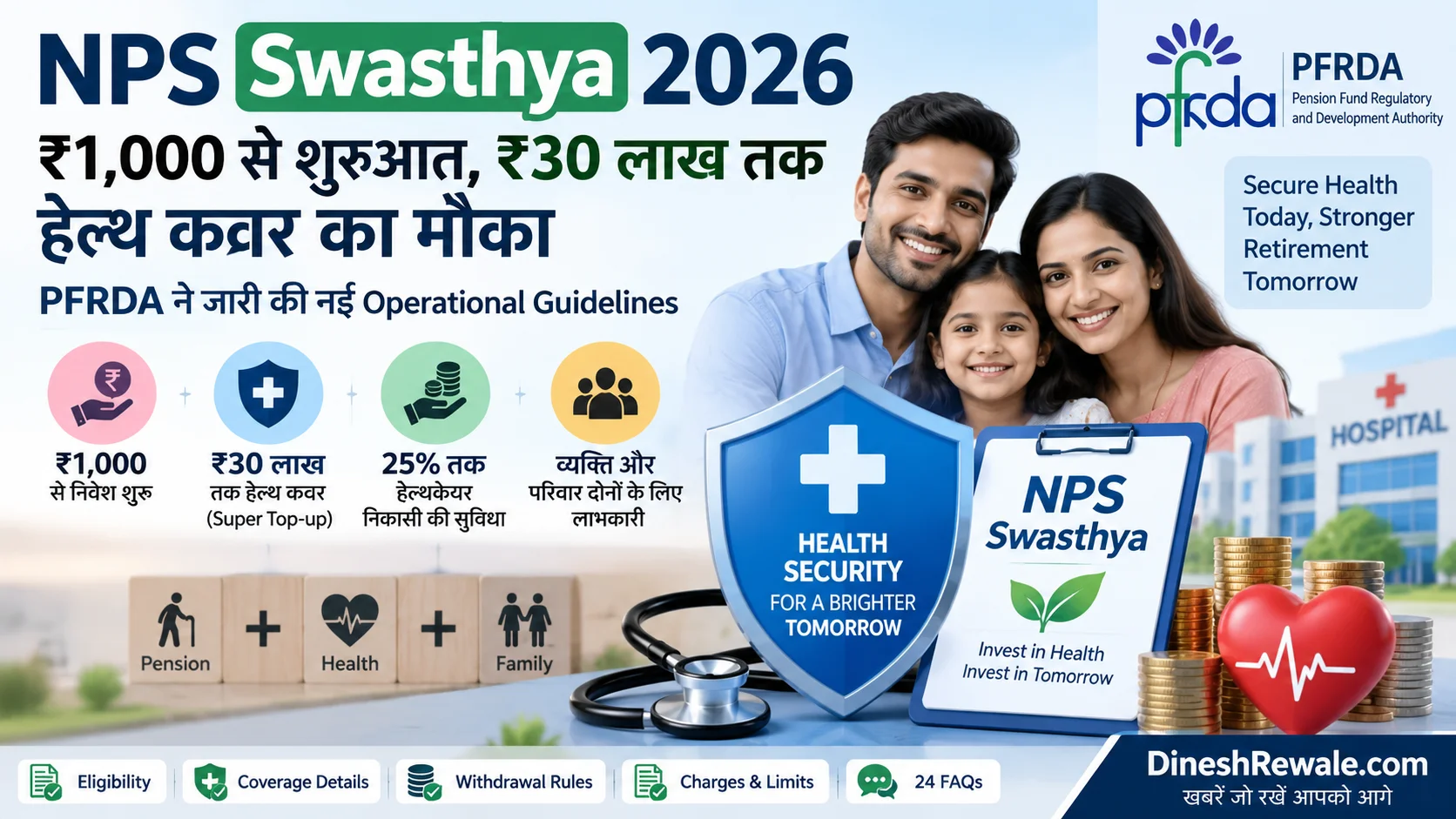
NPS Swasthya 2026: ₹1,000 निवेश, ₹30 लाख तक हेल्थ कवर
नई दिल्ली, 21 सितंबर 2026: National Pension System (NPS) में healthcare और retirement savings को जोड़ने वाली NPS Swasthya व्यवस्था के लिए Pension Fund Regulatory and Development Authority (PFRDA) ने 18 सितंबर 2026 को final operational guidelines जारी कर दी हैं। नई guidelines में eligibility, minimum contribution, health insurance, healthcare withdrawal, exit और servicing से जुड़े नियम स्पष्ट किए गए हैं।
सबसे महत्वपूर्ण बात यह है कि NPS Swasthya को केवल एक सामान्य health insurance plan समझना सही नहीं होगा। यह NPS Swasthya investment account और एक अलग mandatory super top-up health insurance policy के combination के रूप में काम करेगा। PFRDA के अनुसार इसका उद्देश्य retirement corpus बनाने के साथ eligible healthcare expenses के लिए withdrawal facility और health insurance ecosystem उपलब्ध कराना है।
NPS Swasthya क्या है?
NPS Swasthya, NPS framework के तहत बनाया गया एक specific-purpose pension scheme है। इसमें subscriber के लिए एक NPS Swasthya investment account होगा और उसके साथ अलग super top-up health insurance policy जुड़ी होगी। Insurance policy में enrolment mandatory रहेगा, लेकिन NPS account और insurance policy कानूनी तथा operational रूप से अलग रहेंगे।
PFRDA की 18 सितंबर 2026 की guidelines के मुताबिक, NPS में शामिल होने के लिए eligible कोई भी individual NPS Swasthya में enrol कर सकता है, लागू नियमों के अधीन।
NPS Swasthya में कितना पैसा लगाना होगा?
नई व्यवस्था में initial contribution केवल ₹1,000 नहीं है। प्रारंभिक contribution में तीन हिस्से शामिल होंगे:
- पहले साल की applicable insurance policy premium, जिसमें applicable taxes शामिल होंगे।
- Health Benefit Administrator (HBA) के लिए ₹200 annual maintenance charge, plus applicable taxes.
- ₹1,000 NPS Swasthya account में investment के लिए।
इसके बाद NPS Swasthya में minimum subsequent contribution ₹10 रखा गया है। इसलिए “₹1,000 से NPS Swasthya” वाली headline केवल investment component को दर्शाती है, जबकि initial enrolment amount में insurance premium और maintenance charges भी जुड़ेंगे।
₹30 लाख तक health cover कैसे मिलेगा?
NPS Swasthya के standard insurance framework में family floater health cover के चार options निर्धारित किए गए हैं। इनके साथ अलग annual aggregate deductible रहेगा:
| Annual Aggregate Deductible | Family Floater Sum Insured |
|---|---|
| ₹10,000 | ₹1 लाख |
| ₹50,000 | ₹5 लाख |
| ₹1 लाख | ₹10 लाख |
| ₹3 लाख | ₹30 लाख |
इसलिए ₹30 लाख तक का cover available option है, लेकिन यह बिना किसी deductible या premium के universal ₹30 लाख insurance नहीं है। कौन-सा option लागू होगा, यह policy terms, premium और चुने गए cover structure पर निर्भर करेगा।
Family floater में कौन शामिल होगा?
Standard policy में subscriber, spouse और अधिकतम दो dependent children को एक family floater unit के रूप में cover किया जाएगा। Parents इस standard coverage unit में शामिल नहीं हैं।
NPS Swasthya की eligibility और age limit
Guidelines के अनुसार NPS में eligible individual NPS Swasthya में enrol कर सकता है। Standard insurance policy में subscriber की entry age 18 से 70 वर्ष है। Policy renewal applicable premium, policy terms और insurance law के अधीन 85 वर्ष की उम्र तक जारी रह सकता है।
यह अंतर महत्वपूर्ण है, क्योंकि NPS Swasthya account की eligibility और insurance policy की underwriting conditions एक ही चीज नहीं हैं। Insurance coverage पर policy terms और IRDAI-regulated insurance framework भी लागू होंगे।
Healthcare खर्च के लिए कितना पैसा निकाल सकते हैं?
NPS Swasthya की सबसे अहम विशेषताओं में healthcare-related partial withdrawal शामिल है। Eligible healthcare expenses के लिए subscriber अपने NPS Swasthya account में किए गए contributions के अधिकतम 25% तक partial withdrawal कर सकता है।
Guidelines में eligible outpatient और inpatient healthcare expenses दोनों शामिल हैं। Partial withdrawal की संख्या पर कोई fixed numerical limit नहीं रखी गई है और पहले या बाद के withdrawal के लिए minimum waiting period भी निर्धारित नहीं किया गया है।
एक और महत्वपूर्ण नियम है कि withdrawal amount सीधे subscriber को cash के रूप में नहीं दिया जाएगा। निर्धारित process के अनुसार payment संबंधित hospital, healthcare provider या eligible entity के साथ settlement के लिए किया जाएगा।
अगर healthcare bill बड़ा हो तो क्या होगा?
Guidelines में premature exit का एक specific route दिया गया है। अगर eligible inpatient healthcare expenditure किसी एक instance में partial withdrawal के तहत उपलब्ध अनुमत राशि से अधिक हो जाता है, तो subscriber premature exit का option ले सकता है।
ऐसी स्थिति में accumulated NPS Swasthya corpus को पहले eligible inpatient healthcare expenditure की जरूरत के लिए इस्तेमाल किया जाएगा। अगर कुछ balance बचता है, तो NPS Swasthya account बंद होकर लागू प्रक्रिया के अनुसार All Citizen Model की NPS scheme में merge या convert किया जा सकता है।
मौजूदा NPS से पैसा NPS Swasthya में transfer कर सकते हैं?
हाँ, लेकिन transfer पूरी तरह unrestricted नहीं है। मौजूदा All Citizen Model NPS scheme से NPS Swasthya account में funds transfer किए जा सकते हैं, पर amount को applicable insurance policy के deductible को पूरा करने के लिए आवश्यक सीमा तक सीमित रखा गया है।
इसका मतलब यह नहीं है कि subscriber अपनी पूरी मौजूदा NPS बचत को NPS Swasthya में freely shift कर सकता है। Transfer facility का उद्देश्य insurance deductible की जरूरत पूरी करना है।
NPS Swasthya में health insurance कैसे काम करेगा?
NPS Swasthya में insurance component standard super top-up health insurance policy के रूप में रहेगा। PFRDA की guidelines के मुताबिक policy एक IRDAI-registered insurer के जरिए उपलब्ध कराई जाएगी। Super top-up structure का मतलब है कि policy में तय deductible threshold पार होने के बाद eligible medical expenses पर insurance cover लागू होगा।
Standard policy में pre-hospitalisation के लिए 30 दिन और post-hospitalisation के लिए 60 दिन की provision दी गई है। Medically necessary day-care procedures, inpatient hospitalisation, domiciliary hospitalisation, AYUSH treatment, prescribed modern treatments और organ-donor medical expenses को policy terms के अधीन cover किया गया है।
Guidelines में यह भी कहा गया है कि standard policy में co-payment या disease-specific sub-limit नहीं होगा, हालांकि final policy wording और standard top-up terms लागू रहेंगे।
Waiting period क्या होगा?
NPS Swasthya के standard insurance framework में initial waiting period सामान्यतः 30 दिन है, जबकि accident के लिए final policy wording के अनुसार exception हो सकता है। Pre-existing diseases के लिए 12 महीने का waiting period और specified disease या procedure के लिए भी 12 महीने तक का waiting period रखा गया है, subject to the final insurance policy and applicable insurance law.
इस वजह से NPS Swasthya को immediate full-cover health insurance मानना ठीक नहीं होगा। Enrolment से पहले waiting period, deductible, premium और exclusions को समझना जरूरी होगा।
NPS Swasthya में charges कितने हैं?
Guidelines के अनुसार All Citizen Model पर लागू NPS charges के अलावा Pension Fund NPS Swasthya corpus पर 0.08% per annum तक management charge ले सकता है, plus applicable taxes। इसके अलावा HBA के लिए annual maintenance charge ₹200 plus applicable taxes निर्धारित है।
सभी charges को enrolment से पहले और किसी भी बदलाव की स्थिति में subscriber को disclose करना होगा।
Insurance premium हर किसी के लिए एक जैसा होगा?
नहीं। Insurance premium insurer द्वारा IRDAI framework के अनुसार तय किया जाएगा। Guidelines में entry-age cohorts 18–40 वर्ष, 40–60 वर्ष और 60–70 वर्ष के लिए premium quotation framework दिया गया है। इसलिए सिर्फ “₹1,000 में insurance” जैसी headline के आधार पर पूरा cost समझना सही नहीं होगा। ₹1,000 investment component है; insurance premium अलग से लागू होगा।
Insurance renewal के समय balance कम हो तो क्या होगा?
अगर NPS Swasthya account में renewal premium के लिए पर्याप्त funds उपलब्ध नहीं होते, तो Pension Fund को जहाँ संभव हो, subscriber को renewal से 90, 60 और 30 दिन पहले alert करने की व्यवस्था करनी होगी। Grace period और non-payment के consequences भी स्पष्ट रूप से बताए जाने होंगे।
अगर premium applicable grace period के बाद भी unpaid रहता है और cover lapse हो जाता है, तो NPS Swasthya account बंद किया जा सकता है और applicable process के अनुसार इसे All Citizen Model के NPS scheme में merge या convert किया जा सकता है।
NPS Swasthya में investment कैसे होगा?
NPS Swasthya में received contributions को PFRDA द्वारा prescribed investment pattern के अनुसार invest किया जाएगा। Guidelines के अनुसार इसके लिए Central Government Scheme के applicable investment pattern का reference लिया गया है। Pension Funds को NPS Swasthya के लिए separate scheme account maintain करना होगा।
इसका अर्थ है कि NPS Swasthya का investment component market-linked NPS structure का हिस्सा रहेगा। इसे fixed deposit या guaranteed-return health savings product नहीं माना जाना चाहिए।
NPS Swasthya और सामान्य NPS में क्या फर्क है?
| Feature | NPS | NPS Swasthya |
|---|---|---|
| मुख्य उद्देश्य | Retirement corpus | Retirement savings + healthcare benefits |
| Insurance | Standard NPS का अनिवार्य हिस्सा नहीं | Mandatory super top-up insurance |
| Healthcare withdrawal | Applicable NPS withdrawal rules | Eligible healthcare expenses के लिए 25% तक contributions |
| Minimum initial investment | Applicable NPS rules | ₹1,000 investment + premium + ₹200 maintenance + taxes |
| Insurance cover | Standard NPS benefit नहीं | ₹1 लाख से ₹30 लाख तक family-floater options |
आप पहले से NPS क्या है और retirement के लिए कितना निवेश करें वाला detailed guide भी पढ़ सकते हैं। वहीं NPS और PPF के बीच फर्क समझने के लिए NPS vs PPF comparison देखें।
NPS Swasthya किन लोगों के लिए relevant हो सकता है?
NPS Swasthya की संरचना उन subscribers के लिए खास तौर पर प्रासंगिक हो सकती है जो retirement savings के साथ healthcare expenses को भी अपने long-term financial plan में जगह देना चाहते हैं। लेकिन suitability हर व्यक्ति के लिए अलग होगी। Insurance premium, deductible, waiting period, existing employer health insurance और retirement corpus को साथ में देखना जरूरी है।
अगर आपके पास पहले से comprehensive health insurance है, तो NPS Swasthya के अतिरिक्त insurance component की practical utility को policy terms और cost के साथ compare करना चाहिए। वहीं जिन लोगों के पास retirement savings का disciplined framework है और healthcare expenses के लिए additional structured access चाहते हैं, वे इसके rules को detail में समझकर उसका आकलन कर सकते हैं।
NPS Swasthya लेने से पहले किन बातों को check करें?
- ₹1,000 को total cost न मानें: पहले साल का insurance premium और maintenance charges भी जुड़ेंगे।
- ₹30 लाख cover का structure देखें: यह ₹3 लाख annual aggregate deductible वाले family-floater option से जुड़ा है।
- मौजूदा insurance से तुलना करें: employer cover या personal health policy पहले से है तो overlap समझें।
- Withdrawal rules पढ़ें: 25% limit contributions पर आधारित है और payment healthcare provider के साथ settlement process से होगा।
- Waiting periods देखें: pre-existing disease और specified procedures के लिए 12 महीने तक waiting लागू हो सकती है।
- Premium renewal capacity रखें: future insurance premium के लिए account balance पर्याप्त रहना जरूरी है।
निष्कर्ष
NPS Swasthya 2026 NPS को healthcare needs के साथ जोड़ने वाला नया framework है। PFRDA की final operational guidelines में ₹1,000 investment component, mandatory super top-up insurance, eligible healthcare expenses के लिए 25% तक partial withdrawal और ₹1 लाख से ₹30 लाख तक family-floater cover options जैसी महत्वपूर्ण provisions तय की गई हैं।
सबसे जरूरी बात यह है कि ₹30 लाख तक का health cover available है, लेकिन यह free ₹30 लाख insurance नहीं है। Deductible, premium, waiting period और policy terms को समझे बिना सिर्फ headline देखकर निर्णय लेना उचित नहीं होगा। उसी तरह ₹1,000 केवल NPS Swasthya account में investment component है, जबकि initial contribution में insurance premium और maintenance charges भी शामिल होंगे।
18 सितंबर 2026 की PFRDA guidelines लागू होने के बाद आगे operational implementation, insurer selection और detailed policy documents से practical process और स्पष्ट होगा। इसलिए enrolment से पहले मौजूदा official terms और final insurance wording जरूर verify करें।
आधिकारिक स्रोत
- PFRDA: Operational Guidelines for NPS Swasthya under NPS, 2026
- PFRDA Official Circular PDF, 18 September 2026
- Mint: NPS Swasthya final rules and key provisions
Author: Dinesh Rewale
Dinesh Rewale is a content creator and blogger who writes about personal finance, business, investments, technology and current updates in simple, reader-friendly language.
Facebook पर Dinesh Rewale
अगला कदम: Regular health insurance के साथ NPS Swasthya claim कैसे coordinate करें, deductible कैसे count होता है और कौन-से documents चाहिए, इसकी NPS Swasthya vs Health Insurance claim process guide भी पढ़ें।
Disclaimer: यह लेख केवल सामान्य informational और educational purpose के लिए है। NPS Swasthya के insurance benefits, premium, deductible, waiting periods, withdrawal rules, tax treatment और अन्य conditions समय के साथ बदल सकते हैं। Insurance policy की final wording और PFRDA/IRDAI के लागू नियमों को enrolment या financial decision से पहले जरूर verify करें। यह लेख किसी व्यक्ति के लिए investment, pension, insurance या tax सलाह नहीं है।