Small Finance Bank FD vs Government Bank FD: 7 Rules
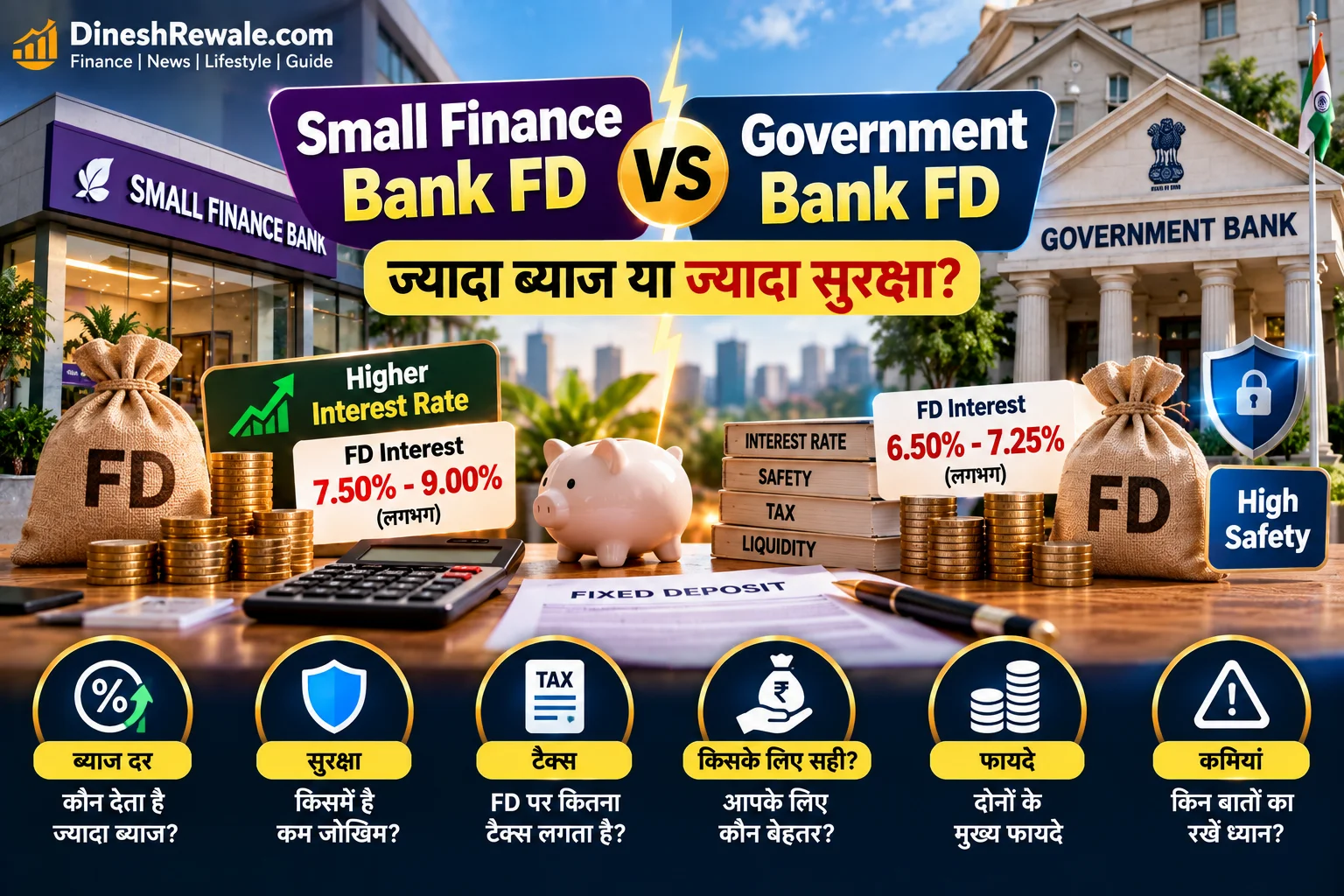
Small Finance Bank FD vs Government Bank FD में बेहतर option चुनना सिर्फ सबसे ज्यादा interest rate देखने का फैसला नहीं है। Small Finance Bank (SFB) की कुछ FDs पर competitive rates मिल सकती हैं, जबकि Public Sector Bank (PSB) FD को कई लोग established banking network और familiarity की वजह से पसंद करते हैं। सही फैसला लेने के लिए interest rate, deposit insurance, liquidity, tenure, premature withdrawal, tax और आपकी total bank exposure को साथ में देखना चाहिए।
In Short
- Small Finance Banks कुछ tenures और customer categories में higher FD rates offer कर सकते हैं, लेकिन rates bank और tenure के हिसाब से बदलती हैं।
- Government-owned/Public Sector Bank की FD भी automatically zero-risk नहीं होती। Banking risk को समझना जरूरी है।
- Eligible bank deposits पर DICGC insurance principal + interest मिलाकर ₹5 लाख तक per depositor per bank की सीमा में है, subject to applicable rules.
- एक ही bank में कई branches या कई अलग FD accounts खोलने से ₹5 लाख insurance limit अलग-अलग नहीं हो जाती, अगर deposits same right and same capacity में हैं।
- अलग banks में eligible deposits रखने पर insurance cover अलग-अलग apply हो सकता है।
- Senior citizens के लिए higher rate attractive हो सकती है, लेकिन केवल rate देखकर long-term FD lock-in करना सही नहीं है।
Small Finance Bank और Government Bank में फर्क क्या है?
Small Finance Banks RBI-regulated banking institutions हैं जिनका mandate financial inclusion और छोटे borrowers/depositors को banking services उपलब्ध कराना है। वे savings accounts, fixed deposits और अन्य banking products offer करते हैं।
Government Bank से यहां आम तौर पर Public Sector Bank (PSB) का मतलब है, यानी जिस bank में government का majority ownership/control होता है। बड़े branch network और लंबे operating history की वजह से इन banks पर customers का familiarity factor ज्यादा हो सकता है।
लेकिन FD चुनते समय “सरकारी” label को deposit insurance का substitute नहीं समझना चाहिए। DICGC की insured-bank framework eligible deposits पर लागू होती है, और deposit insurance की सीमा bank-level exposure के हिसाब से देखनी होती है।
Small Finance Bank FD क्यों आकर्षक हो सकती है?
SFBs deposit mobilization के लिए कई बार बड़े banks की तुलना में competitive interest rates देती हैं। खासकर कुछ specific tenures और senior-citizen slabs में rate difference meaningful हो सकता है।
लेकिन FD का headline rate हमेशा पूरी कहानी नहीं बताता। अगर 1% extra rate पाने के लिए पैसा बहुत लंबे tenure में lock हो जाता है, premature closure पर penalty लगती है, या bank-level concentration बढ़ जाता है, तो higher rate का फायदा कम हो सकता है।
Government Bank FD में क्या फायदा है?
Public Sector Banks का बड़ा branch network, long operating history और कई customers के लिए familiar service model एक comfort factor हो सकता है। ऐसे banks में branch-based support, existing account relationship और digital banking facilities भी decision को influence कर सकती हैं।
फिर भी government ownership का मतलब यह नहीं कि हर FD पर unlimited government guarantee है। इसलिए rate, tenure, liquidity और deposit insurance को independently compare करना चाहिए।
Small Finance Bank FD vs Government Bank FD Comparison
| Factor | Small Finance Bank FD | Government Bank FD |
|---|---|---|
| Interest rate | कुछ tenures में ज्यादा competitive हो सकती है | अक्सर comparatively moderate, bank और tenure पर depend |
| Senior citizen rate | Bank-specific extra rate संभव | Bank-specific extra rate संभव |
| Branch network | Bank-specific | आमतौर पर बड़ा network |
| Deposit insurance | Eligible deposits पर DICGC framework लागू | Eligible deposits पर DICGC framework लागू |
| Liquidity | Premature closure terms bank-specific | Premature closure terms bank-specific |
| Best for | Rate-conscious investors who diversify exposure | Branch access और familiar banking ecosystem चाहने वाले investors |
₹5 लाख DICGC Insurance Rule सबसे जरूरी क्यों है?
DICGC के अनुसार eligible deposits जैसे savings, current, recurring और fixed deposits पर insurance cover उपलब्ध है। Maximum cover ₹5 लाख तक है, जिसमें principal और accrued interest दोनों शामिल होते हैं। यह limit एक depositor के same bank में same right and same capacity वाले eligible deposits पर लागू होती है।
इसका मतलब यह है कि एक ही bank में ₹3 लाख की FD और ₹2 लाख का savings balance है, तो insurance calculation के लिए इन्हें aggregate किया जा सकता है। इसी तरह एक ही bank की अलग-अलग branches में रखे deposits सिर्फ branch बदलने से अलग insurance cover नहीं बनाते।
दूसरी ओर, अलग banks में रखे eligible deposits पर ₹5 लाख की insurance limit bank-wise अलग apply हो सकती है। इसलिए बड़े FD corpus के लिए bank diversification एक practical risk-management approach हो सकती है।
₹10 लाख FD को कैसे समझें?
मान लीजिए किसी investor के पास ₹10 लाख का lump sum है। पूरा amount सिर्फ एक bank की FD में रखने के बजाय वह amount को अलग eligible banks में distribute कर सकता है। इससे interest rates compare करने और liquidity dates spread करने के साथ deposit-insurance exposure को भी manage किया जा सकता है।
हालांकि diversification का मतलब केवल “हर bank में exactly ₹5 लाख” करना नहीं है। क्योंकि insurance principal और interest दोनों को include करता है, interest जुड़ने के साथ ₹5 लाख ceiling के अंदर actual insured amount प्रभावित हो सकता है। इसलिए deposit size तय करते समय expected interest को भी ध्यान में रखें।
क्या Government Bank FD ज्यादा Safe है?
“Safe” शब्द को दो हिस्सों में समझना बेहतर है। पहला, bank की financial strength और operations से जुड़ा risk। दूसरा, depositor को मिलने वाला formal deposit-insurance protection।
Public Sector Bank होने से customer confidence और institutional familiarity बढ़ सकती है, लेकिन इसे unlimited sovereign guarantee नहीं समझना चाहिए। इसी तरह Small Finance Bank को केवल higher rate की वजह से automatically unsafe भी नहीं मानना चाहिए। सही approach है bank की current disclosures, financial position, regulatory information और DICGC insurance status को देखना।
Higher FD Rate कब सच में फायदे की है?
Higher rate तब useful होती है जब बाकी conditions भी suitable हों। उदाहरण के लिए:
- Outstanding corpus बड़ा है।
- Tenure आपकी जरूरत के हिसाब से सही है।
- Emergency के लिए अलग liquidity available है।
- Premature closure penalty acceptable है।
- Bank exposure पहले से बहुत concentrated नहीं है।
केवल 0.50% या 1% extra rate के लिए emergency money को long lock-in में डालना जरूरी नहीं है।
FD Laddering क्यों उपयोगी है?
पूरा पैसा एक ही maturity date वाली FD में लगाने के बजाय अलग-अलग maturity वाली FDs बनाना FD laddering कहलाता है। इससे हर कुछ महीनों या साल में एक FD mature हो सकती है और आपको पूरा corpus एक साथ renew करने की जरूरत नहीं पड़ती।
| FD | Amount | Maturity Goal |
|---|---|---|
| FD 1 | ₹2 लाख | Short-term liquidity |
| FD 2 | ₹2 लाख | Medium-term need |
| FD 3 | ₹2 लाख | Future expense |
| FD 4 | ₹2 लाख | Longer-term income |
| FD 5 | ₹2 लाख | Longer-term reserve |
ऊपर का example सिर्फ structure समझाने के लिए है। Actual allocation आपके cash-flow और goals पर depend करेगी।
Senior Citizen के लिए कौन सा FD बेहतर?
Senior citizen के लिए “सबसे ज्यादा rate” हमेशा “सबसे अच्छा FD” नहीं होता। अगर monthly expenses pension, annuity या दूसरे stable sources से comfortably cover हो रहे हैं, तो FD portfolio को rate और maturity diversification के साथ structure किया जा सकता है।
लेकिन अगर FD ही primary emergency reserve है, तो liquidity और premature withdrawal terms को higher rate से ऊपर priority देना बेहतर हो सकता है।
FD Interest पर Tax भी देखना जरूरी है
FD interest सामान्यतः taxable income का हिस्सा होता है। इसलिए सिर्फ advertised interest rate compare करने के बजाय post-tax return भी देखना चाहिए।
उदाहरण के लिए, 8% FD और 7.25% FD के बीच पूरा decision लेने से पहले देखें कि interest आपकी taxable income में जुड़ने के बाद actual post-tax return कितना रह जाता है। Senior citizens के लिए old और new tax regime के rules अलग हो सकते हैं, इसलिए अपनी overall income के साथ calculation करें।
Premature Withdrawal के Rules check करें
FD को maturity से पहले तोड़ने पर bank reduced interest rate या penalty apply कर सकता है। यह calculation bank-specific होती है। इसलिए FD book करते समय सिर्फ maturity amount नहीं, बल्कि premature closure policy भी पढ़ें।
Emergency fund के लिए अलग liquid reserve रखना useful है, ताकि अचानक खर्च आने पर long-term FD तोड़ने की जरूरत कम हो।
Small Finance Bank FD चुनने से पहले 7 Checks
- DICGC insured status: Bank insured है या नहीं, verify करें।
- Rate: केवल highest rate नहीं, पूरे tenure का effective return compare करें।
- Senior citizen rate: अगर applicable है तो eligibility और age proof rules check करें।
- Premature penalty: FD जल्दी तोड़ने पर कितना interest reduce होगा, देखें।
- Bank exposure: उसी bank में savings/current/FD balances जोड़कर total exposure समझें।
- Liquidity: Emergency needs के लिए अलग money accessible रखें।
- Renewal: Maturity पर FD automatic renew होगी या नहीं, instruction check करें।
Government Bank FD चुनने से पहले 7 Checks
- Current rate card और tenure-wise interest देखें।
- Senior citizen benefit लागू है तो उसकी conditions पढ़ें।
- Premature closure terms समझें।
- Nomination details सही रखें।
- Auto-renewal instruction check करें।
- FD receipt और interest certificate सुरक्षित रखें।
- Total investment को एक ही bank में unnecessarily concentrate न करें।
Small Finance Bank vs Government Bank: किसे चुनें?
| अगर आपकी priority है… | पहले क्या देखें? |
|---|---|
| Higher interest rate | Small Finance Bank rates + bank exposure + DICGC |
| Branch convenience | Government/Public Sector Bank network |
| Emergency liquidity | Premature withdrawal + separate emergency fund |
| Large FD corpus | Diversification across eligible banks |
| Tax-efficient income | Post-tax return and applicable tax regime |
₹5 लाख से ज्यादा FD हो तो क्या करें?
₹5 लाख से अधिक corpus को automatically “unsafe” नहीं कहना चाहिए, क्योंकि DICGC limit insurance cover है, investment limit नहीं। लेकिन insured amount से ऊपर का exposure bank-level risk के अधीन रहता है। इसलिए बड़े corpus को purpose और risk tolerance के हिसाब से multiple eligible banks में spread करना practical हो सकता है।
एक ही bank की अलग branches में पैसा बांटने से insurance cover multiply नहीं होता। Different banks और different ownership capacities के rules अलग हो सकते हैं, इसलिए structure बनाते समय exact DICGC criteria समझना जरूरी है।
FAQs
1. क्या Small Finance Bank FD Government Bank FD से ज्यादा safe है?
किसी भी bank को केवल category के आधार पर “सबसे safe” कहना सही नहीं है। Bank की financial strength, regulatory status, deposit insurance और आपके exposure को देखना चाहिए।
2. क्या Small Finance Bank में ₹5 लाख तक FD पूरी तरह insured है?
Eligible deposit के लिए DICGC principal और interest को मिलाकर maximum ₹5 लाख तक cover देता है, same depositor, same bank, same right and capacity के applicable framework में।
3. क्या एक ही Government Bank में अलग-अलग FD करके insurance बढ़ जाएगा?
नहीं। Same bank में same right and same capacity वाले eligible deposits को aggregate किया जाता है।
4. क्या अलग-अलग banks में FD रखने पर insurance अलग मिलेगा?
हाँ, DICGC के अनुसार अलग banks में deposit insurance coverage bank-wise apply होती है, subject to the applicable ownership/capacity rules.
5. क्या Small Finance Bank FD पर higher rate हमेशा बेहतर है?
नहीं। Rate के साथ tenure, premature closure, liquidity, tax और total bank exposure भी compare करें।
6. Senior Citizen को Small Finance Bank FD लेनी चाहिए?
यह उनकी income needs, liquidity requirement, risk tolerance और existing bank exposure पर depend करता है। Higher rate useful हो सकती है, लेकिन emergency money को केवल rate के लिए long lock-in में नहीं रखना चाहिए।
7. FD interest पर tax कैसे calculate करें?
FD interest सामान्यतः taxable income का हिस्सा होता है। Final tax आपकी total taxable income, applicable tax regime और eligible deductions/rebate पर depend करता है।
निष्कर्ष
Small Finance Bank FD vs Government Bank FD में कोई एक universal winner नहीं है। SFB FD कुछ investors को higher rate दे सकती है, जबकि Government Bank FD branch reach और familiarity के कारण preferred हो सकती है। लेकिन दोनों की तुलना करते समय DICGC insurance, liquidity, tenure, premature closure और post-tax return को नजरअंदाज नहीं करना चाहिए।
बड़े FD corpus के लिए practical approach है कि पैसा जरूरत के हिसाब से ladder करें, अलग eligible banks में exposure diversify करें और ₹5 लाख DICGC insurance ceiling को bank-level context में समझें। सबसे ज्यादा rate के पीछे जाने के बजाय Safety + Return + Liquidity + Tax का balance बनाना बेहतर है।
Useful Related Articles
FD interest और deposit planning के लिए 8.5% FD Interest: पैसा लगाने से पहले 7 जरूरी बातें देखें। Emergency fund के लिए Emergency Fund guide पढ़ें।
₹10 लाख की investment planning के लिए ₹10 लाख Investment Options और ₹25 लाख corpus planning के लिए ₹25 लाख Investment Options देखें। Overall portfolio allocation के लिए Asset Allocation by Age & Salary भी उपयोगी है।
उपयोगी संदर्भ
Deposit insurance की current information के लिए DICGC Deposit Insurance Guide और insured banks की current list के लिए DICGC Insured Banks List देखें। Banking regulation और current instructions के लिए Reserve Bank of India की official information देखें।
लेखक के बारे में
Dinesh Rewale personal finance, banking और investment topics पर practical, reader-focused content लिखते हैं। उनका उद्देश्य complex financial decisions को आसान भाषा में समझाना है ताकि readers अपने goals के अनुसार बेहतर विकल्प चुन सकें।
Disclaimer
FD rates, bank terms, taxation और regulatory rules समय-समय पर बदल सकते हैं। यह article सामान्य educational information है, personalised financial advice नहीं। FD खोलने से पहले bank की current rate sheet, premature withdrawal rules और DICGC insurance status verify करें।