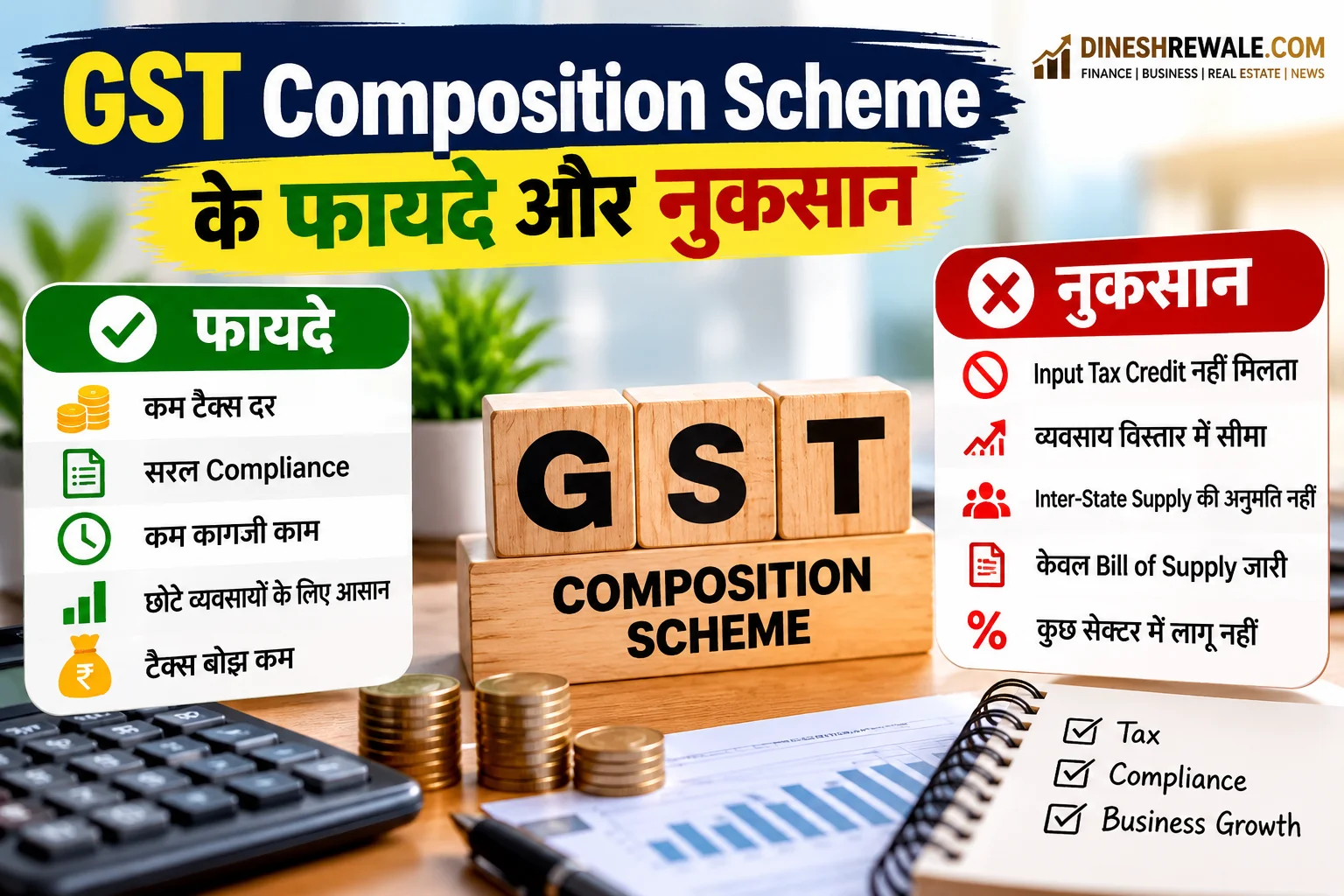
GST Composition Scheme: 7 फायदे, 8 नुकसान (2026)
GST Composition Scheme ke fayde aur nuksan समझना किसी भी छोटे trader, manufacturer, restaurant या eligible service business के लिए जरूरी है, क्योंकि यह scheme GST compliance को सरल बनाने के बदले कुछ महत्वपूर्ण rights और flexibility सीमित करती है.
सीधी बात: Composition Scheme में eligible small taxpayers regular GST व्यवस्था की तुलना में simplified तरीके से tax pay करते हैं। सामान्य goods suppliers के लिए preceding financial year का aggregate turnover limit अधिकांश राज्यों में ₹1.5 करोड़ है, जबकि कुछ specified states में यह ₹75 लाख है। Eligible services या mixed supplies के लिए अलग composition provision के तहत limit ₹50 लाख है। Tax category के अनुसार 1%, 5% या 6% composition rate लागू हो सकती है.
लेकिन इसका सबसे बड़ा trade-off यह है कि composition taxpayer अपने customers से GST अलग से collect नहीं कर सकता और purchases पर Input Tax Credit (ITC) claim नहीं कर सकता। Inter-State outward supplies पर भी restriction है। इसलिए केवल कम tax rate देखकर scheme चुनना सही तरीका नहीं है.
GST Composition Scheme क्या है?
GST Composition Scheme, CGST Act की Section 10 के तहत एक simplified taxation option है। इसका उद्देश्य eligible small businesses के लिए GST compliance को आसान बनाना है। Composition taxpayer prescribed rate के अनुसार tax pay करता है और regular GST की तरह customer से GST separately collect नहीं करता। इसलिए customer को tax invoice की जगह Bill of Supply दिया जाता है.
यह scheme optional है, यानी हर eligible business को Composition में जाना जरूरी नहीं है। सही choice आपके customer profile, purchase pattern, ITC की जरूरत, business geography और margins पर निर्भर करती है.
GST Composition Scheme की Eligibility और Turnover Limit
Eligibility business के प्रकार और preceding financial year के aggregate turnover पर depend करती है। Current GST guidance के अनुसार goods-only businesses के लिए सामान्य limit ₹1.5 करोड़ है। कुछ specified states में यह limit ₹75 लाख है। Services या mixed supplies के लिए अलग provision के तहत ₹50 लाख की limit लागू होती है.
Important: यह table simplified overview है। Particular goods, services, business structure और statutory conditions के आधार पर eligibility अलग हो सकती है। Final compliance decision लेने से पहले applicable GST provisions को verify करें.
GST Composition Scheme के 7 फायदे
1. GST Compliance comparatively आसान हो सकता है
Composition Scheme का सबसे बड़ा फायदा simpler compliance है। Composition taxpayer quarterly CMP-08 के जरिए tax payment/reporting करता है और annual GSTR-4 file करता है। इससे regular GST की invoice-level compliance के मुकाबले administrative workload कम हो सकता है.
Example: एक small local retailer के लिए हर transaction का detailed GST treatment manage करना मुश्किल हो सकता है। Composition framework उसके routine compliance को comparatively simpler बना सकता है.
2. Tax calculation comparatively predictable रहता है
Composition में prescribed rate turnover पर आधारित होती है, इसलिए eligible business के लिए basic tax calculation समझना आसान रहता है। Trader category में आम तौर पर 1%, restaurant में 5% और eligible service provision में 6% rate का framework मिलता है.
Illustration: अगर eligible trader का applicable composition turnover ₹40 लाख है, तो 1% rate पर basic composition tax ₹40,000 होगा। यह सिर्फ illustrative calculation है, final liability की जगह नहीं.
3. Billing process सरल हो सकता है
Composition taxpayer tax invoice issue करके customer से GST अलग से collect नहीं करता। इसके बजाय Bill of Supply issue किया जाता है। इससे छोटा B2C business अपने customer-facing pricing को relatively simple रख सकता है.
Example: neighbourhood retail shop जो primarily final consumers को बेचती है, उसे customer invoice पर अलग GST collection दिखाने की जरूरत नहीं होती.
4. Small B2C business के लिए practical हो सकता है
अगर आपके customers मुख्य रूप से end consumers हैं और वे आपके invoice से ITC claim नहीं करते, तो composition की restrictions कुछ businesses के लिए comparatively manageable हो सकती हैं.
Example: एक local consumer-facing shop के लिए customer को separate GST collection की जरूरत न होना business model के साथ fit हो सकता है.
5. Accounting workload कम रखने में मदद मिल सकती है
Composition framework simplified compliance के लिए बनाया गया है। इसका मतलब यह नहीं है कि books और records की जरूरत खत्म हो जाती है, लेकिन routine GST handling comparatively simpler हो सकती है.
6. Tax collection और pricing communication clear रहता है
क्योंकि composition taxpayer customer से GST अलग से collect नहीं करता, final selling price communication relatively straightforward हो सकता है। हालांकि business को अपनी costing में composition tax और supplier-side GST दोनों को ध्यान में रखना चाहिए.
7. Small business owner का time operational work पर जा सकता है
कम complex GST compliance का practical benefit यह हो सकता है कि owner का समय routine tax administration के बजाय sales, inventory, customers और operations पर लगे। यह खासकर छोटे owner-managed businesses के लिए महत्वपूर्ण हो सकता है.
GST Composition Scheme के 8 नुकसान
1. Input Tax Credit यानी ITC नहीं मिलता
यह Composition Scheme की सबसे बड़ी limitations में से एक है। Composition taxpayer purchases पर सामान्य Input Tax Credit claim नहीं कर सकता। यानी suppliers को दिया गया GST business के लिए real cost बन सकता है.
Example: अगर आपके business में raw material, packaging, equipment या services की खरीद पर significant GST लगता है, तो ITC न मिलना composition benefit को काफी कम कर सकता है.
2. Customer से GST अलग से collect नहीं कर सकते
Composition taxpayer tax invoice issue नहीं करता और customer से GST अलग से collect नहीं कर सकता। इस वजह से business को composition tax अपने pricing और margin structure में absorb करना पड़ सकता है.
3. Inter-State outward supply पर restriction
Composition scheme चुनने के बाद inter-State outward supply पर restriction लागू होती है। इसलिए ऐसा business जो दूसरे राज्यों में नियमित रूप से goods या services outward supply करना चाहता है, उसे इस limitation को शुरुआत से evaluate करना चाहिए.
Example: Mumbai में local customers को बेचने वाला shop और पूरे India में B2B supply करने वाला wholesaler एक जैसा GST choice नहीं ले सकते, क्योंकि business geography अलग है.
4. B2B customers के लिए appeal कम हो सकती है
अगर आपका customer registered business है और वह purchases पर eligible ITC लेना चाहता है, तो composition supplier से खरीदना उसके लिए less attractive हो सकता है क्योंकि composition seller input tax credit pass-through नहीं कर सकता.
5. High-input business में real cost बढ़ सकती है
Composition की low-looking percentage देखकर decision लेना risky हो सकता है। अगर आपकी business purchases में काफी GST लगता है, तो ITC का loss total cost को बढ़ा सकता है। इसलिए tax rate को अकेले न देखें.
6. Turnover limit cross होने पर scheme की स्थिति बदल सकती है
Composition eligibility turnover conditions से जुड़ी है। अगर business statutory limit या दूसरी eligibility condition के बाहर चला जाता है, तो composition से बाहर निकलकर regular GST provisions लागू हो सकते हैं.
7. Business growth की कुछ directions सीमित हो सकती हैं
अगर आप future में online marketplaces, nationwide distribution, B2B expansion या multi-state supply model बढ़ाना चाहते हैं, तो composition scheme की restrictions planning को प्रभावित कर सकती हैं। इसलिए आज की turnover स्थिति के साथ अगले 12 से 24 महीनों की business strategy भी देखें.
8. Composition को automatically “cheapest GST option” मानना गलती है
Composition tax rate कम दिख सकती है, लेकिन regular GST में eligible ITC का benefit मिलता है। इसलिए सही comparison यह है:
GST Composition Scheme में कितना Tax लगता है?
Current GST composition framework में category के अनुसार prescribed rates अलग हैं। Eligible goods categories में traders और other eligible suppliers के लिए सामान्य composition rate 1% और manufacturers के लिए भी सामान्य rate 1% framework में है; composition restaurants के लिए 5% तथा eligible services/mixed supplies के लिए 6% provision उपलब्ध है.
Note: ऊपर के numbers educational examples हैं। Actual composition liability turnover definition, nature of supplies, RCM और other applicable GST provisions के कारण अलग हो सकती है.
Composition Scheme में कौन सा Business अधिक suitable हो सकता है?
किसी business को scheme के लिए suitable मानने से पहले चार चीजें साथ में देखें: customer type, input GST, supply geography और growth plan.
- Mostly B2C business: customer को ITC नहीं चाहिए तो billing restriction comparatively manageable हो सकती है.
- Low input-GST business: अगर purchases पर GST कम लगता है, ITC loss का impact कम हो सकता है.
- Mostly intra-State sales: local customer base होने से inter-State restriction कम relevant हो सकती है.
- Stable small-scale operation: अगर business deliberately small और local model पर चलता है, simplified compliance useful हो सकती है.
किन Businesses को Composition Scheme पर extra caution रखना चाहिए?
- Heavy B2B suppliers जिनके customers ITC चाहते हैं.
- Businesses जिनके purchases पर बड़ा GST component आता है.
- Pan-India selling या regular inter-State outward supply करने वाले businesses.
- ऐसे businesses जिनकी turnover growth जल्दी composition limit के पास पहुँच रही है.
- ऐसे businesses जो future में national distribution या marketplace-led scale बनाना चाहते हैं.
Composition Scheme vs Regular GST: एक practical comparison
GST Composition Scheme चुनने से पहले 7 Checks
- Last financial year turnover: applicable limit के अंदर है या नहीं?
- Business category: trader, manufacturer, restaurant या eligible service/mixed supplier कौन सा है?
- Customer profile: B2C ज्यादा है या B2B?
- Annual input GST: purchases पर लगभग कितना GST pay करते हैं?
- Sales geography: क्या regular inter-State outward supply है?
- Growth plan: क्या turnover जल्दी limit के पास पहुँच सकता है?
- Full-cost comparison: Composition tax + lost ITC बनाम regular GST + available ITC compare करें.
एक Simple Decision Example
मान लीजिए एक local retailer की annual turnover ₹45 लाख है। उसके customers primarily final consumers हैं, inter-State outward supply नहीं है और purchases पर input GST बहुत ज्यादा नहीं है। ऐसे case में composition की simplicity useful हो सकती है.
अब दूसरी तरफ, एक distributor की turnover ₹1 करोड़ है और वह mostly GST-registered businesses को बेचता है। उसके customers ITC चाहते हैं, purchases पर GST significant है और business अगले साल दूसरे राज्यों में expand करना चाहता है। इस model में composition की restrictions को बहुत ध्यान से evaluate करना होगा.
इन दोनों examples में turnover eligibility का हिस्सा है, लेकिन business model final decision के लिए उतना ही important है.
Composition Scheme के बारे में 5 Common Mistakes
- सिर्फ 1% देखकर scheme को automatically beneficial मानना.
- ITC loss को costing में शामिल न करना.
- B2B customers की ITC requirement ignore करना.
- Inter-State expansion की future requirement न देखना.
- Eligibility बदलने पर timely compliance और withdrawal requirements verify न करना.
Composition Scheme के Forms और Basic Compliance
Composition taxpayers के लिए GST system में quarterly CMP-08 और annual GSTR-4 का framework इस्तेमाल होता है। Eligible person को scheme की conditions के अनुसार prescribed intimation/option process follow करना होता है, और eligibility समाप्त होने पर withdrawal/transition rules लागू हो सकते हैं.
इसलिए “composition मतलब return की जरूरत नहीं” एक गलत धारणा है। Compliance simpler है, zero नहीं.
GST Composition Scheme: Final Takeaway
GST Composition Scheme का सबसे बड़ा फायदा simplicity है, लेकिन इसका सबसे बड़ा नुकसान flexibility और ITC की कमी है। Small B2C business के लिए यह model practical हो सकता है, जबकि high-input, B2B या inter-State growth वाले business को regular GST के साथ detailed cost comparison करना चाहिए.
सबसे सही तरीका है कि आप अपनी turnover, input GST, customer profile, margins और next 12–24 months की growth plan के आधार पर comparison करें। Low composition rate का मतलब हमेशा low total business cost नहीं होता.
GST-related business decisions में current rules, notifications और your exact transaction pattern महत्वपूर्ण होते हैं। इसलिए major tax decision लेने से पहले qualified GST professional से your case verify करना उचित है.
FAQs: GST Composition Scheme
GST Composition Scheme क्या है?
यह eligible small taxpayers के लिए simplified GST option है, जिसमें prescribed composition rate के अनुसार tax pay किया जाता है और regular GST की तुलना में compliance structure comparatively सरल होता है.
GST Composition Scheme की turnover limit कितनी है?
Goods composition के लिए अधिकांश राज्यों में ₹1.5 करोड़ की limit लागू है, जबकि कुछ specified states में ₹75 लाख limit है। Eligible services या mixed supplies के लिए अलग provision के तहत ₹50 लाख limit है.
Composition taxpayer GST customer से collect कर सकता है?
नहीं। Composition taxpayer customer से GST अलग से collect नहीं कर सकता और prescribed Bill of Supply जारी करता है.
Composition Scheme में ITC मिलता है?
नहीं। Composition taxpayer inward supplies पर सामान्य Input Tax Credit claim नहीं कर सकता.
Composition taxpayer Inter-State supply कर सकता है?
Composition scheme में inter-State outward supply पर restriction है। इसलिए ऐसे business को scheme चुनने से पहले अपनी current और expected supply geography check करनी चाहिए.
क्या Composition Scheme हमेशा Regular GST से सस्ती होती है?
नहीं। Comparison में composition tax के साथ lost ITC, customer mix, pricing और business costs शामिल करें। केवल headline tax percentage देखकर decision न लें.
Composition taxpayer कौन सा invoice जारी करता है?
Composition taxpayer tax invoice की जगह Bill of Supply जारी करता है और customer से tax separately collect नहीं करता.
Composition Scheme कब छोड़नी पड़ सकती है?
जब business statutory eligibility conditions satisfy नहीं करता या taxpayer voluntarily scheme से बाहर निकलना चाहता है, तब prescribed withdrawal and transition process follow करना होता है.
और पढ़ें: GST Collection September 2026: 14.7% बढ़कर ₹2.04 लाख करोड़ और GST Council Update
लेखक
Dinesh Rewale
वित्त, Business और Real Estate जैसे विषयों पर reader-first और practical content लिखते हैं, ताकि complex financial topics को आसान भाषा में समझाया जा सके।
Facebook पर Dinesh Rewale से जुड़ें
Disclaimer: यह लेख केवल सामान्य जानकारी और educational purpose के लिए है। GST rules, notifications, rates, eligibility और compliance requirements समय के साथ बदल सकते हैं। किसी business-specific tax decision, registration, return filing या financial decision से पहले current official rules और qualified tax professional से सलाह लें.